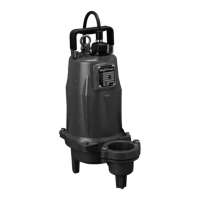
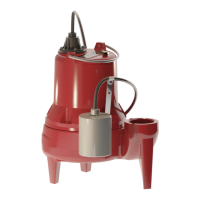
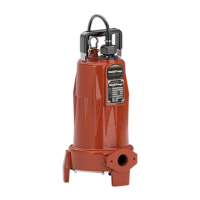
This document serves as an installation and operation manual for Liberty Pumps' LE and LEH-Series submersible sewage pumps, designed for residential and commercial applications. These pumps are engineered to handle septic tank effluent, sewage, and drain (storm) water, ensuring efficient and reliable waste removal from various systems.
The primary function of these pumps is to move wastewater from a collection basin to a discharge point. They are designed for submersible operation, meaning they are intended to be fully immersed in the fluid they are pumping. The manual emphasizes the importance of proper sizing and installation to ensure optimal performance and longevity, noting that operating the pump outside its recommended range can lead to damage, premature failure, and voided certifications.
A key usage feature of these pumps is their adaptability to different control methods. Automatic models, identified by an "A" suffix, come factory-equipped with a piggyback float switch. This design allows for automatic operation, where the pump turns on and off based on fluid levels, and also provides a temporary manual operation option by bypassing the float switch. For manual pumps, which lack a built-in float switch, an approved liquid level control or motor control panel is required. This flexibility allows installers to integrate the pumps into simplex (one pump) or duplex (two pump) systems, depending on the application's needs and local plumbing codes.
The manual details the installation process, starting with the preparation of the sump basin. It specifies excavation requirements, recommending a minimum 8-inch diametrical clearance around the tank and the use of fine pea gravel or crushed stone for bedding and backfill, explicitly prohibiting sand or native soil. Proper inlet connection is crucial, with specific instructions for different basin types, such as no-hub couplings for P370 and P380-Series basins or caulking hubs for others. The importance of a sealed and properly vented basin is highlighted to prevent the buildup of flammable and poisonous gases.
Electrical connections are a critical aspect of installation. For 3-phase pumps, verifying proper rotation is essential before lowering the pump into the basin. Incorrect rotation can lead to significant performance loss and potential damage. The manual provides clear instructions on how to check and correct rotation by reversing any two power leads. It also stresses that all electrical work must comply with the National Electrical Code® and local ordinances, and be performed by qualified personnel.
Discharge line setup is another important usage feature. A check valve is mandatory to prevent backflow, followed by a gate valve for maintenance access. The discharge line should be as short as possible with minimal turns to reduce friction head loss, and the pipe size should not be reduced below the pump's provided discharge size. Proper venting of the basin through an existing building vent stack or a dedicated vent flange is also emphasized to ensure safety and compliance.
Maintenance features are primarily preventative and diagnostic. The manual advises frequent checks for debris or buildup that could interfere with pump or float switch operation. Since the motor is oil-filled, no lubrication is required. In case of clogging, the inlet screen can be removed to access and clear the impeller, and the anti-airlock hole should be cleaned. The troubleshooting matrix is a comprehensive maintenance tool, listing common problems, possible causes, and corrective actions. This includes issues like the pump not starting, running continuously, or running but not pumping, covering electrical, mechanical, and operational faults.
The warranty information outlines the conditions for coverage, emphasizing that proper installation, operation, and maintenance according to the manual's instructions are necessary. Unauthorized disassembly, modifications, or specific types of damage (e.g., cut electrical cords, reduced discharge size, use with inappropriate fluids or temperatures) will void the warranty. This underscores the importance of adhering to the guidelines provided in the manual for both usage and maintenance.
Overall, the Liberty Pumps LE and LEH-Series submersible sewage pumps are designed for robust wastewater management, offering features for both automatic and manual control, with clear guidelines for installation, operation, and troubleshooting to ensure long-term, reliable performance.


 To Next Page
 General