Page 10 Maxmig 210 IMA 578BLA
Changing Electrode Size and Type
When changing the electrode size or type, ensure the wire feed
roll is the correct size and type for the electrode. Wire feed rolls
have two grooves each of different sizes. Ensure the roll is
located by the key and keyway and firmly secured by knurled
screw.
When changing to aluminium welding a new drive roll, cable liner
and contact tip should be used.
Also check electrode polarity, as different processes may require
different polarities.
Adjust Spool Tension
The spool should stop rotating when the wire feed roll stops.
Overrun of the spool can cause the coil of wire to unravel. The
spool hub should be tensioned so that it neither drags nor
overruns. The tension can be set by adjusting the large nut
inside the hub with a tube spanner.
*
The Maxmig 150 gun, with a 1.2mm tip and liner will be required for 1.2mm
wires.
5.MAINTENANCE
Safety Precautions
Routine Maintenance
General
In extremely dusty locations, dirt may clog the air passages and
cause the welder to run hot. Blow dirt out of the welder with low-
pressure air at regular intervals to eliminate excessive dirt and
dust build-up on internal parts.
The fan motors have sealed ball bearings which require no
service.
Welding Thermal Overload Protection
The Maxmig 210 has built-in protective thermostats that respond
to excessive temperature. They open the wire feed and welder
output circuits if the machine exceeds the maximum safe
operating temperature because of a frequent overload, or high
ambient temperature plus overload. The over temperature light
on the control panel glows if thermostats open. The thermostats
automatically reset when the temperature reaches a safe
operating level.
Gun and Cable Maintenance
Cable Cleaning
Clean cable liner after using approximately 150kg of electrode.
Remove the cable from the wire feeder and lay it out straight on
the floor. Remove the contact tip from the gun. Using an air hose
and approx. 350 kPa (50psi) pressure, gently blow out the cable
liner from the gas diffuser end.
Flex the cable over its entire length and again blow out the cable.
Repeat this procedure until no further dirt comes out.
Gun Tips and Nozzles
The gun tip should be replaced when worn. Replace with the
correct size for the wire type and diameter. Too large a tip for the
electrode wire will cause arcing within the gun cable and possible
jamming of the wire within the cable .
Remove spatter from inside of gas nozzle and from tip after each
10 minutes of arc time or as required.
Drive Rolls and Guide Tubes
After every coil of wire, inspect the wire drive mechanism. Clean
it as necessary by blowing with low pressure compressed air. Do
not use solvents for cleaning the idle roll because this may wash
the lubricant out of the bearing. All drive rolls are stamped with
the wire sizes they will feed. If a wire size other than that
stamped on the roll is to be used, the drive roll must be changed.
Avoiding Wire Feeding Problems
Wire feeding problems can be avoided by observing the following
gun handling procedures:-
1. Do not kink or pull gun cable around sharp corners.
2. Keep the gun cable as straight as possible when welding
or loading electrode through cable.
3. Keep gun cable clean by following maintenance
instructions.
4. Use only clean, rust-free electrode. LiquidArc electrode
has proper surface lubrication.
5. Replace contact tip when the arc starts to become
unstable or the contact tip end is fused or deformed.
Input Lead
If the supply cord is damaged, it must be replaced with a special
cord, Part No. AS2373-2.
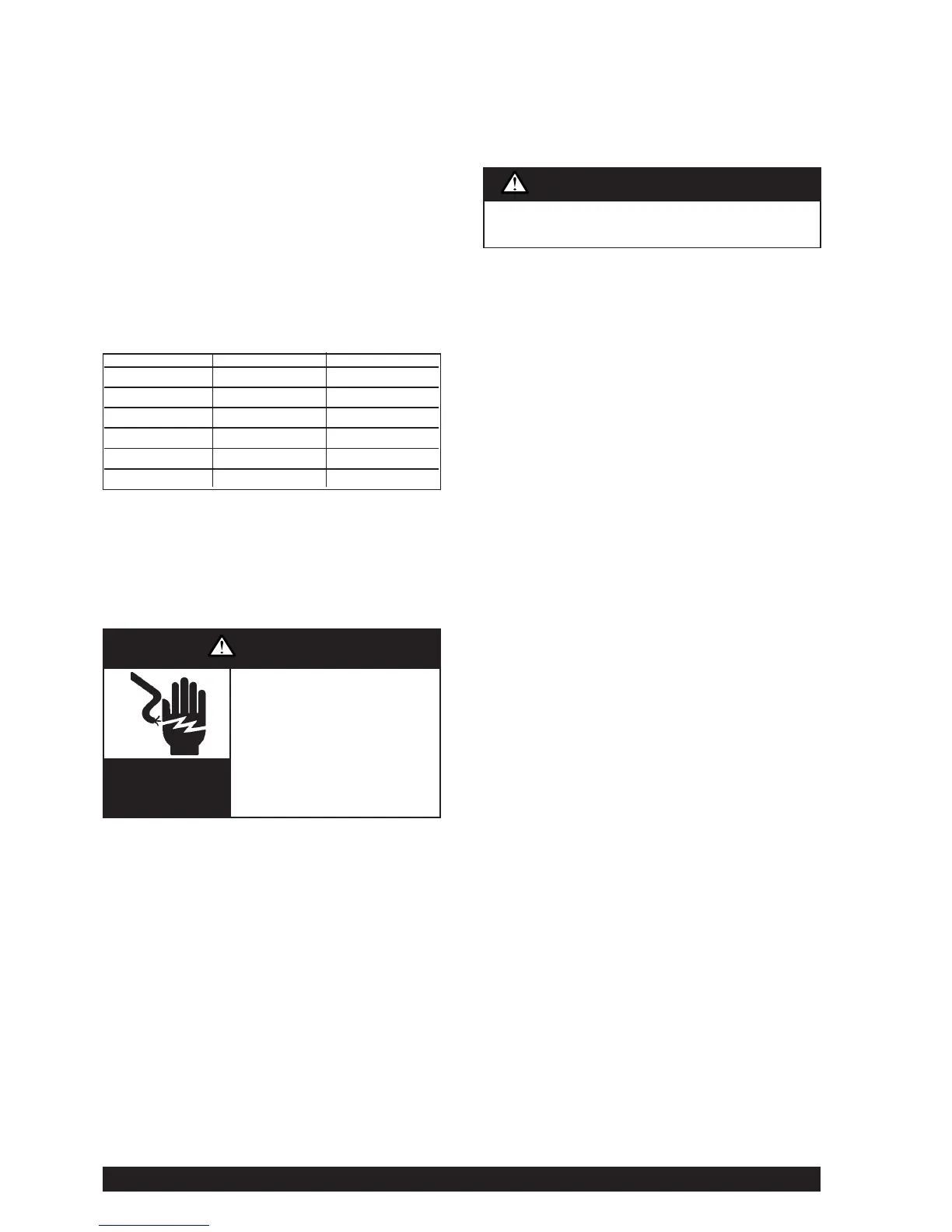
Excessive pressure at the start may cause dirt to form a
plug.
CAUTION
Part No. Size (mm) Use with
AS4449-9 0.6 - 0.8 Hard Wire
AS4449-1 0.8 - 1.0 Hard Wire
AS4449-2 1.0 - 1.2 Hard Wire*
AS4449-5 0.8A - 1.0A Aluminium Wire
AS4449-10 1.0A - 1.2A Aluminium Wire*
AS4449-3 0.8 - 1.0 Cored Wire
Available Drive Rolls
WARNING
ELECTRIC
SHOCK
can kill
• Have an electrician install and
service this equipment.
• Turn the input power off at the
fuse box, or unplug input lead
before working on equipment.
• Do not touch electrically hot
parts.



 To Next Page