'
Over-inflated
tires are more
llkelyto
be cut,
punctured
or
broken by a sudden impact
-
such as hitting a
pothole.
'
lmprop€rly inflated or worn rires are more likely
lo aqua-
plane
in wet
conditions.
'
Check all tires frequentty and
keeo tires at the
recom-
Ee[d9lLO&SSgIg.
ChecUadjust tlre
pressures
only
when
the tires are cold
(i.e.
the car has been stationary
for
a
minimum of3 hours, orhas been driven
lessthan 1
mile/
kllometer).
'
On cars used on a race track or in
a comp€titive manner.
special
vigilance
is requirecl due lo the severity
ot tire
operating condilions. Carelul inspectlons
must be
car-
ried
out before and after each session. Notei
Lotus does
not endo.se such use
of the Evora
-
refer to the Warranty
Booklet
section 2'lntended Purpose'-
The tires should rcguJarly be inspected forsigns
of cuts, abra-
sions orotherdamage,
and forany uneven tread wearpatlerns.
Uneven treadwear may indicate
thal the suspension
geometry
ordampers
require atlenlion irom
your
dealer
Take carc when
pa*ing
to avoid tire contact with high or
sharp edged kelbs- Such mistreaiment can cause internaldam-
age to the tke structure
and this may nol be rcadity apparent.
The wheel
rims may also be disloded or damaged
by careless
parking,
and €suli in wheel
imbalance or loss of tire
pressure.
Similardamage
may also be caussd by
potholes,
rccks
or other
highway deb s.
When
driving on wet roads, surface water is squeezed
oul
fiom behveen the tire and road.
However excessive speed or
water
depth can oveMhelm the water clearing capability
of lhe
trcad and lead to a condition
called aquaplaning' or 'hyd rcplan-
ing', where
lhe tire des on a film ofwater and
prcvides
little or
no
grip
on the road surface, leadinq
to a loss of control. This
condition is
more likelyto occurwith wom tires having
little depth
ol tread, or with incorrcct tke
pressures,
Daiverc should keep
a vigilant check on
tire wear and condition, and moderate thek
speed in
adverse weather condilions-
Tire Care
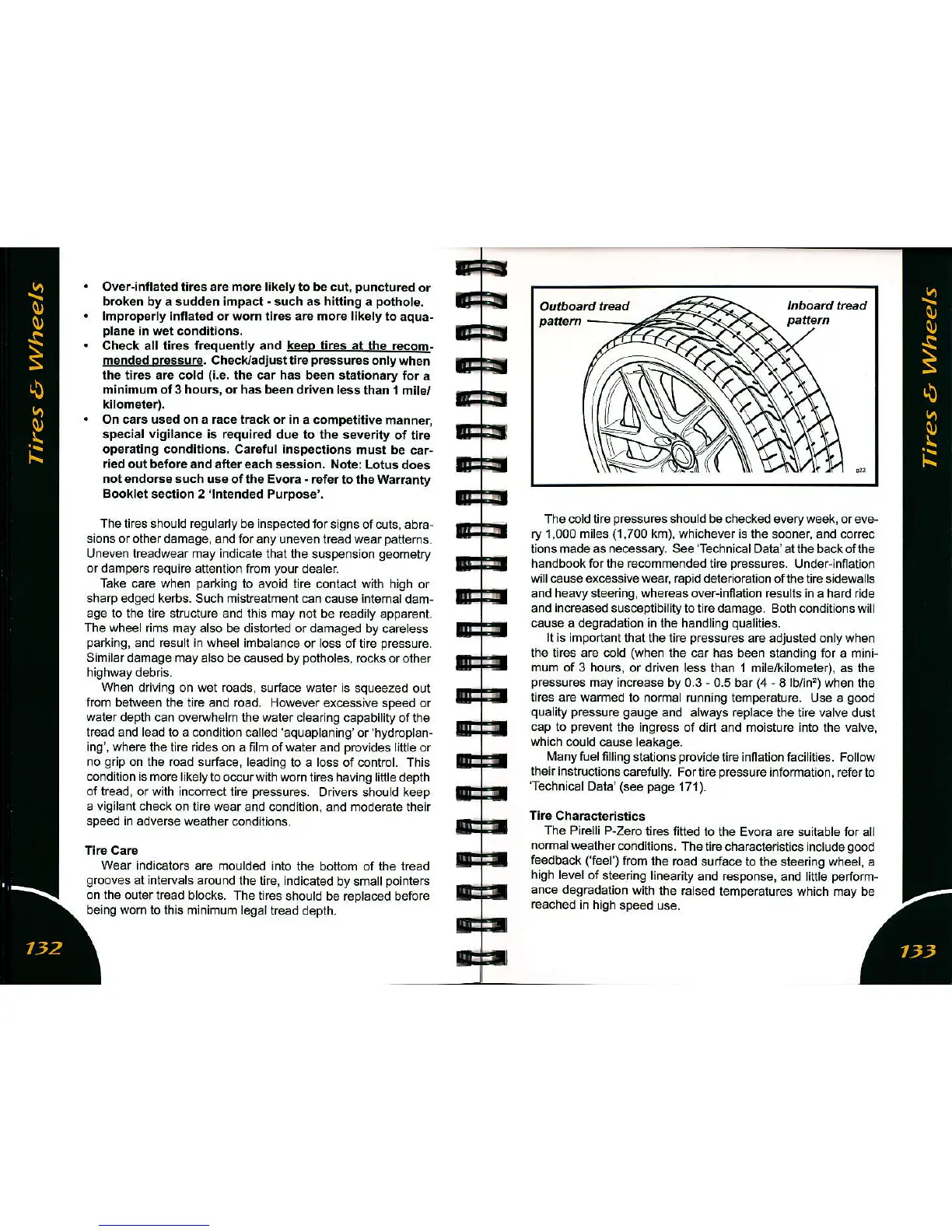
Wear
indicatorc are moulded
into the boitom of the tread
grooves
at inlervals around
the tirc, indicaied
by smallpointers
on the outer
tread blocks. Thetiresshould
be replaced before
beang worn to this minimum legaltread
depth.
The cold tire
pressures
should be checked everyweek, oreve-
ry
1,000 miles
(1,700
km), whichever is lhe sooner,
and correc
lions made as necessary, See 'Technic€l Data at the back of the
handbook for the Gcommended tire
pressures.
Under-inflation
wall c€use excessive wear, rapid delerioralion of lh€ tire sjdewalls
and heavy sleering, whercas oveFiniation results in
a
hard
ride
and
increased
susceplibility tolire damage. Both condilions will
cause a degradation in lhe handling
qualities.
It is importanl
that the lre
pressures
arc adjusted only when
lhe li€s are cold
(when
lhe car has
been standing lor a mini-
mum of
3
hours,
or driven less lhan 1 mil€/kbmeter), as the
prcssures
may increase by 0.3 -
0-5 bar
(4
-
8 lb/in,) when the
lires a€ warmed
to normal runn;ng temperature. Use a
good
qualiiy paessure
gauge
and
always
replace
ihe tie valve dust
cap to
prevenl
the ingress of dirt and moistu€ into the valve,
which
could cause leakage.
lranytuellilling
stations
provide
liro inflation facililies. Follow
lheir instructions
carcfully. For
tire
pressure
information, refer to
'Technical
Data'
(see page
171).
Tire
Characteristics
The Pirclli P-Zero
lircs fitted
to the Evora are suitable for all
normal weather
conditions.
The tire characteristics inctude
good
feedback ('feel')
from the road
surface to lhe stee ng wheel, a
high level
ol stee ng lineaity
and rcsponse,
and littte
perform-
ance degradalion
with
th€ raised
tempeEtures which may be
reached
in high
speed use.


 To Next Page