
 Need help?
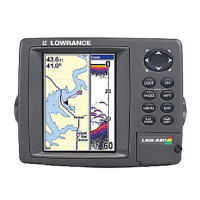
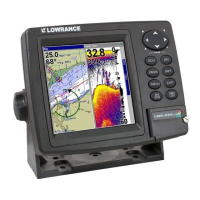
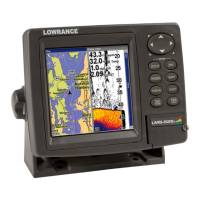
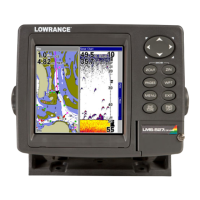
Do you have a question about the Lowrance LMS-350A and is the answer not in the manual?
Instructions for mounting the unit using the supplied bracket.
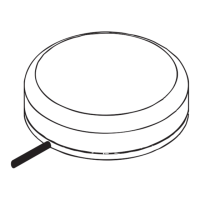
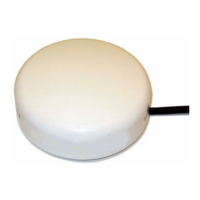
How to mount the GPS module on a surface with access from below.
Description of keys for sonar, menu, GPS, and window selections.
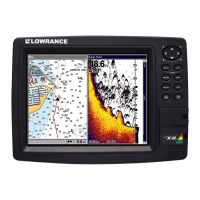
Customizing displays with 22 different window screens.
How the unit automatically adjusts sensitivity and range.
Adjusting chart scroll speed and using Grayline for echo differentiation.
Setting audible alarms for fish, depth limits, and echo ranges.
Controlling display lighting intensity and speaker volume.
Turning the zoom bar and zone alarm bar on/off for visual reference.
Using Fastrak for rapid updates and selecting display units.
Reducing surface clutter with SCC and using Advanced Signal Processing.
Compensating for transducer location and calibrating boat speed sensor.
Addressing weak bottom echoes, erratic readings, and electrical noise.
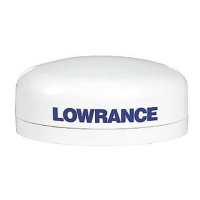
Details on GPS accuracy, Selective Availability, and the LGC-1 module.
Manually setting current position, time, and date for accurate navigation.
Viewing technical data about visible satellites and signal strength.
Using cursor lines to pinpoint locations and navigate the plotter.
Steps to create a route by selecting and naming waypoints.
Setting audible alarms for nearing waypoints, cross-track error, and vessel drift.
Resetting to factory defaults and initiating the Man Overboard search pattern.
 General
| Display Size | 5.5 inches |
|---|---|
| Waterproof Rating | IPX7 |
| Chartplotter | Yes |
| Sonar | Yes |
| Waypoints | 1000 |
| Routes | 100 |
| Operating Frequency | 200 kHz |
| Track Log | 10000 points |
| Voltage Range | 10-15 VDC |
| Operating Temperature | -15°C to 55°C |
| Weight | 2.2 lbs |

 To Next Page