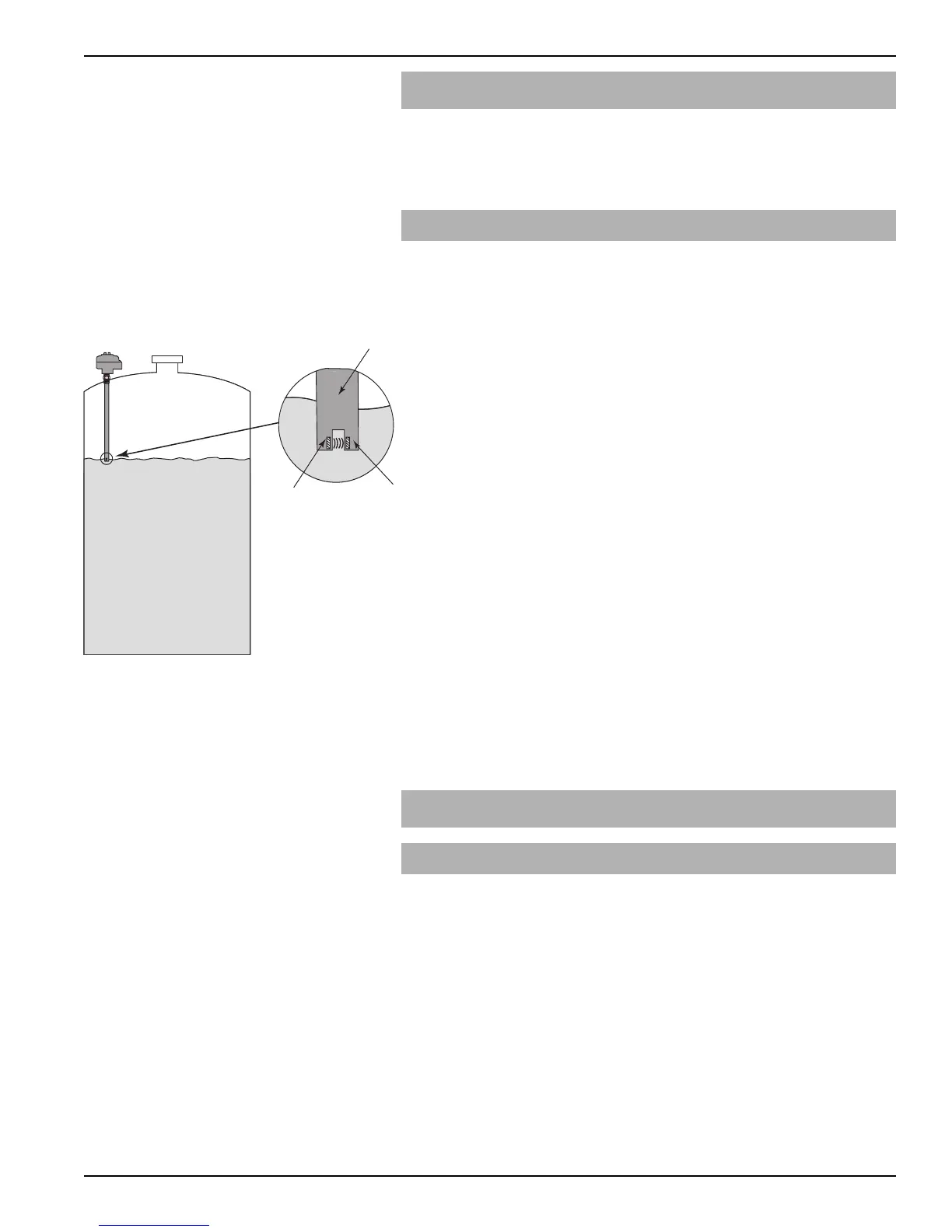
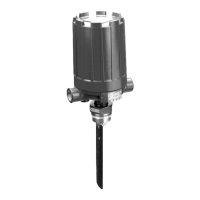
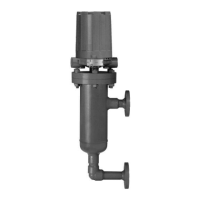
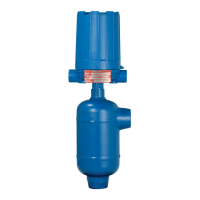
Figure 1
1.0 Introduction
Echotel Model 910 Level Switches utilize ultrasonic
contact technology for measuring level in clean liquid
applications.
1.1 Principle of Operation
The Model 910 Level Switch uses ultrasonic energy to
detect the presence or absence of liquid in a transducer
gap. The basic principle behind ultrasonic contact tech-
nology is that high-frequency sound waves are easily
transmitted across a transducer gap in the presence of a
liquid medium, but are severely attenuated when the gap
is dry. The Model 910 uses an ultrasonic frequency of
3 MHz to perform this liquid level measurement in a
wide variety of process media and application conditions.
The transducer uses a pair of piezoelectric crystals that are
encapsulated in epoxy at the tip of the 316 stainless steel
transducer. The crystals are made of a ceramic material,
that vibrates at a given frequency when subjected to an
applied voltage. The transmit crystal converts an electrical
signal from the Model 910 electronics into an ultrasonic
signal. When liquid is present in the gap, the receive
crystal is able to sense the ultrasonic signal from the
transmit crystal and convert it back to an electrical signal.
This signal is sent to the electronics to indicate the pres-
ence of liquid in the transducer gap. When there is no
liquid present, the ultrasonic signal is attenuated, and is
not detected by the receive crystal.
2.0 Installation
2.1 Unpacking
Unpack the instrument carefully. Inspect all units for
damage. Report any concealed damage to carrier within
24 hours. Check the contents of the packing slip and
purchase order. Check and record the serial number for
future reference when ordering parts.
1





 To Next Page