Need help?
Do you have a question about the Mase IS 9.6 and is the answer not in the manual?
Detailed electrical diagram of the generator unit and its components.
Assembly of engine and generator for electrical energy production.
Power supply circuits of user equipment, including protection devices.
Cut-out device opening automatically by thermal effect.
Person with technical know-how to avoid electrical dangers.
Generator is for autonomous electric energy production within declared limits.
Generator is suitable for independent electrical energy production within specified limits.
Potential risks include injury from hot parts, electrocution, noise, lubricants, and fire.
Indicates specific warnings for danger, warning, and caution to prevent harm.
Visual warnings on the generator group regarding carbon monoxide, fire, electrical shock, and moving parts.
Details safety labels for hot parts, accidental starting, moving parts, and preventing fire.
Lists documents provided with the generator, including CE declaration and manuals.
Lists applicable EC directives and standards for generator compliance.
Describes the generator identification plate data.
Lists data points for identifying the generator unit.
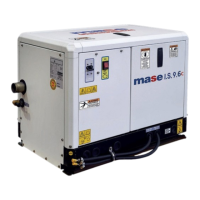
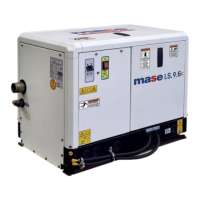
Lists the essential components of the generator unit.
Details the components of the standard control panel and their functions.
Provides a detailed table of the generator's technical specifications.
Specifies requirements for the installation room, ventilation, and temperature.
Instructions on how to lift the generator using a hook or lift truck.
Guidance on securing the generator to a base to support weight and vibrations.
Details the generator's internal cooling system and air requirements for combustion.
Explains the closed-circuit cooling system using water and seawater.
Describes two systems for seawater intake and recommends the direct intake.
Lists and describes key components of the cooling water circuit.
Illustrates typical installation layouts above and under the waterline.
Covers exhaust system requirements, including pipe length and carbon monoxide warnings.
Details the diesel fuel inlet/outlet, pipes, and fuel filter.
Covers battery connection, control panel, AC connection, switching, and emergency stop.
Important checks before starting the generator, including oil, fuel, and connections.
Precautions for safely refuelling the generator, emphasizing ventilation and no smoking.
Step-by-step procedure for starting the generator and safety warnings.
Procedure for safely stopping the generator and advice on gradual cooling.
How to use the emergency stop switch and reset the system.
Explains how magnetothermal switches protect against overloads.
Details fuses protecting the low-voltage system and stopping the generator.
Lists alarm codes displayed on the panel and their causes.
Recommends following engine manufacturer instructions and regular checks.
Periodic engine operations are indicated in the service schedule.
Procedure for checking engine oil level using the dipstick.
Instructions for changing engine oil, including disposal precautions.
Procedure for replacing the engine oil filter cartridge.
Steps for replacing or cleaning the fuel pump filter, including bleeding.
Refers to instructions in the fuel filter manual.
Explains manual bleeding if air bubbles are present in the fuel system.
How to clean the air filter and disposal of cleaning liquids.
Procedure to drain seawater from the cooling circuit for maintenance.
Importance of replacing the zinc anode to prevent galvanic corrosion.
How to check and maintain the seawater pump impeller.
Guidance on adjusting and checking the V-belt tension.
Alternator requires minimal maintenance, mainly for moisture and oxidation.
Precautions for activating, charging, and maintaining the battery.
Mentions checking/replacing the alternator V-belt.
Operations to perform if the generator is not used for a long period.
Comprehensive table of periodic checks and maintenance tasks based on intervals.
Troubleshooting guide for common generator problems and their solutions.
Information on ordering original spare parts from the Mase authorized network.
Guidelines for transporting and storing the generator to protect it.
How to safely lift and handle the generator using appropriate equipment.
Details the warranty period and exclusions for Mase generators.
Outlines Mase's responsibilities concerning generator safety and performance.
Instructions for environmentally sound disposal of generator components and waste.
Provides a detailed wiring diagram for the generator's electrical system.
 General
| Fuel Type | Diesel |
|---|---|
| Fuel Tank Capacity | 24 liters |
| Run Time at 50% Load | 12 hours |
| Starting System | Electric Start |
| Rated power | 9.6 kVA |
| Outlet Types | 1 x 12V DC |

 To Next Page