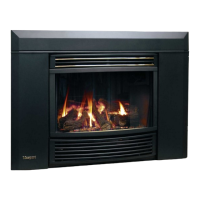
Masport Inbuilt Gas Fires - 17 - 19/11/04
Fan:
It is not unusual for the fan to make a "whirring" sound
when ON. This sound will increase or decrease in
volume depending on the speed setting of your fan.
Burner Tray:
The burner tray is positioned directly under the burner
and logs and therefore will expand and contract at
slightly different rates from the rest of the heater. This
can cause "ticking" and "cracking" sounds.
Pilot Flame (Piccolo Only):
While the pilot flame is on it can make a very slight
"whisper" sound.
Gas Control Valve:
As the gas control valve turns ON and OFF, a dull
clicking sound may be audible, this is normal operation
of a gas regulator or valve.
Firebox:
Different parts will expand and contract at different
rates resulting in some "cracking" and "ticking" sounds
being heard.
GENERAL MAINTENANCE
INSTRUCTIONS
1) If the top louvres start to discolour, check the glass
gasket seat and replace if necessary.
2) Clean the appliance, glass and louvres with a
damp cloth only when the heater is cold. Never
use an abrasive cleaner. Gold trim can be
scratched if abrasives are used to clean it.
The heater is finished in a heat resistant paint and
should only be refinished with heat resistant paint.
3) Keep the area near the appliance clear and free
from combustible materials, petrol and other
flammable vapours and liquids.
WARNING: CHILDREN AND ADULTS SHOULD
BE ALERTED TO THE HAZARDS OF HIGH
SURFACE TEMPERATURES AND SHOULD
KEEP WELL AWAY TO AVOID BURNS OR
CLOTHING IGNITION. YOUNG CHILDREN
SHOULD BE CAREFULLY SUPERVISED WHEN
THEY ARE IN THE SAME ROOM AS THE
APPLIANCE.
CAUTION: ANY SAFETY SCREEN OR GUARD
REMOVED FOR SERVICING AN APPLIANCE
MUST BE REPLACED PRIOR TO OPERATING
THE APPLIANCE.
CLOTHING OR OTHER FLAMMABLE
MATERIAL SHOULD NOT BE PLACED ON OR
NEAR THE APPLIANCE.
SERVICING INSTRUCTIONS
(Routine maintenance schedule)
Servicing must be carried out only by authorised
personnel.
Your Masport heater must be checked yearly by an
authorised Technician. This periodic maintenance
should cover the following points:-
1) Keep the burner and control compartment and any
air entry points clean by brushing and vacuuming.
Always turn the gas valve to OFF before cleaning.
When cleaning the logs, use a clean soft
paintbrush, as the logs are fragile and easily
damaged.
2) Make a periodic check of burner for proper log
position and condition. Visually check the flame
pattern of the burner periodically, making sure the
flames are steady, not lifting or floating.
3) The appliance and flue system must be inspected
before use and thereafter annually to ensure that
the flow of combustion and ventilation air is not
obstructed. During the annual service call, remove
the burner from the burner tray and clean it.
Replace the embers but do not block the air slots.
4) Clean the fan of any lint or foreign matter.
5) Check the pilot flames (Piccolo only), there should
be three strong flames approx. 19 mm long - one
flame to the rear burner, one to the ignition
electrode and one to the thermocouple.
6) Check the operation of the thermostat (if fitted) by
turning its control point above and below ambient
room temperature and checking the response of
the fire.
Other points which can be checked after completing
the above:-
Thermocouple generation
Gas consumption rate
Carbon dioxide content in the combustion products
Flue operation.
LOG REPLACEMENT
The unit should never be used with broken logs. Turn
off the gas valve and allow the unit to cool before
removing the glass to carefully remove the logs. If a
log should need replacement, you must use the proper
replacement log. The log positions must be as shown
in the diagram on page 9.
Note: Improper positioning of logs may create carbon
build-up and will alter the unit’s performance.



 To Next Page