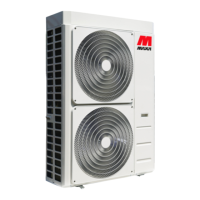
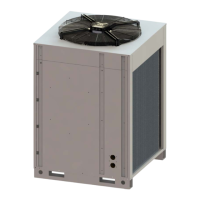
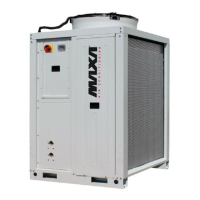
i-32V5 Air/Water heat pumps wih axial fans
36
Measure Completed Notes
15
Before carrying out this procedure, it is essenal that the technician is completely
familiar with the equipment and all its detail. It is recommended good pracce
that all refrigerants are recovered safely. Prior to the task being carried out, an oil
and refrigerant sample shall be taken in case analysis is required prior to re-use
of reclaimed refrigerant. It is essenal that electrical power is available before
the task is commenced.
a) Become familiar with the equipment and its operaon
b) Isolate system electrically.
c) Before aempng the procedure ensure that:
• mechanical handling equipment is available, if required, for handling refrig-
erant cylinders;
• all personal protecve equipment is available and being used correctly;
• the recovery process is supervised at all mes by a competent person;
• recovery equipment and cylinders conform to the appropriate standards.
d) Pump down refrigerant system, if possible.
e) If a vacuum is not possible, make a manifold so that refrigerant can be re-
moved from various parts of the system.
f) Make sure that cylinder is situated on the scales before recovery takes place.
g) Start the recovery machine and operate in accordance with manufacturer's
instrucons.
h) Do not overll cylinders. (No more than 80 % volume liquid charge).
i) Do not exceed the maximum working pressure of the cylinder, even tempo-
rarily.
j) When the cylinders have been lled correctly and the process completed, make
sure that the cylinders and the equipment are removed from site promptly and
all isolaon valves on the equipment are closed o.
k) Recovered refrigerant shall not be charged into another refrigeraon system
unless it has been cleaned and checked.
16
(labelling the heat pump)
If the heat pump has been taken out of use, ax a label to the heat pump in
a clearly visible posion containing the following in- formaon with date and
signature:
• Refrigerant is ammable.
• The system has been taken out of use.
• The refrigerant has been removed.
17
When removing refrigerant from a system, either for servicing or decommission-
ing, it is recommended good pracce that all refrigerants are removed safely.
When transferring refrigerant into cylinders, ensure that only appropriate refrig-
erant recovery cylinders are employed. Ensure that the correct number of cyl-
inders for holding the total system charge are available. All cylinders to be used
are designated for the recovered refrigerant and labelled for that refrigerant (i.e.
special cylinders for the recovery of refrigerant). Cylinders shall be complete
with pressure relief valve and associated shut-o valves in good working order.
Empty recovery cylinders are evacuated and, if possible, cooled before recovery
occurs.
The recovery equipment shall be in good working order with a set of instrucons
concerning the equipment that is at hand and shall be suitable for the recovery
of ammable refrigerants.
In addion, a set of calibrated weighing scales shall be available and in good
working order. Hoses shall be complete with leak-free disconnect couplings and
in good condion. Before using the recovery machine, check that it is in sas-
factory working order, has been properly maintained and that any associated
electrical components are sealed to prevent ignion in the event of a refrigerant
release. Consult manufacturer if in doubt.
The recovered refrigerant shall be returned to the refrigerant supplier in the cor-
rect recovery cylinder, and the relevant Waste Transfer Note arranged. Do not
mix refrigerants in recovery units and especially not in cylinders.
If compressors or compressor oils are to be removed, ensure that they have
been evacuated to an acceptable level to make certain that ammable refriger-
ant does not remain within the lubricant. The evacuaon process shall be carried
out prior to returning the compressor to the suppliers. Only electric heang to
the compressor body shall be employed to accelerate this process. When oil is
drained from a system, it shall be carried out safely


 To Next Page
 Loading...