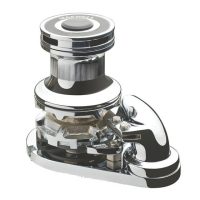
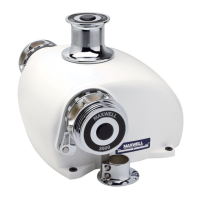
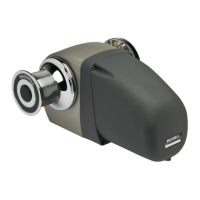
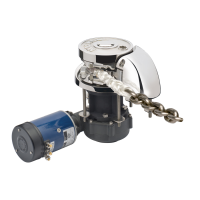
RC12 Windlass
Important Safety Information
• Make sure your windlass has been correctly specified before installation - Personal safety
may depend on it. The windlass must have a maximum pull capacity of at least three times
the combined weight of the anchor and rope/chain.
• For automatic operation to be possible, the anchor must be self launching.
• Correct fit of the chain to the chainwheel is essential. See "Rope and Chain Selection
Guide" on page 9.
• Keep hands, feet, loose clothing and hair well clear of the windlass and rope/chain during
operation.
• While raising the anchor, run the boat's engine above idle. This will minimise the power
drain on the batteries.
• Never operate the windlass from a remote station without having a clear view of the
windlass.
• Do NOT use the windlass as a mooring point. When anchoring or mooring, secure the line
directly to a bollard or deck cleat.
• Do NOT use the windlass to pull the boat forward when raising the anchor. Use the boat's
engine to drive the boat up to the anchor.
• Do NOT attempt to break free a fouled anchor with the windlass. Secure the line to a
bollard or cleat and use the boat's engine to break the anchor out.
• Always firmly tie down the anchor when under way or in heavy seas. Do not rely on the
windlass as a securing device.
• Always turn the circuit breaker/isolator switch off when the windlass is not in use and before
you leave the boat.
• Tie the end of the anchor rope/chain to a secure fixture in the rope/chain locker.
• Keep the anchor rope/chain in good condition, free from knots and twists. Inspect the rope
regularly for chafe. Where this has occurred, repair by cutting away the affected portion and
re-splice.
Tip: The rope can be swapped end-for-end to extend its life.
• Do NOT use the windlass to haul a person up a mast.


 To Next Page