22
4.3 GENERAL OPERATION THEORY
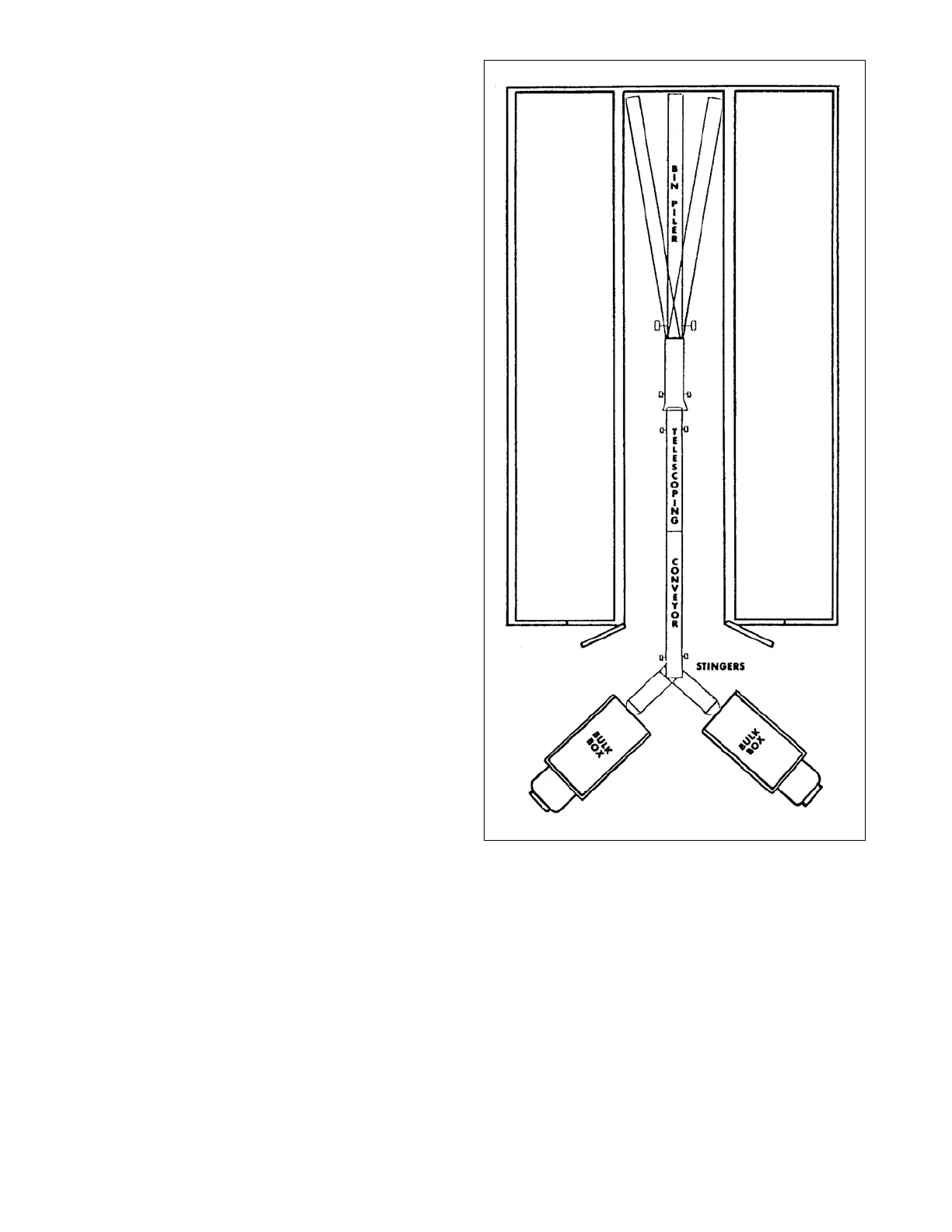
Potatoes are unloaded from transport trucks into
the hoppers of the stingers. Here they are carried by
chain conveyors up into the hopper of the top belted
mainframe conveyor. The chain conveyors are engi-
neered to gently vibrate and rotate the potatoes to
remove excess dirt.
The top belted mainframe conveyor feeds into the
bottom belted mainframe conveyor, which ultimately
feeds into the hopper of a bin piler, an additional con-
veyor or directly into a processing plant for long term
storage or processing.
All hopper-to-conveyor and conveyor-to-conveyor
transition points are designed for minimum drop to
prevent bruising of the potatoes.
The purpose of the telescoping function is to allow for
retraction of the conveyor as the attached bin piler or
conveyor moves in and out of the warehouse or pro-
cessing plant during the unloading operation without
necessitating movement of the conveyor or transport
trucks. Thus the stinger and mainframe section of the
telescoping conveyor can remain stationary as the
telescoping section moves in and out inside of the
warehouse in conjunction with the piler.
The telescoping action between top and bottom con-
veyor main frames allows for adjustment between the
conveyor and bin piler or additional conveyor, before
the conveyor must be moved or repositioned. The
adjustable length varies depending on length of ma-
chine.
FIG. 2 POSITIONED (TYPICAL)



 To Next Page