51
5.2.3 ELECTRIC MOTOR RESTART
Two types of electrical starting systems have been
used on the equipment and restart procedure for each
system is covered in this section. It is recommended
that only a licensed electrician perform maintenance
work on the electrical system.
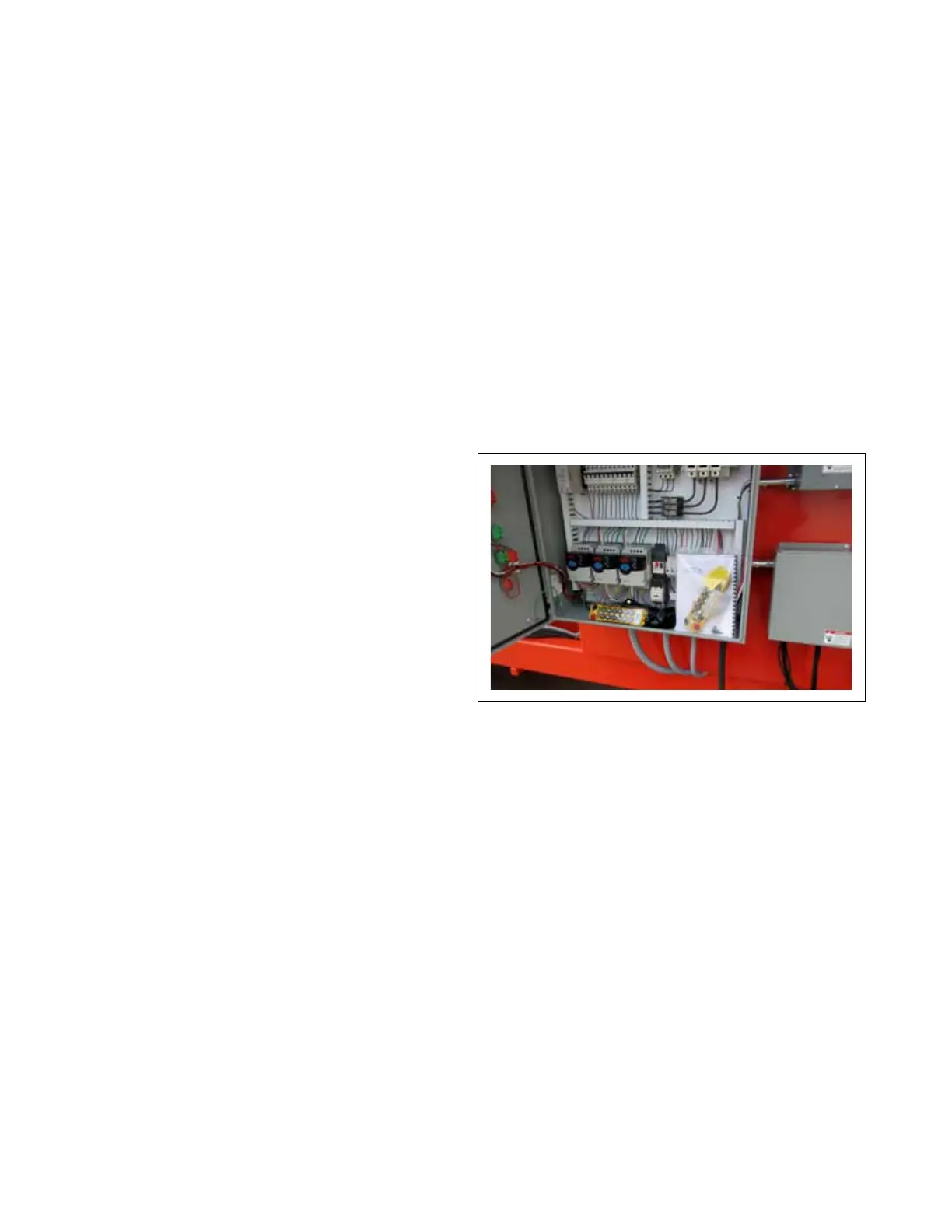
All electric motors are supplied with power through
an individual circuit that includes a circuit breaker,
switch, contactor and overload relay that are all incor-
porated into a single electrical component inside the
control panel. The contactor is the main connecting
device for power to the motor. If the current is greater
than the adjustable dial of the relay, the relay will trip
and cut off power to the coil of the contactor. When
this happens, the contactor dial will move to a new
position and indicates the cause of the overload. It
must be reset before the motor can be restarted.
When a motor will not start:
1. Depress the red OFF button.
2. Depress the green ON button.
3. If the motor will not start, turn machine OFF and
lock out power at the master control panel before
opening the control panel.
4. Reset the contactor dial to the ON contactor open
position.
5. Close and secure the panel door and turn the
power to the machine ON.
6. If the motor still will not start you have one of the
following conditions:
a. The motor is hot and must cool a period of
time before attempting to restart.
NOTE
If your conveyor utilizes single phase
motors, chances are good that the mo-
tor has a thermal overload located on
the electrical junction box of the motor
itself. If this is the case then, fully de-
press the reset button to make certain
that the overload circuit is closed.
b. The overload is adjusted incorrectly for the
amperage of the motor and must be properly
adjusted.
c. The overload and/or contactor has fullled it's
service life and is in need of replacement.
d. The motor is bad and needs replacing.
e. An electrical short exists somewhere in the
circuit.
FIG. 36 MOTOR RESTART



 To Next Page