Need help?
Do you have a question about the McHale V Series and is the answer not in the manual?
Important user information regarding machine registration and warranty voiding.
Details the required qualifications and training for machine operators.
Advice on minimizing paper usage when printing documents.
Specifies the intended agricultural applications and limitations for the baler.
Warning regarding alterations to safety equipment affecting machine validity.
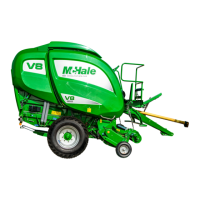
Identifies key components of the baler from the front perspective.
Identifies key components of the baler from the rear perspective.
Provides key dimensions, weights, and speed specifications for the baler models.
Lists the required specifications for the tractor to operate the baler.
Details technical specifications of the baler, including bale chamber and pick-up width.
Outlines tyre details, including field and road pressures.
Lists available optional equipment for the baler.
Emphasizes understanding safety symbols like Warning, Caution, Note, and Environment.
Stresses reading manual, understanding decals, and ensuring operator instruction.
Advice on storing attachments safely to prevent falling hazards.
Lists essential PPE for maintenance work and prohibits mobile phone use.
Recommends keeping first aid, fire extinguisher, and emergency numbers ready.
Warns about entanglement risks with rotating parts and specifies safety precautions.
Defines age-related and general requirements for operating the machine.
Provides critical warnings about blockages and operating hazards.
Offers a guideline procedure for dealing with a fire situation.
Highlights common causes of accidents and the importance of manual and safety rules.
Advises on keeping the machine clean to reduce fire risk.
Warns against attempting to extinguish advanced fires due to explosion risks.
Specifies requirements for safe lifting gear during machine assembly.
Lists crucial safety checks before operation, including substance influence and cover status.
Notes that the danger zone size may vary based on operating conditions.
Provides precautions for operating on slopes, clearance, and avoiding moving parts.
Details checks and requirements before operating the machine on public roads.
States that maintenance should follow the manual or be done by qualified persons.
Prohibits carrying persons or animals on the machine.
Covers personal safety, support, electrical/hydraulic safety, and general warnings during maintenance.
Recommends regular tyre inspection and correct inflation procedures.
Advises on regular cleaning, preferably using an air line.
Guides on checking bearings for wear or damage and listening for unusual noises.
Details safety procedures for inspections within the danger zone while the machine is running.
Provides essential safety guidelines for children on farms.
Advises to stop all work if lightning is a risk.
Recommends finding a safe place to stop if lightning occurs while travelling.
Advises against leaving the cab or starting work until lightning risk has passed.
Covers warnings related to electronic components and potential electromagnetic interference.
Details safety precautions for the hydraulic system, including pressure limits and hose checks.
Discusses noise levels during operation and recommendations for reducing exposure.
Outlines precautions to prevent fires, including awareness of inflammable crops and flammable materials.
Explains procedures for maintenance and the design of machine covers.
Details safety for working on the bale chamber and handling sharp knives.
Warns about the sharpness of the netter knife.
Shows the placement of safety decals on the front and side of the machine.
Explains the meaning of various safety decals found on the machine.
Covers daily checks, operation, maintenance safety, and tractor shutdown procedures.
Warnings regarding hydraulic accumulators, crush areas, and road use disconnections.
Safety advice for PTO shaft adjustments, wheel direction, and joint angle limits.
Covers chain oil, chamber door locks, jacking points, and PTO speed limits.
Explains the content and meaning of each field on the machine's serial number plate.
Provides instructions and safety warnings for lifting the machine safely.
Details safe procedures for jacking the machine, including support requirements.
Warns against relying only on a hydraulic jack and recommends additional support.
Lists essential requirements for the tractor, including hitch, spools, and PTO shaft.
Advises using good quality oil and regular filter changes for the tractor's hydraulic system.
Explains how to install the electronic control box in the tractor cab.
Details the procedure for attaching the baler to the tractor's drawbar.
Warning about using only the specified power supply for the control system.
Advises checking compatibility between tractor drawbar and machine coupling.
Describes how to use a padlock to prevent unauthorized use of the machine.
Explains the function and attachment of the break-away brake system.
Details the correct procedure for attaching the PTO shaft and safety precautions.
Reminder to release the hand brake before moving the machine.
Stresses the importance of intact PTO guarding to prevent serious injury.
Warns about selecting the correct PTO speed to avoid gearbox damage.
Lists the required hydraulic and electrical connections for attaching the baler to the tractor.
Critical warning to turn off the tractor before connecting hydraulic hoses.
Provides instructions for connecting the control box to the tractor's power supply.
Emphasizes the necessity of a free-flow tank return connection to prevent damage.
Warns against connecting the control box to a power supply exceeding 12 V.
Explains lighting system connection and pre-road travel check.
Details the specifications for high-quality net rolls suitable for the machine.
Advises on the minimum number of net layers based on crop conditions.
Provides guidance on protecting net rolls from damage and moisture.
Warns about health hazards and environmental impact of burning plastics.
Instructions for cleaning and maintaining the netting system components.
Covers procedures for loading net rolls and operating the netter system.
Advises caution with heavy rolls, glove use for knives, and safety reminders.
Step-by-step guide for replacing or fitting a net roll onto the machine.
Describes the process after replacing the net roll and resuming baling.
Explains how to adjust the number of net layers applied to a bale.
Details net setting adjustments, crop type considerations, and mode preferences.
Instructions for installing and removing chopper unit knives.
Covers correct installation, protective gloves, and removal procedures.
Covers knife/blank removal, lever operation, and checking knife engagement.
Checks knife alignment, lever return, and compartment door safety.
Explains knife storage, sharpening procedures, and warnings against grinding disks.
Describes automatic oiling and manual greasing systems, including adding oil.
Explains manual greasing points and intervals using centralized grease blocks.
Covers the optional automatic greasing system and replacing cartridges.
Details additional grease points and procedures for cartridge rotation and lube count reset.
Explains tension arm lock operation and oil pump adjustment procedures.
Details how to adjust oil pump delivery rates and ranges.
Covers gearbox oil draining, filling, and disposal procedures.
Lists recommended tyre pressures for field and road use and weekly check reminder.
Explains wheel chock purpose, location, and safety warnings.
Details usage of drawbar stands and emphasizes solid footing.
Explains drawbar adjustment and warns about qualified personnel requirement.
Covers PTO shaft adjustment, maintenance, and safety warnings.
Procedure for fitting PTO shafts and maintaining angle limits to prevent damage.
Shows recommended grease quantities and intervals for PTO shaft points.
Explains the use of softkeys for navigation and function selection on the control box.
Details the functions of each button on the control box in Manual and Automatic modes.
Guides on setting machine specifications like twine or knives via the control box.
Explains how to select between net and twine binding options.
Describes the initial display, working display, and softkey functionality.
Explains the Manual, Automatic, and Semi modes of operation.
Describes bale formation, diameter increase, and full bale warnings.
Details manual net feeding and cutting procedures.
Explains automatic net feeding and cutting.
Describes Semi mode operation for netting, useful on hills.
Details information on the main screen and accessing extra data.
Provides steps for unblocking the machine's floor.
Instructions for raising/lowering knives and monitoring pressure.
Critical warning against baling with excessively high knife pressure.
Explains bale shape indicators and their use in steering.
Manages bale and lube counters, subtotals, and grand totals.
Allows adjustment of controller settings like contrast, clock, and volume.
Lists and explains various warning messages displayed on the control unit.
Lists essential checks and procedures before operating the baler on public roads.
Emphasizes the necessity of a thorough inspection before road travel.
Advises checking wheel areas and brake hubs for crop material buildup.
Instruction to fix pick-up guide wheels and secure PTO stands for transport.
Explains the function and activation of the break-away brake system.
Reminder to release the hand brake before moving the machine.
Recommends a break-in period for the machine and subsequent chain adjustments.
Highlights the importance of proper swath preparation for optimal baling.
States that swath width is key for proper bale formation.
Details how to adjust the pick-up reel height for optimal ground contour following.
Crucial instruction to set the spool lever to float position for height adjustment.
Warns about potential tine breakage and wear from setting the pick-up too low.
Explains how to adjust the crop roller and fingers for smooth crop flow.
Describes the unblocking system and procedures for clearing blockages.
Details the chopping system, knife options, and operation.
Strong warning against approaching the pick-up reel while it's rotating.
Explains the selection and operation of optional selectable knives.
Describes how knife position and pressure are monitored and displayed.
Critical warning against baling with excessively high knife pressure.
Details the automatic netting cycle, including beeps and net cutting.
Explains the bale density gauge and how pressure relates to bale density.
Guides on setting bale density pressure based on crop type and desired density.
Warning against exceeding the maximum bale density pressure.
Explains the net tension gauge and its relation to net stretch and bale shape.
Details the use of the chamber door lock for safety during maintenance.
General safety warning before working inside the baling chamber.
Explains the tension arm lock mechanism for releasing belt pressure during maintenance.
Step-by-step guide to operating the tension arm lock.
Crucial reminder to lock the chamber door before starting work inside.
Describes hand brake and air brake systems.
Details connecting and disconnecting air brake hoses.
Procedure for moving the machine without an air brake system.
Warning that movement procedure is for emergency use when attached to tractor.
Describes the optional hydraulic drum brake system and tractor connection.
Critical warning that brake drum work requires qualified personnel.
Essential safety precautions and step-by-step guide for checking and adjusting brakes.
Routine maintenance for air brakes, hoses, and cables.
Details how to adjust pick-up float springs for optimal ground contour following.
Explains adjustment methods for Type A and Type B float springs.
Crucial reminder to set the spool control lever to float position.
Emphasizes the importance of properly tensioned drive chains.
Details how to adjust the main drive chain tension.
Explains how to adjust the lower drive chain tension.
Guides on adjusting the pick-up reel tine chain.
Details how to adjust the reel drive chain tension.
Explains how to adjust the rotor duplex chain tension.
Describes belt tracking and when adjustment might be needed.
Critical safety warning before approaching the machine for adjustments.
Initial steps for belt alignment, including chamber preparation.
Checks door rollers, belt movement, and adjusts tracking roller.
Final tightening, running machine to check tracking, and alignment confirmation.
Importance of preventative maintenance for machine upkeep.
Emphasizes immediate replacement of faulty components.
Lists maintenance intervals for ensuring machine longevity and safety.
Specific checks and adjustments required within the first 5 working hours.
Crucial safety reminder regarding PPE and following instructions.
Strict safety protocol for inspections within the danger zone while the machine is running.
Daily maintenance checks and greasing tasks.
Lists weekly, monthly, and annual maintenance tasks.
Procedure for cleaning the machine at the end of the season.
Indicates low oil for the net tension pump and provides safety/environmental rules.
Provides tables of recommended torque values for various fasteners.
Note regarding torque values for different materials or finishes.
Comprehensive instructions for preparing the machine for storage at the end of the season.
Checklist of tasks required to prepare the machine for the start of the season.
Introduction to the troubleshooting section and how to use it.
Common issues and solutions related to the pick-up slip clutch.
Common issues and solutions related to the PTO slip clutch.
Troubleshooting steps for issues with chamber pressure loss.
Solutions for problems where the machine fails to cut the net.
Troubleshooting steps when the net is not cut correctly.
Common problems and solutions related to bale rotation and intake.
Troubleshooting common issues affecting bale quality and density.
Solutions for problems with net feeding during automatic operation.
Troubleshooting steps if the greasing system is not functioning.
Solutions for when the drop floor movement is restricted.
Troubleshooting excessive horsepower usage during chopping.
Solutions for knives not staying in the up position during chopping.
Addresses issues with low or dropping knife pressure.
Troubleshooting problems related to excessively high knife pressure.
Solutions for chopper knives failing to activate or disengage.
Explains the Declaration of Conformity and its validity.
Details the Pre-Delivery Inspection form and its checks.
Guidelines for pre-sale checks during ownership transfer.
Information on the limited warranty conditions for the product.
Visual guide illustrating the steps for adjusting the PTO shaft.
Tables for converting units of length, area, volume, and mass.
Tables related to flow rates in various units.
Tables related to pressure measurements.
Tables related to speed measurements.
Tables related to torque measurements.
Formulas for converting temperatures between different scales.
 General
| Pick-Up Width | 2.1 m |
|---|---|
| Bale Density | Adjustable |
| Model | V Series |
| Type | Round Baler |
| Bale Wrap System | Optional |

 To Next Page