EasyManua.ls Logo

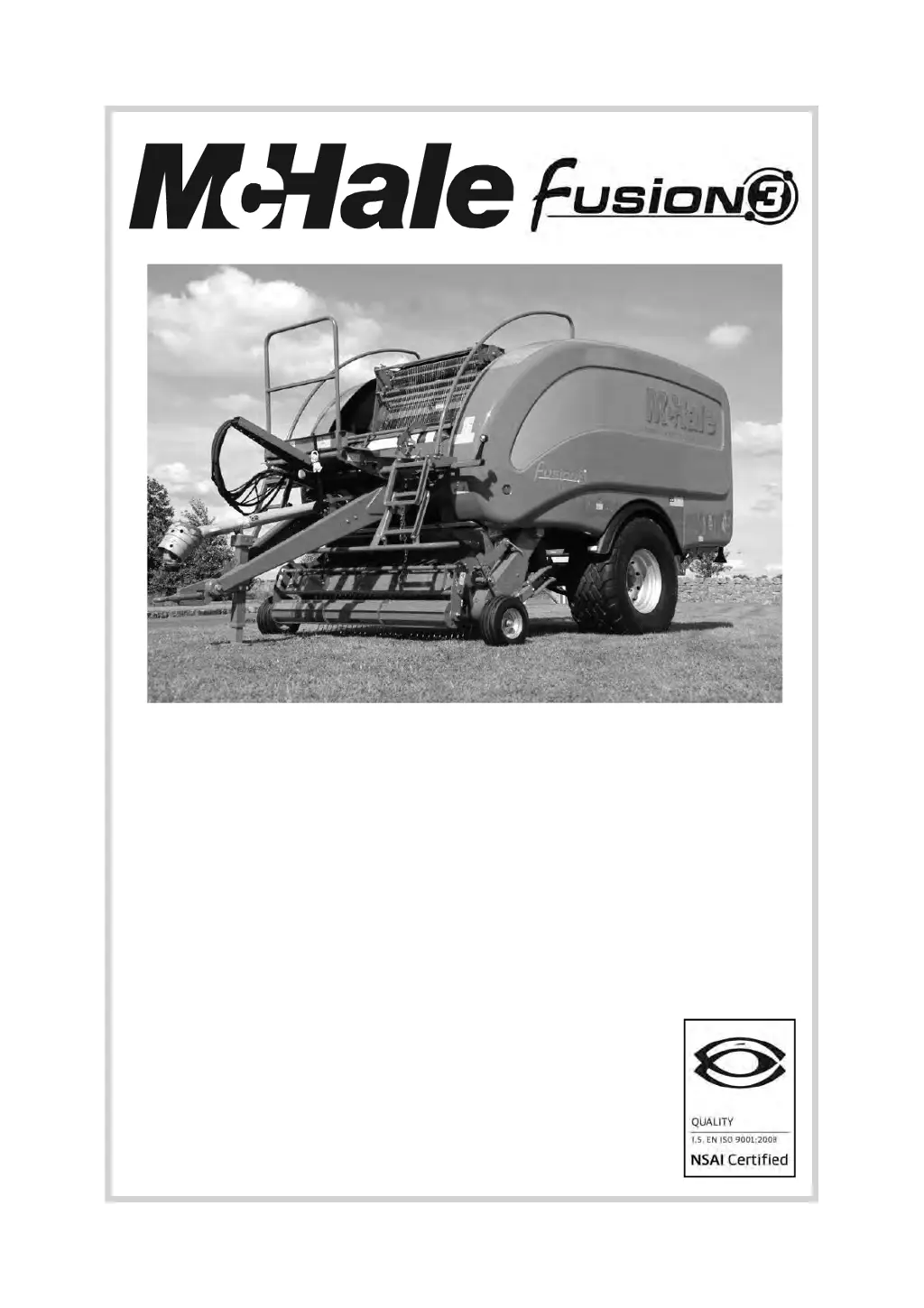
McHale Fusion 3 - User Manual

McHale Fusion 3
120 pages
Print Icon
To Next Page IconTo Next Page
Loading...
McHale
Ballinrobe
Co. Mayo, Ireland
Tel: +353 94 9520300
Fax: +353 94 9520356
Email: sales@mchale.net
Website: www.mchale.net
CLT00485_1
Fusion 3 Baler & Wrapper
Operator Instructor Manual
Issue 1

Table of Contents

Other manuals for McHale Fusion 3

Questions and Answers

  • R
    Robert RossAug 19, 2025
    What to do if I have issues with bale quality/density in McHale Farm Equipment?
    • T
      Tamara KellerAug 19, 2025
      If you're experiencing issues with bale quality or density when using your McHale Farm Equipment, there are a few potential causes. The density may be set too low for the current crop conditions, so try increasing it. Also, check for any crop buildup at the tailgate's lower closing point and clean it away. Reducing your ground speed will also allow the machine to pack the bale more effectively.
  • N
    ngreenAug 21, 2025
    Why is the PTO slip clutch going off easily on my McHale Farm Equipment?
    • N
      nicholasgonzalezAug 21, 2025
      If your McHale Farm Equipment's PTO slip clutch is activating frequently, it could be due to several reasons. First, check if the rotor chain is loose and tighten it as needed. Ensure your swath preparation aligns with the machine setup recommendations. Examine the knives for bluntness and sharpen them if necessary. Finally, reduce chamber pressure or ground speed if they are too high.
  • R
    Rhonda MossAug 25, 2025
    How to reduce horsepower usage in McHale Farm Equipment?
    • G
      Glenn SandersAug 25, 2025
      If your McHale Farm Equipment is using more horsepower than expected, it might be because the knives in the chopper unit are dull, or the bale density is set too high. To resolve this, remove the knives, sharpen them, and then replace them.
  • W
    whitetoddAug 26, 2025
    Why are the knives not remaining up while chopping in my McHale Farm Equipment?
    • M
      Melissa BrownAug 26, 2025
      If the knives on your McHale Farm Equipment are not staying up while chopping, it could be due to blunt knives or broken roll pins in the knife activator arms. Try removing the knives and sharpening them. If that doesn't solve the issue, replace any broken roll pins.
  • N
    Nathan SchmidtAug 27, 2025
    What to do if McHale Farm Equipment machine won’t cut the net?
    • D
      David MorganAug 28, 2025
      If your McHale Farm Equipment isn’t cutting the net correctly, there are several possible reasons. The bill hook might be worn and catching on the plastic reset bushing, in which case you should replace it. Alternatively, the bill hook might have too much free play and be catching on the plastic reset bushing, so try realigning it. Finally, the knife might be jammed or lack sufficient spring pressure; check for free movement and increase spring pressure if needed.
  • M
    Miguel SmithAug 30, 2025
    Why is the net not cut correctly in McHale Farm Equipment?
    • B
      Brian ButlerAug 30, 2025
      If the net is not being cut correctly by your McHale Farm Equipment, the knife may be blunt or rusty. Try fitting a new knife. If the knife has grease on it (especially on a new machine or after winter storage), carefully clean the grease off, using protective clothing. Also, the knife spring might be too slack; adjust the knife spring pressure, which is located behind the netter drive gears.
  • L
    Lisa WrightSep 1, 2025
    Why is the pick up slip clutch going off easily on my McHale Farm Equipment?
    • N
      Nicole WeberSep 1, 2025
      If the pick-up slip clutch on your McHale Farm Equipment is activating too easily, it may be because the pick-up is set too close to the ground. Adjust the pick-up to a higher position to prevent the tines from catching on the ground. Also, check if the pick-up chains are loose and tighten them.
  • F
    fitzgeraldwalterSep 3, 2025
    What to do if knife pressure is too low in McHale Farm Equipment?
    • T
      Timothy MorrisSep 3, 2025
      If your McHale Farm Equipment's knife pressure is too low or dropping completely, first check all hydraulic hoses and tighten them if necessary to address potential leaks. If the issue persists, there may be leakage in the hydraulic valve, and you should contact a McHale dealer.
  • J
    John SnowSep 5, 2025
    Why drop floor won’t move in McHale Farm Equipment?
    • P
      peggy66Sep 5, 2025
      If the drop floor on your McHale Farm Equipment is not moving up or down, it could be due to a faulty hydraulic valve, in which case you should contact a dealer. Alternatively, there might be a low power supply to the control box, so check the power source.
  • A
    awashingtonSep 7, 2025
    What causes knife pressure to be too high in McHale Farm Equipment?
    • D
      David BrownSep 7, 2025
      If the knife pressure on your McHale Farm Equipment is too high, it might be because the knives have been raised to the maximum pressure. Lower the knives and then raise them again to set them at the correct pressure. If the issue continues, there may be a faulty hydraulic valve, and you should contact a McHale dealer.

Summary

Introduction

Product Information

Designated Use of the Machine

Defines the intended agricultural applications and limitations of the machine.

Front View

Illustrates the front of the machine with numbered components and their functions.

Rear View

Shows the rear of the machine with numbered components and their functions.

General Dimensions & Specifications

Lists key physical dimensions, weight, speed, and brake system specifications.

Tractor Attachment

Details required tractor connections like drawbar, PTO speed, lighting, and hydraulics.

Machine Specifications

Provides specifications for bale chamber, net tying, plastic film, and dispenser.

Tyre Specifications

Lists tyre types and their recommended pressures.

General Safety

Be Aware of All Safety Information

Explains safety symbols and the importance of paying attention to warnings.

Follow All Safety Instructions

Emphasizes reading instructions, understanding decals, and ensuring their presence.

Store All Items Carefully

Advises on secure storage of attachments to prevent falling hazards.

Protective Clothing

Recommends appropriate clothing, hearing protection, and avoiding distractions.

In Case of Emergencies

Stresses the need for readily available emergency equipment and phone numbers.

Stay Clear of Rotating Elements

Warns against entanglement with moving parts and emphasizes safety precautions.

Operating the McHale Fusion 3

Provides critical safety instructions for operating the machine safely.

In the Event of a Fire

Offers a guideline procedure for dealing with fires involving the machine.

General Safety Warnings

Covers essential safety principles, safety devices, and the 'Danger Zone'.

Specific Safety Warnings

Electronic Safety Warnings

Addresses potential influences from electromagnetic transmissions and cable integrity.

Hydraulic Safety Warnings

Covers maximum pressure, working on pressurized systems, and hose maintenance.

Noise Level

Discusses noise regulations and recommendations for operating the machine.

Fire Precautions

Lists precautions to prevent fires, such as keeping the machine clean and avoiding open flames.

Special Safety Devices;Instructions

Details on cover operation, bale chamber procedures, and knife handling.

Safety Instruction Decal Locations

Shows diagrams indicating the placement of safety decals on the machine.

Safety Warnings & Instructions Explained

Explains the meaning of various safety decals and their associated part numbers.

Description of the Serial Number Plate

Explains the meaning of each item listed on the machine's serial number plate.

Machine Lifting Guidelines

Provides essential safety instructions and requirements for lifting the machine.

Tractor Requirements & Preparation

Tractor Requirements

Specifies the recommended tractor size, hydraulic system, and required connections.

Control Box Installation

Guides on the proper placement and connection of the electronic control box.

Attaching to Drawbar

Explains how to attach the machine to the tractor's drawbar correctly.

Attaching ‘Break-away’ Brake

Details the procedure for connecting the 'break-away' brake rope for safety.

Attaching the Fusion 3 to a 540 rpm PTO

Provides instructions for connecting the PTO shaft at the correct speed.

Lighting System

Covers the connection of the tractor's 7-pin lighting socket.

Fusion 3 Set-up & Tractor Hydraulic System

Explains the importance of correct hydraulic setup to prevent damage.

Which Hydraulic System is Used?

Helps identify the tractor's hydraulic system type (Open Centre, Closed Centre, Load-Sensing).

Hydraulic Spool Valve Setup

Details the procedure for setting up the hydraulic spool valves for different systems.

Attaching Hydraulic Hosing to the Tractor

Guides on connecting hydraulic hoses and electrical connections to the tractor.

Connecting the Control Box

Explains how to connect the control box to the tractor's power supply.

Baler Requirements & Preparation

Net Requirements

Specifies the quality and characteristics of net rolls recommended for the machine.

Care of the Net Roll

Advises on protecting net rolls from damage and moisture.

Care of the Net Wrapping System

Outlines cleaning procedures for the net wrapping system rollers.

Loading & Operating the Netter System

Details the steps for changing or fitting a net roll and operating the system.

Net Cutter Setting

Explains how to adjust the net cutter for optimal bale wrapping.

Net Tension Bar Setting

Describes how to adjust the net tension bar for proper net application.

Chopper Unit Knife Removal & Installation

Provides detailed instructions for safely removing and installing chopper unit knives.

Automatic Lubrication System

Explains the function and maintenance of the automatic greasing and oiling system.

Gear Box Oil

Details the procedure for draining and refilling the gearbox oil.

Tyre Inflation Pressures

Lists the recommended tyre pressures for different tyre types.

Wheel Chocks

Explains the use of wheel chocks for securing the baler when detached.

Drawbar and PTO Shaft Stand Usage

Guides on the correct usage of drawbar and PTO shaft stands.

Drawbar Adjustment

Provides instructions for adjusting the drawbar to ensure the machine is level.

PTO Shaft Adjustment & Maintenance

Covers PTO shaft length adjustment, angles, and lubrication intervals.

Electronic Control System

Control Box Functions

Details the functions of each button and display element on the control box.

Control Box Features

Explains the working display, manual/automatic modes, and screen options.

Menu Structure

Outlines the hierarchical structure of the control box menus and sub-menus.

Warning Messages

Lists common warning messages and the steps to resolve them.

Simulating a “Bale to Wrapping” Cycle

Provides a procedure for testing the machine's cycle without baling material.

Wrapper Operation

Loading Plastic Film

Step-by-step guide for loading plastic film rolls into the dispensers.

Plastic Film Requirements

Specifies requirements for plastic film and how to determine wrap rotations.

Wrapping Process

Describes the automatic wrapping process, including bale transfer and film cutting.

Dispenser Adjustment

Explains how dispenser rollers are set for film stretching.

Cut and Hold System

Details the operation and maintenance of the film cut and hold mechanism.

Road Traffic Safety & Operation

Before Travelling on Any Public Roadway

Lists essential pre-travel checks and safety considerations for public roads.

Road Transportation

Covers procedures for securing the machine during road transport.

Road Transportation with Side Tip Attached

Provides specific warnings and limitations for transporting with a side tip attachment.

‘Break-away’ Brake

Explains the function and connection of the 'break-away' brake system.

Field Operation & Baler Adjustments

Break-in Period

Recommends an initial break-in period for the machine after new use.

Swath Preparation

Emphasizes the importance of correct swath width and preparation for bale formation.

Pick-up Reel Height Adjustment

Details how to adjust the pick-up reel height for optimal ground following.

Crop Guard Adjustment

Explains how to adjust the crop guard plate for even material flow.

Unblocking System

Describes the procedure for clearing blockages in the feeding channel.

Chopping System

Discusses the knife chopping system and recommendations for dry material.

Selectable Knives

Explains how to select the number of knives for the chopping system.

Bale Density Gauge

Describes the function of the bale density gauge and its readings.

Setting Chamber Pre-Charge Pressure

Guides on setting the chamber pre-charge pressure for different crop conditions.

Chamber Door Lock

Explains the use and function of the chamber door lock mechanism.

Spare Film Holders & Door Latch Safety

Details on storing spare film rolls and the safety of door latches.

Adjusting Pick-up Float Springs

Instructions for adjusting the pick-up float springs for ground contour following.

Chain Adjustments

Provides a general guide for adjusting various drive chains on the machine.

Accessories & Optional Equipment

Drawbar Hitch Options

Describes available drawbar hitch options (low and high).

Stand Options

Details the different types of drawbar stands available for the machine.

Brake Options

Explains the hydraulic and air brake systems available for the machine.

Tyre Options

Lists available tyre options and their corresponding part numbers.

Side Tip Option

Describes the purpose and benefits of the side tip option for bale handling.

Selectable Knives

Explains the system allowing selection of 0, 11, 12, or 23 knives.

Crop Roller

Describes the function of the crop roller in aiding crop transfer.

Dispenser Gear Options

Lists available gear options for dispensers to adjust film stretching.

Attachments

Side Tip

Details the side tip attachment, its operation, safety, and road transport.

Machine Maintenance

Maintenance Intervals

Outlines recommended maintenance tasks and their frequency (hours, daily, weekly, monthly, yearly).

Storage

End of Season

Provides comprehensive instructions for preparing the machine for storage at the end of the season.

Start of Season

Lists essential checks and procedures for preparing the machine for use at the start of the season.

Trouble Shooting

Trouble Shooting Overview

Introduces the troubleshooting section and explains its purpose.

Machine Using Higher Than Expected Horse Power When Chopping

Identifies symptoms, reasons, and solutions for high power usage during chopping.

Pick Up Slip Clutch Going Off Easily

Addresses issues with the pick-up slip clutch engaging or causing tine damage.

P.T.O Slip Clutch Going Off Easily

Lists common reasons and solutions for the PTO slip clutch disengaging.

Knives Not Remaining Up While Chopping

Explains causes and remedies for knives not staying in the 'up' position.

Knife Pressure Too Low or Dropping Completely

Covers issues related to low or dropping knife pressure and their causes.

Knife Pressure Too High

Identifies reasons for excessive knife pressure and potential damage.

Chamber Losing Pressure

Discusses causes of chamber pressure loss, such as oil leaks.

Issues with Bale Rotation;Intake

Addresses problems with bale rotation or crop intake into the chamber.

Issue with Bale Quality;Density

Provides solutions for poor bale quality or incorrect density.

Machine Won’t Cut the Net

Details troubleshooting steps for the net cutting mechanism.

Chopper Knives Wont Move (Activate;Disengage)

Explains issues with the chopper knives not activating or deactivating.

Net Not Cut Correctly

Covers problems related to the net cutting mechanism not functioning properly.

Drop Floor Wont Move (Up or Down) - Pick Up Moves

Addresses issues with the drop floor movement while the pick-up is operational.

Greaser Not Working

Troubleshoots problems with the automatic greasing system.

Certification & Warranty

Declaration of Conformity

Refers to the document certifying the machine's compliance with EC directives.

PDI Form

Explains the Pre-Delivery Inspection form and its importance.

Change of Ownership Pre-checks

Recommends using the PDI form for used machine sales and familiarizing new owners.

Limited Warranty

Outlines the terms and conditions of the limited warranty for the machine.

McHale Fusion 3 Specifications

General IconGeneral
BrandMcHale
ModelFusion 3
CategoryFarm Equipment
LanguageEnglish

Related product manuals