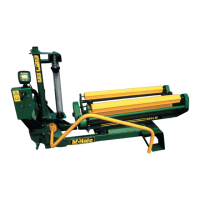
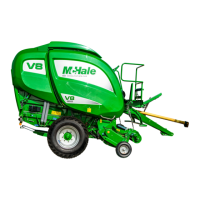
McHale Fusion 3 Baler & Wrapper
89
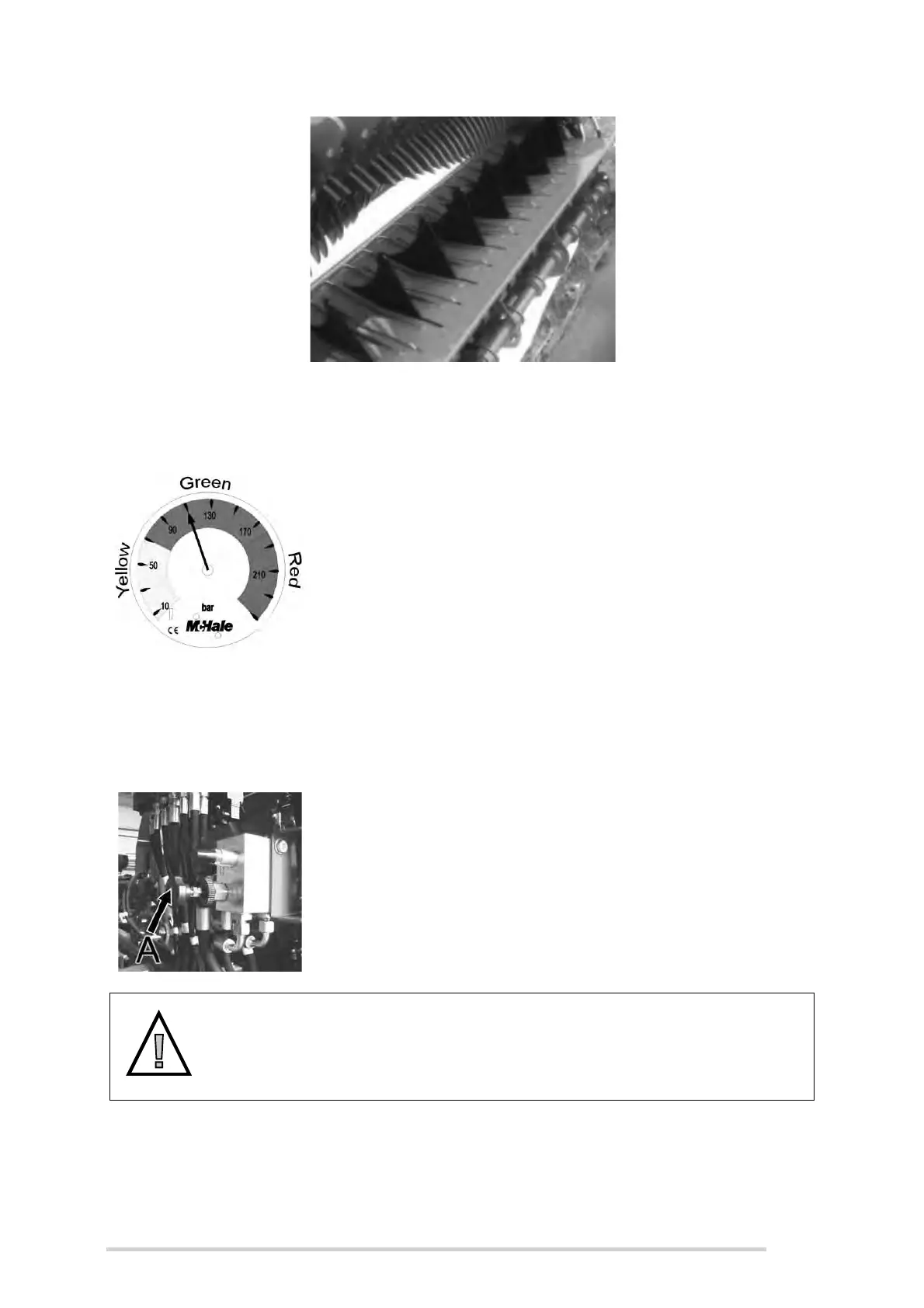
Figure 10.e - Selectable knives
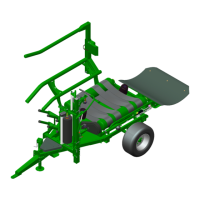
10.8 Bale density gauge
The bale density gauge, is used to indicate the pressure
applied to the top door rams (on the small side of the rams).
When the top door is closed, and no material in the baling
chamber, this is known as “chamber pre-charge pressure”.
This pressure will then increase at the end of the bale
forming cycle, due to the oil in the cylinders being forced
into the accumulator. As material begins to fill up the baling
chamber, it pushes the door rams open ever so slightly.
This can cause the gauge to go into the red and this is
normal operation. However, pressure should never go
above 200 bar, if it does consult your McHale dealer.
10.9 Setting chamber pre-charge pressure
The bale density gauge is divided up into increments of 20
bar per increment and has a yellow zone, green zone and a
red zone, as a quick reference during machine operation.
When baling drier materials, such as straw or hay, McHale
recommend setting the chamber pre-charge pressure
between 70 and 110 bar pressure. When baling wetter
materials, such as grass for silage, a pressure of between
110 and 160 bar is recommended.
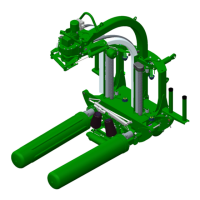
Chamber pre-charge pressure is set at the door charge valve, shown above and is
located in the hydraulic section (inside the front right door panel), by following the below
procedure:
CAUTION: Never adjust chamber pre-charge pressure above 160
bar
The chamber pre-charge pressure should never be adjusted above 160
bar pressure in any case, damage to machine components may result!


 To Next Page