MFJ-941EK Tuner Kit Instruction Manual
- 27 -
OPERATING INSTRUCTIONS
MFJ-941EK Operating Instructions
General Installation Suggestions:
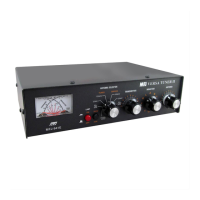
As its "manufacturer", you are now quite familiar with the MFJ-941EK, its four
basic station-accessory functions, and the location of all the controls, jacks, and
switches. Acquiring this kind of inside-out knowledge is one of the true benefits
and satisfactions that come with building a kit! Now that the project is complete,
here are some common do's and don'ts to guide you when installing it at your
station:
[ ] Do install it where you'll have convenient access to all front panel controls.
[ ] Don't install it where you could be exposed to RF-energized open-wire lines.
[ ] Do install it using a short 50-Ohm coax cable.
[ ] Don't install a balun between the transceiver and the tuner.
[ ] Do connect the tuner chassis directly to your station ground.
[ ] Don't exceed 300 Watts in either the Tuned or Bypass mode.
[ ] Do use the dummy load option if you use a radio with a tunable PA.*
Dummy Load Option:
Standard operating procedure for a radio with a tunable PA is to "tune up" into a
50-Ohm load before connecting it to the tuner. If you're running a rig with a tube
PA, we recommend installing a 50-Ohm load such as the MFJ-260C permanently
at Ext. Dummy Load. Then, use this setup procedure:
[ ] Set the Antenna Selector to Bypass, Dummy Load.
[ ] Tune your transceiver PA stage into the 50-Ohm Load.
[ ] Switch to the desired antenna in Tuned mode.
[ ] Match the selected antenna using the T-network controls.
Once your radio has been tuned to the dummy load, don't change PA settings
while adjusting the tuner. Let the tuner do the work! If you use a solid state radio
with fixed 50-Ohm output, the pre-tuning procedure is not needed (or possible).
1. Using the SWR/Wattmeter Function:
The SWR metering circuitry in your tuner is similar to MFJ's popular MFJ-860
stand-alone power meter. In fact, with the Antenna Selector in Bypass mode, it
functions exactly the same. However, when switched into Tuned mode, it
becomes an integral part of the tuner circuitry and is essential for adjusting the T-
network properly.


 To Next Page