^
Note: all temperatures are approximations and must be varied according to the
thickness and preparation of the meat. The chart below is a suggested guide
only. Personal taste and size of serves will vary times and temperatures. We
recommend you monitor cooking results for best outcomes.
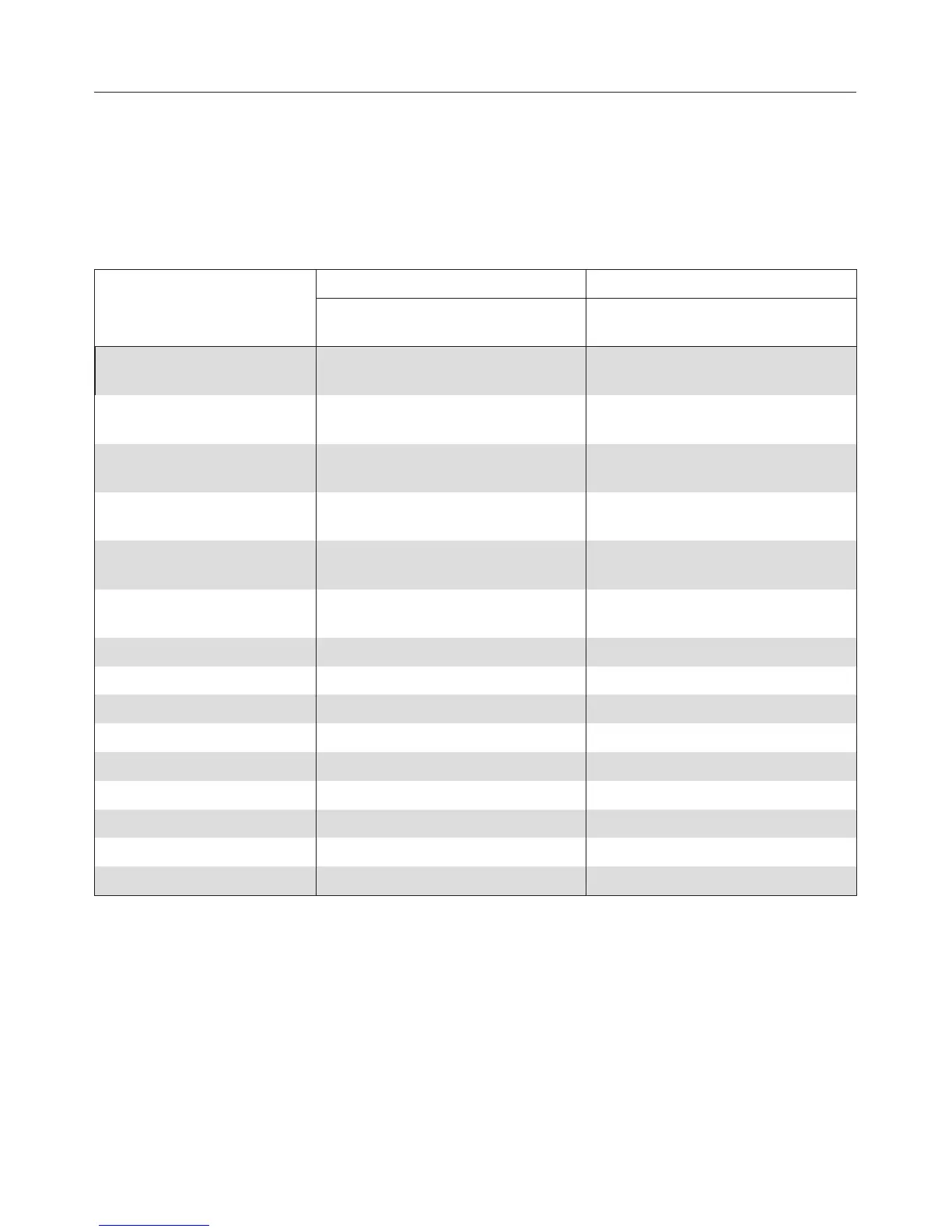
Use shelf level 1
Food
Fan Plus U Conventional Heat V
Temperature
in °C
1)
Time
in min.
2)
Temperature
in °C
1)
Time
in min.
2)
Topside of beef
(approx. 1 kg)
160–180 50–80 180–200 50–80
Beef fillet, Roast beef
3)
(approx. 1 kg)
190–210 20–50 210–230 20–50
Haunch of venison
(approx. 1 kg)
160–180 90–120 180–200 90–120
Saddle of venison
(approx. 1 kg)
160–180 60–90 180–200 60–90
Roast pork (Leg, shoulder,
neck, approx. 1 kg)
160–180 70–100 180–200 70–100
Pork with crackling
(approx. 1 kg)
160–180 70–120 180–200 70–120
Gammon joint (approx. 1 kg) 170–190 60–70 200–220 60–70
Meat loaf
3)
(approx. 1 kg) 160–180 80–90 170–190 80–90
Veal (approx. 1 kg) 170–190 70–120 190–210 70–120
Leg of lamb (approx. 2 kg) 160–180 90–120 180–200 90–120
Rack of lamb
3)
170–190 50–60 190–210 50–60
Poultry (approx. 1 kg) 160–180 65–75 180–200 65–75
Poultry (approx. 2 kg) 160–180 100–120 180–200 90–110
Poultry (approx. 4 kg) 160–180 150–180 180–200 150–180
Whole fish (approx. 1.5 kg) 160–180 35–55 190–210 35–55
The data for the recommended function is printed in bold.
1) Temperature in a covered pot.
If open roasting, set the temperatures 20 °C lower.
2) Unless otherwise stated, the times given are calculated on the basis of an oven which has not been
pre-heated.
3) Pre-heat the oven.
In general, if a range of temperatures and times is given, it is best to select a temperature in the
middle and to check the food after the shortest time.
Roasting chart
34



 To Next Page