EasyManua.ls Logo

miniDSP UMIK-2 - User Manual

miniDSP UMIK-2
21 pages
Print Icon
To Next Page IconTo Next Page
Loading...
miniDSP Ltd, Hong Kong / www.minidsp.com / Features and specifications subject to change without prior notice 1
UMIK-2
OMNI-DIRECTIONAL MEASUREMENT MICROPHONE
User Manual
Question and Answer IconNeed help?

Do you have a question about the miniDSP UMIK-2 and is the answer not in the manual?

Summary

Important Information

Disclaimer and Warranty Terms

Legal notice regarding product use, potential damage, and warranty coverage limitations.

FCC Class B Statement

Compliance information for FCC regulations regarding digital devices and potential interference.

Product Overview

Installation and Configuration - Windows

Download and Driver Installation

Steps for downloading software and installing the USB driver on Windows.

Control Panel Configuration

Setting the UMIK-2 as default audio device and configuring sample rate/bit depth.

UAC2 Control Panel

Using the UAC2 control panel for status and input channel bit depth settings.

Installation and Configuration - Mac OS X

Download Software for macOS

Instructions for downloading software and driverless operation for macOS.

Audio MIDI Setup Configuration

Configuring sample rates and channels in macOS Audio MIDI Setup.

Download Calibration Files

Microphone Positioning and Orientation

Free-Field Measurement

Guidelines for positioning the microphone for free-field speaker measurements.

In-Room Measurement for Speakers

Tips for positioning the microphone for in-room speaker measurements.

In-Room Measurement for Subwoofers

Microphone orientation and calibration file choice for subwoofer measurements.

Using the UMIK-2 with Dirac Live

Using the UMIK-2 with Room EQ Wizard

Initial Configuration in REW

Steps for initial setup, detecting the UMIK-2, and checking for calibration files.

REW Calibration File Loading

Loading specific calibration files and configuring input/output devices in REW.

Configuring ASIO for REW (Windows)

Setting up ASIO4ALL for audio output and UMIK-2 input within REW on Windows.

Additional Information

Technical Specifications

Detailed technical specifications of the UMIK-2, including controller, ADC, capsule, and connectivity.

Obtaining Support

Guidance on troubleshooting and contacting miniDSP support via forums and the support portal.

Overview

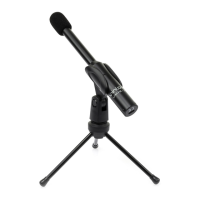
The miniDSP UMIK-2 is an omni-directional USB measurement microphone designed for accurate acoustic measurements. It is a versatile tool suitable for a wide range of audio applications, from speaker design and room correction to general acoustical measurement and characterization. The microphone's design emphasizes ease of use and broad compatibility, making it accessible to both enthusiasts and professionals.

Function Description

The primary function of the UMIK-2 is to capture sound for precise acoustic analysis. It achieves this by converting sound waves into digital audio signals that can be processed by a computer. Its omni-directional pickup pattern means it captures sound equally from all directions, which is crucial for accurate room measurements where reflections and ambient sound are significant. The microphone features a low-noise ½-inch capsule and a low-noise A/D converter, ensuring high-fidelity signal acquisition. It supports a wide range of sample rates, from 44.1 kHz up to 192 kHz, allowing for detailed analysis across the audio spectrum.

A key aspect of the UMIK-2's functionality is its reliance on unique calibration files. Each UMIK-2 microphone is individually measured, and a specific calibration file is generated to correct its raw frequency response. This ensures that the measurements taken with the UMIK-2 are as accurate as possible, compensating for any minor variations in the microphone's characteristics. Two types of calibration files are provided: an on-axis file for measurements where the microphone is pointed directly at the sound source, and a 90-degree file for multichannel or surround-sound applications where the microphone is typically pointed towards the ceiling to capture the overall room response.

The UMIK-2 is designed for driverless operation across various operating systems, including macOS, Linux, Android, and iOS, simplifying its integration into diverse setups. For Windows users, a dedicated ASIO driver is provided, which enhances compatibility with professional audio software and ensures low-latency performance. This broad compatibility makes the UMIK-2 a flexible choice for different measurement environments and software ecosystems.

Usage Features

The UMIK-2 offers several features that streamline its usage in various acoustic measurement scenarios:

  • Driverless Operation (macOS, Linux, Android, iOS): For these operating systems, the UMIK-2 functions as a standard USB Audio Class 2.0 device, requiring no additional driver installation. This plug-and-play capability allows users to quickly connect the microphone and begin measurements without complex setup procedures.
  • ASIO Driver for Windows: Windows users benefit from a supplied ASIO driver, which provides enhanced performance and compatibility with many measurement and recording applications, including Room EQ Wizard (REW) and Dirac Live. The driver includes a control panel for managing settings like sample rate, bit depth, and input gain, although many software applications will override these settings automatically.
  • Calibration File Integration: The use of unique calibration files is central to the UMIK-2's accuracy. Users download these files from the miniDSP website by entering their microphone's serial number. These files are then loaded into the measurement software (e.g., REW, Dirac Live) to correct the microphone's response, ensuring precise results. The availability of both on-axis and 90-degree calibration files allows users to select the appropriate correction based on their measurement goals.
  • Compatibility with Measurement Software: The UMIK-2 is fully compatible with popular acoustic measurement platforms. It is specifically designed to work seamlessly with Room EQ Wizard (REW), a widely used freeware for acoustic measurements, and Dirac Live (version 3 and later), a leading room correction platform. This ensures that users can leverage the UMIK-2 with established and powerful analysis tools.
  • Microphone Positioning and Orientation Guidance: The manual provides clear guidance on how to position and orient the microphone for different types of measurements.
    • Free-field measurements (e.g., speaker design): The microphone should be pointed directly at the sound source, using the normal (0-degree) calibration file. This setup aims to capture the direct sound with minimal room reflections.
    • In-room measurements for speakers: For capturing the combined effect of speakers and the room, the microphone is typically placed at and around the listening area. Pointing the microphone towards the speaker and using the 0-degree calibration file is recommended for capturing the direct signal accurately with room effects. Alternatively, pointing the microphone towards the ceiling and using the 90-degree calibration file can capture more of the room's overall response, especially in multichannel systems to ensure consistent measurements between speakers.
    • In-room measurements for subwoofers: For subwoofer measurements, the microphone orientation and choice of calibration file are less critical due to the low-frequency nature of subwoofers, as the calibration files primarily differ at higher frequencies.
  • Input Gain Adjustment: The miniDSP UAC2 Control Panel (for Windows) allows for adjustment of the input gain. While some software like Dirac Live and REW automatically set input levels, this feature provides manual control when needed.

Maintenance Features

While the UMIK-2 is a robust device, proper handling and data management are crucial for its long-term usability and accuracy:

  • Calibration File Management: Users are strongly advised to keep a hard copy of their microphone's serial number and to back up their calibration files regularly. This is a critical maintenance step, as miniDSP does not retain records of serial numbers or calibration files sent to individual customers. Losing these files can compromise the accuracy of future measurements.
  • Firmware Updates: The UMIK-2's firmware can be updated if necessary. Users should download the latest software package from the miniDSP website to ensure their device is running the most current and optimized firmware.
  • Support Resources: miniDSP provides comprehensive support resources to assist users with any issues or questions.
    • Online Forums: Users are encouraged to check the miniDSP forums, where solutions to common problems may already be available.
    • Support Portal: For specific issues, users can contact miniDSP directly via their support portal. When doing so, it's important to provide detailed information, including product details, a clear explanation of the symptoms, and a description of any troubleshooting steps already performed. This helps the support team diagnose and resolve issues efficiently.
  • Physical Care: The microphone comes with a mini tripod and a windscreen, which aid in proper positioning and protect the microphone capsule from environmental factors like wind noise, contributing to its longevity and consistent performance. The aluminum body provides durability.

In summary, the miniDSP UMIK-2 is a user-friendly and highly accurate measurement microphone designed to simplify acoustic analysis. Its broad compatibility, precise calibration, and integration with leading measurement software make it an invaluable tool for anyone looking to optimize their audio system or conduct detailed acoustic research.

miniDSP UMIK-2 Specifications

Audio Specifications IconAudio Specifications
USB Audio ControllerXMOS 500MHz multicore processor
ADC32-bit, 120 dB SNR
Capsule Sensitivity-31.9 dB FS (94 dB SPL. 1 kHz)
Capsule Noise Level-105.3dBfs (A) @ 0 dB gain
MAX SPL(0dBfs)125dB SPL
Equivalent Input Noise (EIN)20dB SPL @ 0dB gain
Selectable Sample Rate44.1 to 192 kHz
Connectivity and Ports IconConnectivity and Ports
USB StandardUSB 2.0
USB Connector TypeType C connector
Driver CompatibilityLinux/macOS/Android Driverless, ASIO compatible driver for Windows, iOS support with USB camera adaptor
Physical Characteristics IconPhysical Characteristics
Dimensions (W x D)21 x 185 mm
Weight150g
Construction MaterialAluminum body

Related product manuals