ENGLISH
Glossary
ATAPI CD-ROM
32
ATAPI stands for Advanced Technology Attachment Interface. An ATAPI device
is interfaced to an IDE controller using a 40-pin ribbon cable. See also EIDE.
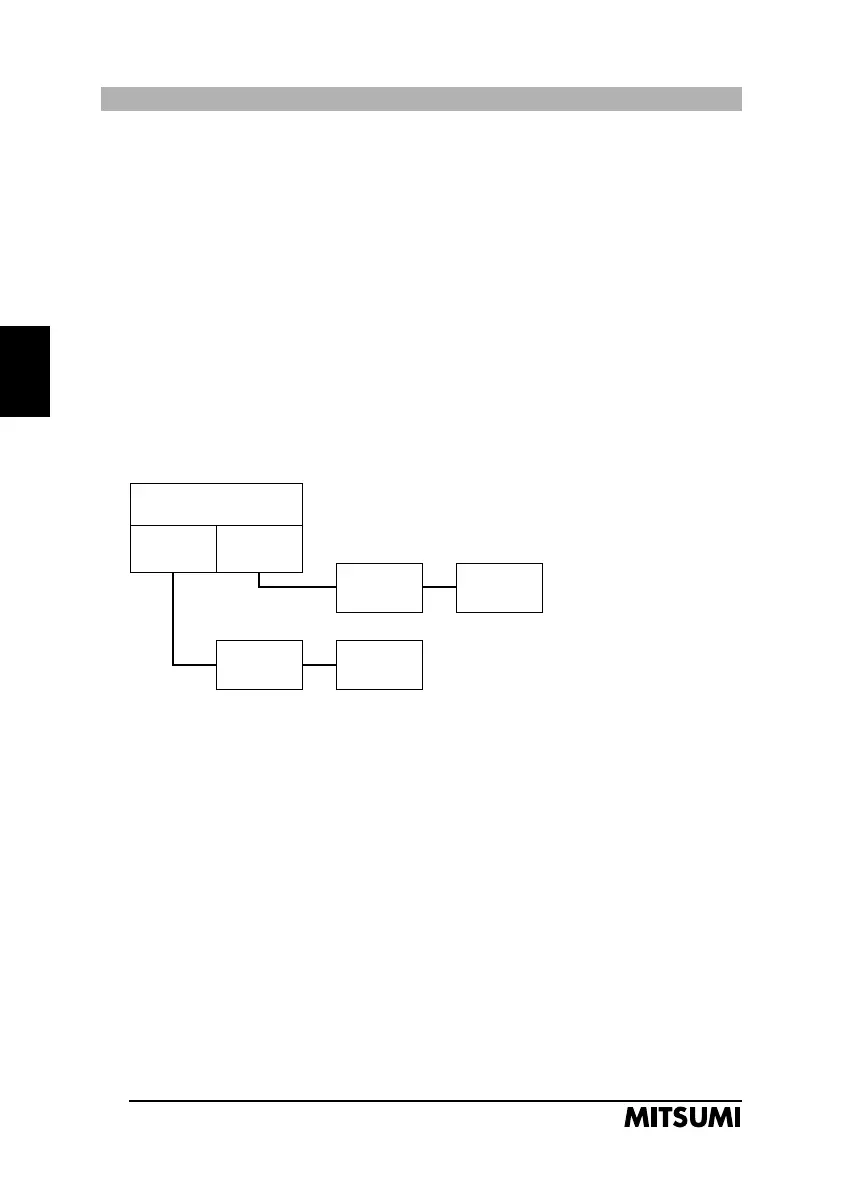
IDE/EIDE stands for Integrated Drive Electronics and Enhanced Integrated Drive
Electronics respectively and describes the hardware interface to connect (E)IDE
hard disks and ATAPI-compatible devices (CD-ROM, see also ATAPI). IDE can
only make use of one IDE port, the so-called primary port, which can operate a
maximum of two (E)IDE or ATAPI devices in a master/slave combination. EIDE
can make use of a second IDE port, the secondary port, which can likewise ope-
rate two devices. This means that an EIDE system can operate up to four (E)IDE
devices.
CD-ROM is the description for Read Only Memory data CDs. The original stan-
dard was specified in the so-called „Yellow Book“ and was extended subse-
quently. The standard is divided into CD-ROM mode 1 and CD-ROM mode 2.
Further information on the structure can be found in the corresponding standard
sources.
CD-ROM/XA stands for Extended Architecture. This format is compatible with
CD-ROM mode 1, and mode 2 and also permits nesting of data, audio sequences
and video images.
CLV stands for Constantly Linear Velocity. The data tracks of a CD must be read
at a constant speed. In order to achieve this, the speed of the CD-ROM drive
must be constantly adjusted as there are more data blocks on the outer tracks
than on the inner tracks.
EIDE
Port 1
primary
Port 2
secondary
Device 2
Master / Master, Slave present
Device 1
Device 2Device 1
Slave
SlaveMaster / Master, Slave present
FX2400.2 20.10.2000 10:05 Uhr Seite 32



 To Next Page