45
02/02
UNDERSTANDING HYDRAULICS
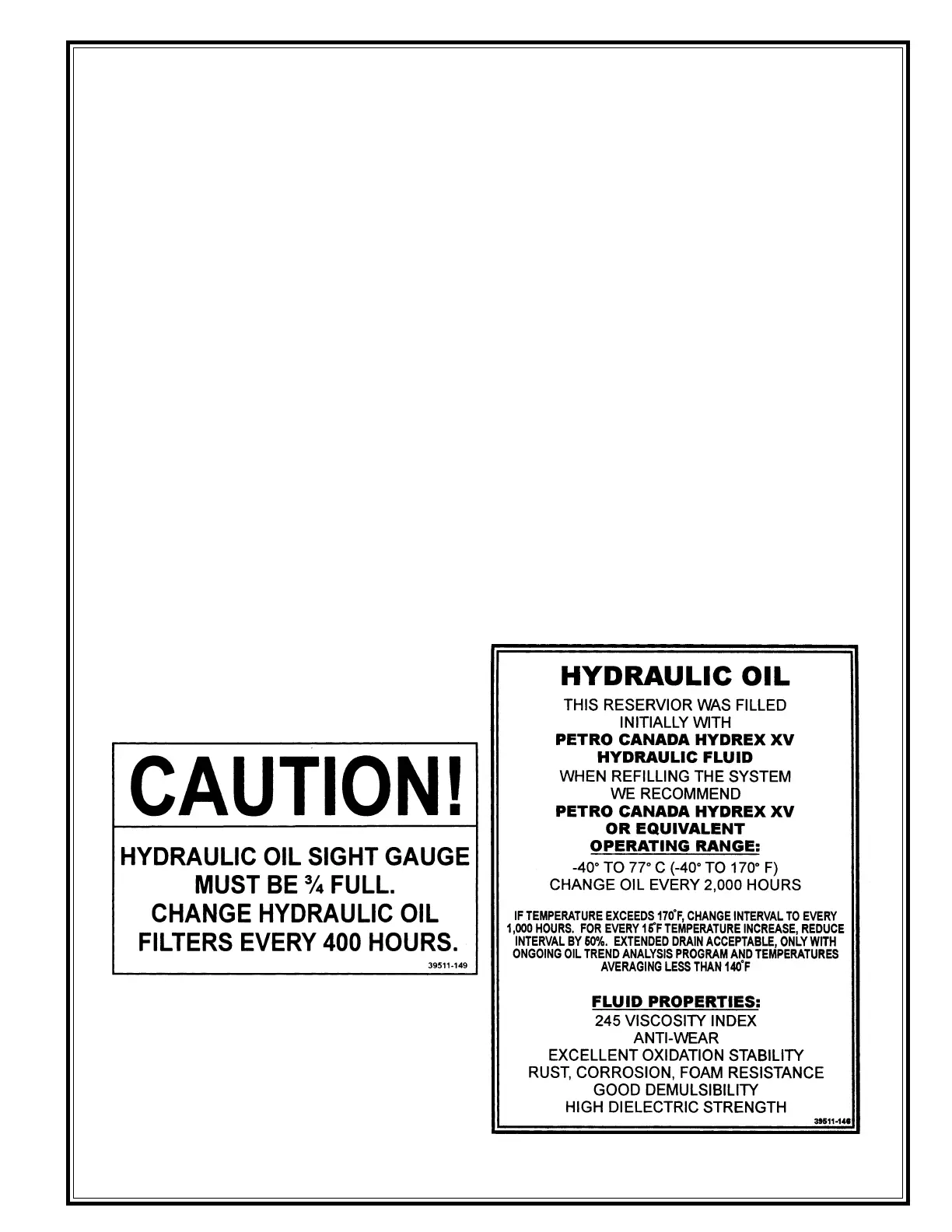
TESTING HYDRAULIC FLUID
Test the fluid regularly. A number of formal test kits are available to evaluate the condition of hydraulic fluid, or
a fluid sample can be sent to a lab for evaluation. However, there are simple signs of fluid degradation such as
a color shift, bad aroma, or feel of grit in a sample.
Don't neglect maintenance. Set up and adhere to a rigid preventative maintenance schedule. One of the most
important elements in such a program is changing or adding to the fluid on schedule.
WHEN TO CHANGE FLUID
Blotter spot test. This is a very simple test in which a drop of fluid is placed on a piece of blotterlike paper. If
the blotter remains colorless (A) or develops only a light yellow ring, oxidation is under control. Even when color
develops, but is uniform throughout (B), the oil is serviceable. If the sample shows distinct rings (C), the fluid should
be changed. When a distinct dark spot remains in the middle, but lighter-colored oil migrates outward in the blotter
paper (D), the oil has, or is about to, dump sludge or other products into the system. This indicates that the time
for fluid replacement has passed.
Listen for a sound change. If the operating system changes in sound level, usually louder or other than normal
sounds, it is time to evaluate the fluid's condition.
Test for Acid Content. A shift in the acid content may indicate a break down in the fluid. Acid-test kits are
available from fluid suppliers, and the test are easy to carry out.



 To Next Page