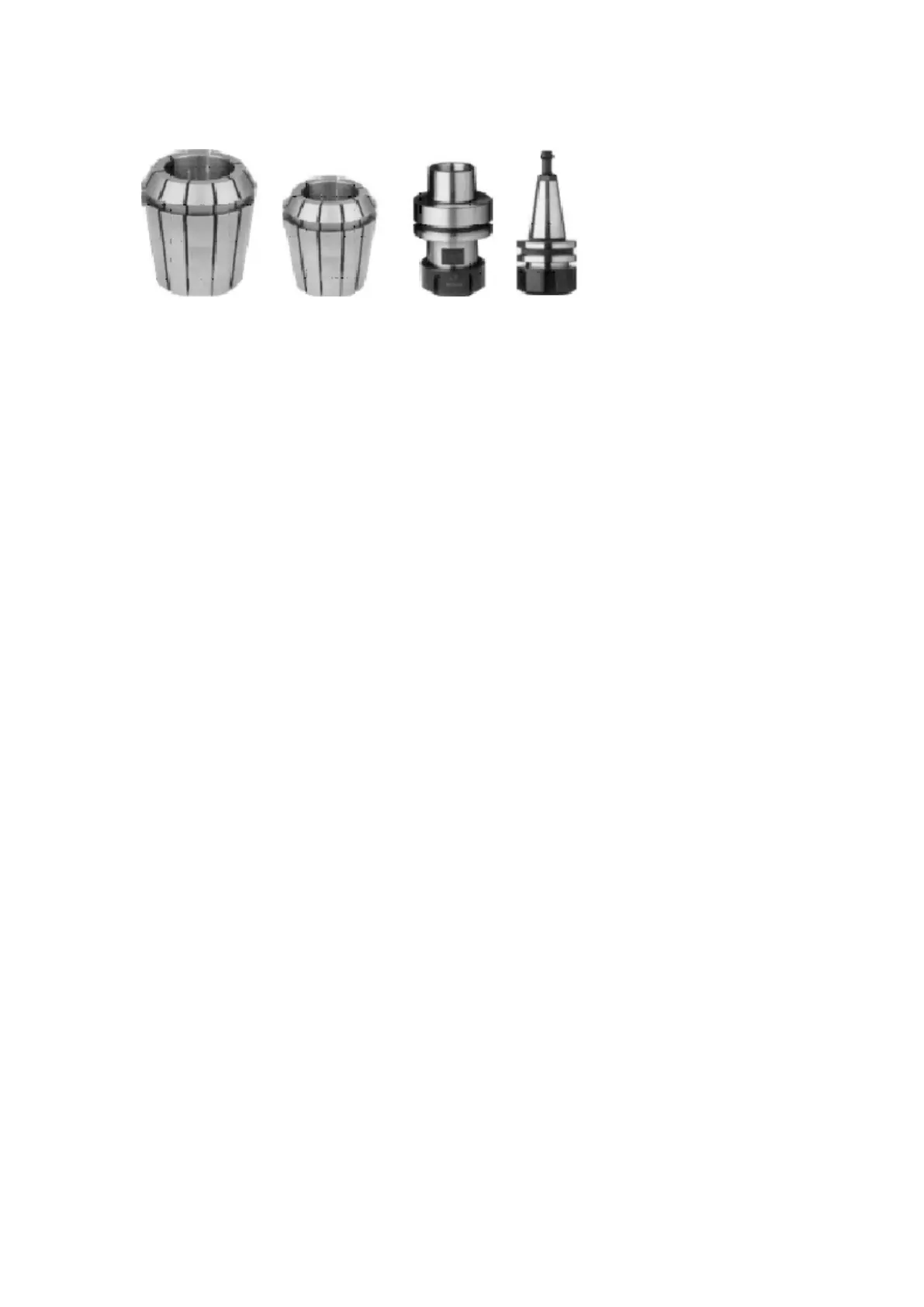
How to Avoid Tool Breakage
Most CNC tool breakages are caused by incorrect or faulty colleting
A router tool spinning at 18,000rpm is in trouble if it's as little as 5 microns off centre. This is
about how thick a deposit of resin or dust is when it's squashed inside the collet.
Collets are manufactured to exacting tolerances and when they are 5 microns out of round
both the collet and the tool are strained because the distorted collet cannot grip the tool
shank perfectly.
This results in
• Poor component edge finish
• Less than optimum tool life
• Metal fatigue and eventual breakage of the tool
• Increased noise.
The extra noise is a clue as to what is happening to the machine. Tool run out causes high
frequency vibrations in the high speed motor bearings. This drastically reduces their service
life.
Colleting and Collet life Span
Collets have a life span of 3 months if used 8 hours a day. Replacing the collets will ensure
that your operation runs consistently and prevents tool breakage. When inserting a tool into
the collet, make sure the flute fade out does not enter the collet. If the collet is gripping on
the fadeout, it will cause runout and potentially tool breakage. To ensure proper clamping the
tool shank should fill, at a minimum 80% of the depth of the collet.
Collet Maintenance
Cleaning is an essential part of collet maintenance. As material is cut, extremely fine dirt and
resin migrates up the tool shaft into the collet, causing the collet, collet nut, toolholder and
spindle interface to become dirty. This causes your tool to cut in an elliptical fashion which
will decrease tool life and cause inconsistency in your operation.
Keeping collets and tool holders clean is as essential as it is easy.
• Do not allow dirt to build up in the collet, cover nut or tool holder.
• Always clean mating surfaces prior to fitting.
• Do not used damaged collets, tools or tool holders.
• Do not leave tools or tool holders in spindles for extended periods of time.
• Replace collets and tool holders if they show any signs of damage.


 To Next Page