MAYCO LS450 CONCRETE PUMP • OPERATION MANUAL — REV. #2 (02/23/21) — PAGE 35
HOSE LUBRICATION
Before pumping, it is necessary to lubricate the hose.
This procedure prevents separation and blockages in the
hose. Inspect the lines at all times to prevent problems.
Before concrete is discharged into the hopper, it is suggested
that 3 to 4 gallons of water be sprayed into the hopper,
followed by approximately 5 gallons of a creamy cement
and water slurry (1/2 bag of cement to 5 gallons of water).
Priming the Pump with Slurry Mixture
It is CRITICAL to the successful operation of a concrete
pump that the manifold and all delivery hoses, pipes and
elbows are coated with a film of lubrication BEFORE you
attempt to pump concrete.
Failure to properly prepare the pump and system will result
in a ‘dry pack’ of concrete, blocking the shuttle valve tube
or delivery line.
1. Connect the entire delivery system to the pump. Pour
5 gallons of water and a bag of raw cement into the
hopper.
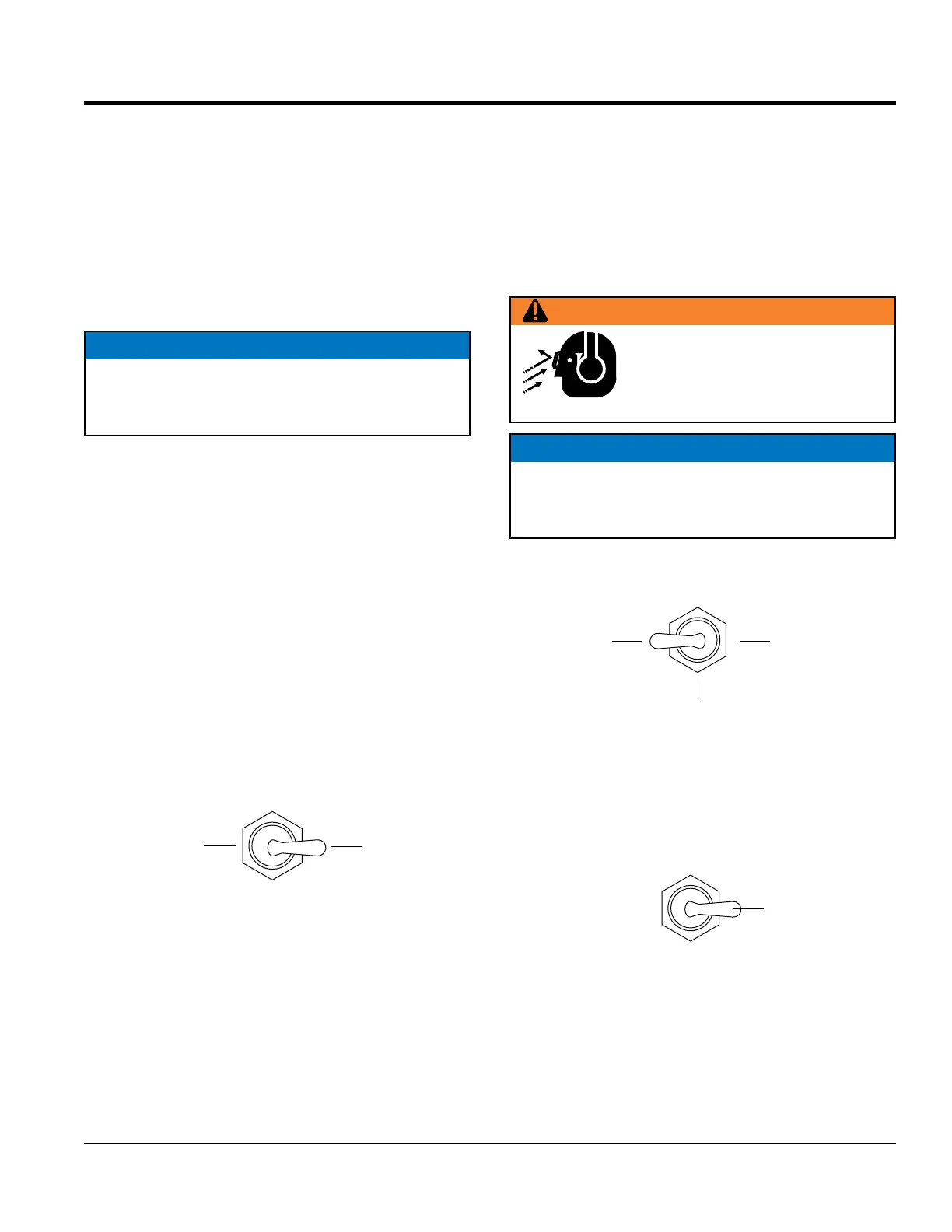
2. Place the direction control switch in the REVERSE
position (Figure 27). This will mix the water and cement
into slurry.
Figure 27. Direction Control Switch (REVERSE)
3. Mix the slurry to the consistency of a smooth batter.
4. Position the first ready-mix truck at the hopper. Check
the concrete. DO NOT discharge concrete into the
hopper at this time.
NOTICE
Getting the concrete to flow through the hose at the start
of the pumping cycle can be one of the most critical
operations of the pour.
FORWARD
5. Place the direction control switch in the FORWARD
position. This will start the flow of the slurry to the hoses.
6. Keep the slurry flowing until most of it is pumped out.
However, make sure that some slurry is left on the
hopper when concrete is first discharged from the
ready-mix truck.
PUMPING
1. Place the pumping control switch in the LOCAL
position (Figure 28) for normal pumping operation.
Figure 28. Pumping Control Switch (Local)
2. Holding the volume control switch (Figure 29) to the
right will increase pumping volume to approximately 10
strokes per minute. Holding the volume control switch
to the left will decrease pumping volume.
Figure 29. Volume Control Switch
3. A thumping sound (cylinder stroke) should be heard.
The thumping sound represents the number of strokes
per minute (volume) of the pump.
WARNING
Safety glasses and hearing protection
MUST be worn at all times when operating
the pump. Failure to follow safety
guidelines can result in serious injury.
NOTICE
A well-planned location of the pump and routing of the
hose before starting a pour may prevent subsequent
moves throughout the job.
LOCAL
CENTER
OFF
VOLUME
VOLUME
+
OPERATION


 To Next Page