GNSS Antennas
GNSS antennas should be mounted on a stable structure that will not wobble or flex during surveys.
They must have a clear view of the sky to the horizon so that every satellite may be continuously
tracked without obstruction and are as far as possible from transmitting devices such radars and
radio antennas. The GNSS mounting locations should be free from vibration and rigid with respect
to each other and the IMU.
The Primary Antenna (or Antenna 1) should be nearest to the IMU so that offset measurement errors
are minimized.
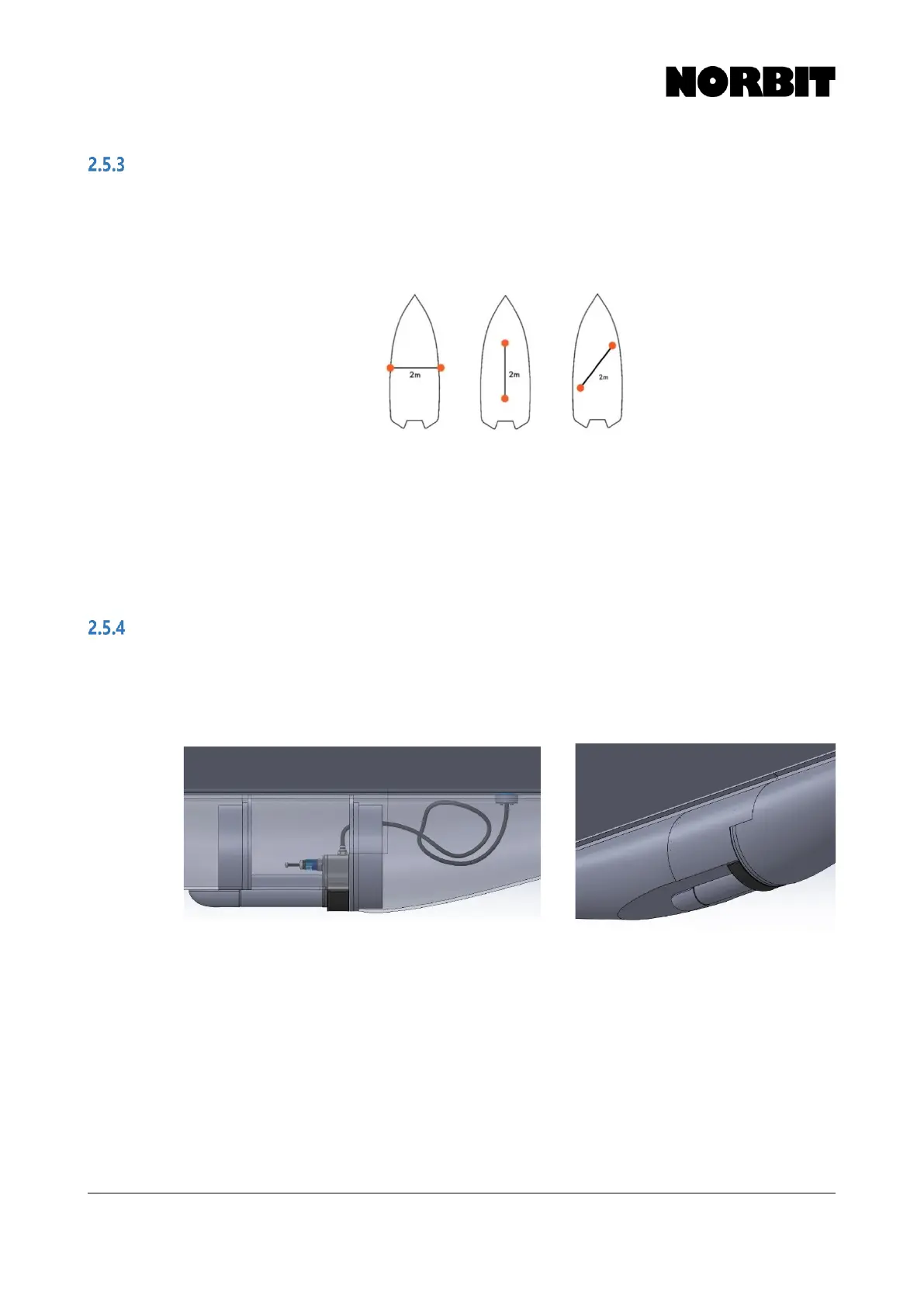
The Secondary Antenna (or Antenna 2) should be a fixed distance from Antenna 1. It is
recommended that the antennas be at least 2m apart. Shorter distances may be used but will likely
result in decreased performance, which can be mitigated by using a higher-grade IMU. The
separation must be rigid and not flex by more than 5mm during the survey. The antennas should be
positioned parallel to the water surface to within 2-3cm.
Hull Mount
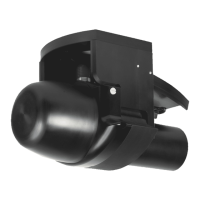
The WBMS can be permanently hull-mounted to a vessel for operations that do not require the
system to be portable. The following images are examples of hull-mounted assemblies. When hull-
mounting, the sonar pod must be carefully designed to prevent formation of bubbles and to allow
water to flow over the SV sensor.
To inquire about NORBIT’s complete hull-mounted design and installation service, please contact
subsea_support@NORBIT.com



 To Next Page