48
420012001500 - 03182024 - Rev. 04
2. Venting Through an Existing System
This boiler may be vented through an existing unused vent system.
The inner diameter of the existing vent system is utilized for the
combustion air source. Two methods have been approved for such
venting: Concentric Venting Through an Existing System and Venting
as a Chase.
Table 18 - Minimum Existing Vent / Chase Sizing
Seal
Existing
Exhaust
Sealed
cap
Seal
Seal
Air Intake
(w/Screen)
Exhaust
Intake
Concentric Venting through an Existing System 1
12" MIN.
Combastion
air
Combastion air
Concentric Venting through an Existing System 2
Intake
Exhaust
Exhaust
Intake
Exhaust
Seal
Existing
Air Intake
(w/Screen)
Sealed
cap
Seal
24"
Chase Venting Through an Existing System 3
Exhaust
Existing
vent
Air inlet
Seal
Seal
Cap
NOTE: These drawings are meant to demonstrate system venting only.
The installer is responsible for all equipment and detailing required by local codes.
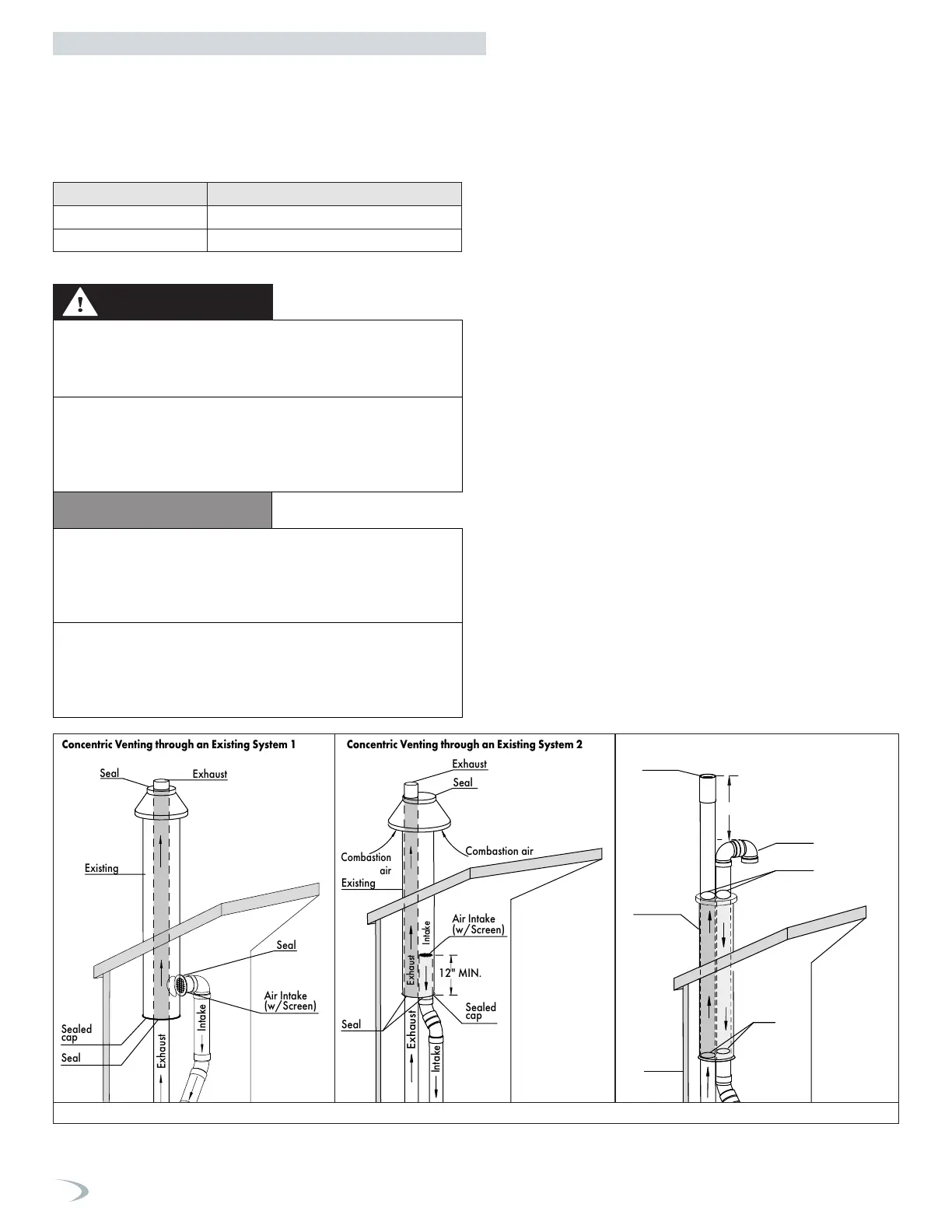
Concentric Venting Through an Existing System
NOTE: The following instructions refer only to venting through an
existing vent system, and not to venting with NTI’s optional concentric
vent kits. Refer to Concentric Vent Kit installation manual (LP-166) for
further information on venting with the optional concentric vent kits.
Concentric venting through an existing system must run vertically
through the roof. See Table 18 for proper minimum vent sizing. Use
only the approved venting materials specified in Table 12 for piping
the system. All instructions listed in this Venting section apply. See
Figures 54-1 and 54-2 for venting demonstrations.
Chase Venting Through an Existing System
When venting as a chase, follow all instructions included in this
Venting section, including those in the previous Concentric Venting
Through an Existing System section. See Figure 54-3 for chase venting
demonstration.
Vent / Air Inlet Size Minimum Existing Vent / Chase Size
2” 4”
3” 5”
Do not install the boiler into a common existing vent with any other
appliance. This will cause flue gas spillage or boiler malfunction,
resulting in substantial property damage, serious personal injury, or
death.
The upper and lower vent terminations as well as all joints in the venting
system must be properly sealed to ensure that all combustion air is
drawn properly and exhaust does not leak from the system. Failure to
properly seal the venting system will result in property damage, serious
personal injury, or death.
DANGER
Contractors must check state and local codes before installing
through an existing vent opening. State and local codes always take
precedence over manufacturer’s instructions. Failure to check state
and local codes before installing through an existing opening could
result in property damage and add significantly to installation costs.
If an existing venting system is converted for use with this boiler, the
installer must ensure that the existing venting system is clean and free
from particulate contamination that could damage the boiler. Failure to
do so could result in property damage and boiler failure. Such failure
IS NOT covered under warranty.
CAUTION
Figure 54 - 1, 2 - Concentric Venting Through an Existing System, 3, Chase Venting Through an Existing System
Part 5 - Venting


 To Next Page
 Loading...