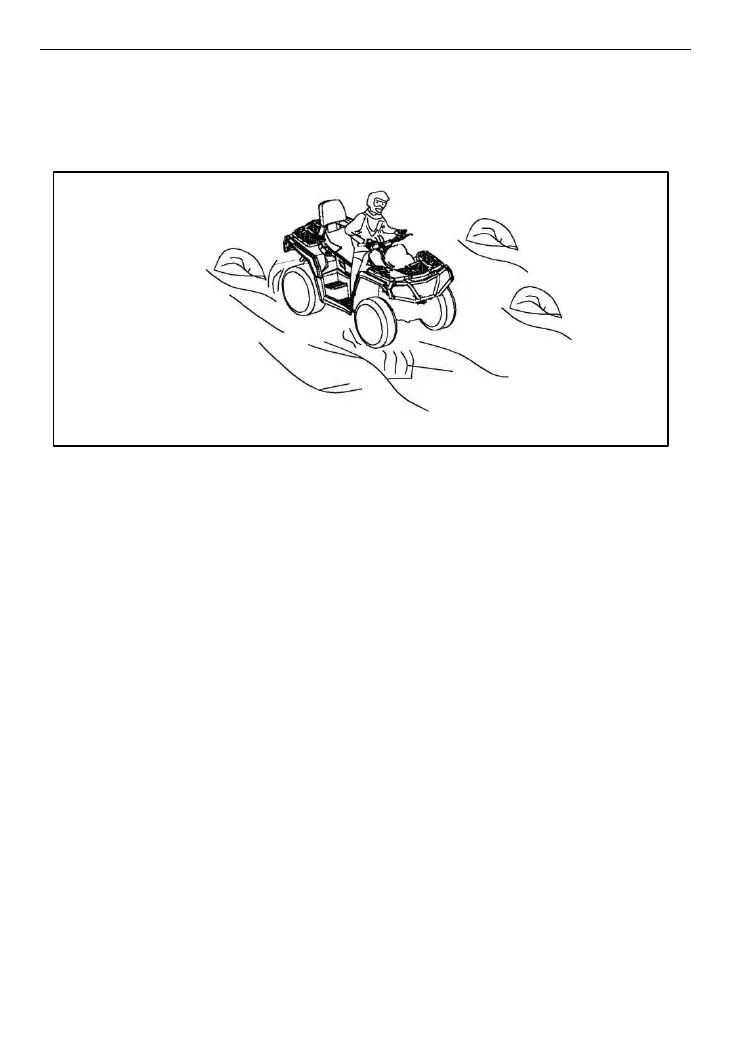
Riding on sand, sand dunes or on snow is another unique experience, but there
are some basic precautions that should be observed. Wet, deep or fine
sand/snow may create a loss of traction and cause the vehicle to slide, drop off
or become bogged" down. If this occurs look for a firmer base. Again, the best
advice is to slow down and be watchful of the conditions.
When riding in sand dunes it is advisable to equip the vehicle with an antenna
type safety flag. This will help make your location more visible to others over
the next sand dune. Proceed carefully should you see another safety flag
ahead. Since the antenna type safety flag can snag and rebound on your body
if caught, do not use it in areas where there are low hanging branches or
obstacles.
Riding on loose stones or gravel is very similar to riding on ice. They will affect
the steering of vehicle, possibly causing it to slide and tip over especially at high
speeds. In addition, braking distance may be affected. Remember that
"gunning" the throttle or sliding may cause loose stones to be ejected rearwards
into the path of another rider. Never do it deliberately.
If you do get into a slide or skid, it may help to turn the handlebar in the direction
of the skid until you regain control. Never jam the brakes and lock the wheels.
Respect and follow all posted trail signs. They are there to help you and others.
Obstacles in the "trail" should be traversed with caution. This includes loose
rocks. fallen trees, slippery surfaces, fences, posts, and embankments and
depressions. You should avoid them whenever possible. Remember that some
obstacles are too large or dangerous to cross and should be avoided. Small
rocks or fallen trees may be safely crossed, approach at a 90 angle. Stand on
the footrests while keeping your knees flexed. Adjust speed without losing
momentum and do not "gun" the throttle. Hold handlebar firmly. Place your
body weight rearwards and proceed. Do not try to lift the vehicle front wheels off
the ground.



 To Next Page