–––––––––––––––––––––
Use expand to quickly increase resolution.
–––––––––––––––––––––
The opposite of Expand is the Condense function.
· RANDOM & GENERATORS
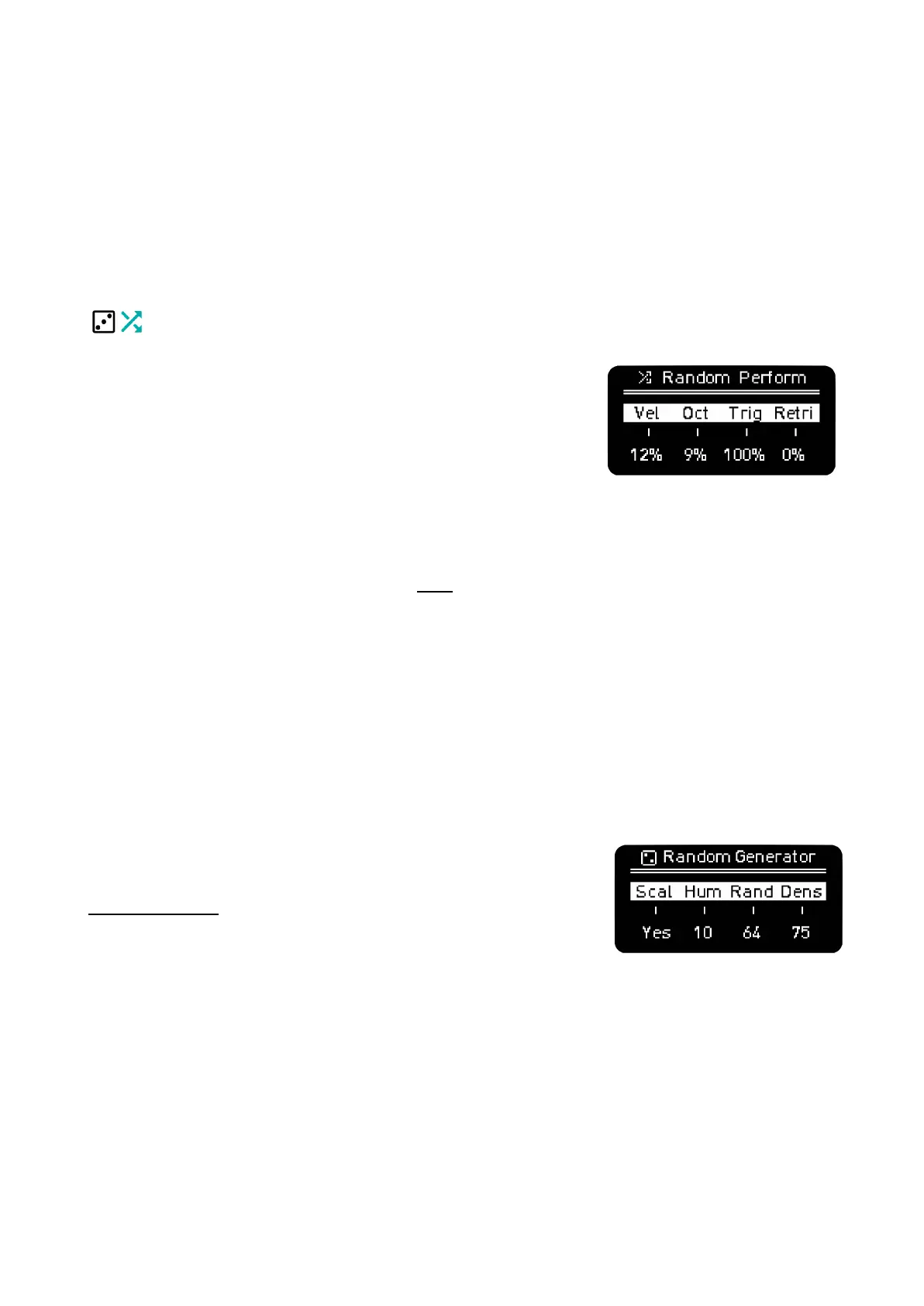
RANDOM PERFORM
An easy and musical way to create non destructive variations on a
sequence is to use Random Perform. The parameters affect all the
steps per track. From left to right: Rand Velocity, rand Octave (In
higher values it adds not only more probability of playing the note in
different octaves, but also increases the octave range of the
randomization), rand Probability of notes being triggered, rand Retrigger probability, which
introduces ratcheting effect on steps.
In Mono and Multitrack modes it also affects Skip (step parameter) the following way:
- With negative values, add skips to the steps.
- 0% to 32%, steps set to Skip start to be triggered, some retriggers might appear as well.
- 33% to 100%, increase the probability of retriggers appearing. Steps set to Skip have more
chance of being triggered.
In Multitrack mode instead of Random Octave you have Random Gate, it doesn’t affect the TIEs.
Random function can be enabled/disabled on individual tracks in Multitrack mode: the first column will
light up orange, press a pad from the respective track to stop Random from affecting it.
RANDOM GENERATOR
Shift + Random activates the Random Generator menu. It allows
you to generate a sequence based on different parameters you can
fine tune to come up with melodic and rhythmic ideas in any
Sequencer mode.
In Multitrack mode Shift + Random toggles between the Euclidean
Generator and the Random Generator. (Euclidean Generator is
explained below).
Random scale: if “Yes”, it randomizes the scale and root note of the sequencer;
Humanize introduces time offset, gate and velocity variations
(Note: in the current implementation it also applies octave randomization per step. The more of this
value, the more steps get their octave randomized and in greater amount);


 To Next Page