EasyManua.ls Logo

Parker ADAPTOMODE A4AS - User Manual

Parker ADAPTOMODE A4AS
16 pages
Print Icon
To Next Page IconTo Next Page
Loading...
Refrigerating Specialties Division
1
BULLETIN 23-06B
A4A Series
January 2003
Installation, Service and Parts Information
ADAPTOMODE
®
INLET
PRESSURE REGULATORS
Types: A4AS, A4AB, A4AD, A4AZ
PORT SIZE 20 - 100 mm (3/4" - 4")
FOR AMMONIA, R-12, R-22, R-502
OTHER REFRIGERANTS AND OIL
FEATURES
Pilot operated characterized Modulating Plug for precise
control
Suitable for all common refrigerants and oil
27.6 bar (400 psig) maximum rated pressure (MRP)
Flanges for threaded or welded steel pipe and copper
tube (copper not for ammonia)
Unique Modular construction
Interchangeable parts
Easy to service
Close coupled strainers, optional
Many control variations are possible with the use of a
few Modules and kits.
Stainless Steel Diaphragm
Chrome Plated Pilot Seat
Manual Opening Stem
Description:
These compact, heavy duty, pilot operated, iron alloy (ASTM A126
Class B high strength semi-steel) Inlet Pressure Regulators are
suitable for Ammonia, R-12, R-22, R-502 and other common
refrigerants and fluids approved for use in refrigeration systems.
All A4 Regulators are pilot operated using upstream pressure for the
opening force and require a minimum 0.14 bar (2 psi) pressure drop
to fully open.
These valves are generally ordered with close coupled upstream
strainer to prevent entrance of foreign material into the valve and the
rest of the system. (See current Bul. 00-10 for strainer information.)
Purpose
Modulates flow of refrigerant gas or liquid to maintain a constant
upstream (or inlet) pressure as set-for, despite load fluctuations.
The fluid temperature range for the A4 Series of Regulators is -45°C
to 105°C (-50°F to 220°F).
Principles of Operation (See Fig. 1)
The inlet pressure enters the space under the diaphragm through
passage N. When the force created by the pressure exceeds the force
of the range spring, the diaphragm is lifted off the pilot seat allowing
pressure to enter on top of the power piston. This causes the power
piston to move downward forcing the modulating plug to open and
modulate to maintain constant inlet pressure. An increase in inlet
pressure lifts the diaphragm further, allowing more pressure on top of
the power piston and opening the valve wider. A decrease in inlet
pressure causes the diaphragm to move closer to the pilot seat
reducing the pressure on the top of the power piston and causing the
closing spring to reduce the valve opening. The pressure on top of the
power piston is controlled by the flow through the pilot seat and the
bleed off through the bleed hole in the power piston and through the
clearance between the piston and cylinder. A minimum of 0.14 bar (2
psi) pressure drop across the valve is required to open it fully.
The A4A Inlet Pressure Regulator therefore opens on a rise in the
inlet pressure above its set point and closes on a drop in inlet pressure
below its set point. The inlet pressure set point is not appreciably
affected by variations in the outlet pressure.
Manual Opening Stem
All Type A4A Regulators are provided with a manual opening stem. To
open the regulator manually, back the stem out (turn counter-clockwise)
until it stops. To put the regulator into automatic operation, turn the
stem in (clockwise) until only the flats on the stem protrude from the
packing nut.
050275
A4AZ
Fig. 1
ISO 9001 - 2 0 0 0 CERTIFIED
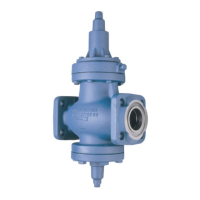
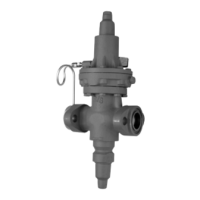
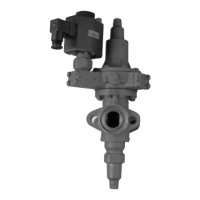
A4AS
A4AD
A4AZ A4AB
Question and Answer IconNeed help?

Do you have a question about the Parker ADAPTOMODE A4AS and is the answer not in the manual?

Overview

The ADAPTOMODE® Inlet Pressure Regulators, specifically the A4A Series (Types A4AS, A4AB, A4AD, A4AZ), are designed to modulate the flow of refrigerant gas or liquid to maintain a constant upstream (or inlet) pressure, irrespective of load fluctuations. These compact, heavy-duty, pilot-operated regulators are constructed from iron alloy (ASTM A126 Class B high-strength semi-steel) and are suitable for use with Ammonia, R-12, R-22, R-502, and other common refrigerants and fluids approved for refrigeration systems.

Function Description:

The A4A Series regulators operate on a pilot-operated principle, utilizing a characterized modulating plug for precise control. The inlet pressure enters the space beneath the diaphragm through passage N. When the force generated by this pressure surpasses the force of the range spring, the diaphragm lifts off the pilot seat, allowing pressure to flow onto the top of the power piston. This action drives the power piston downward, causing the modulating plug to open and regulate to maintain a constant inlet pressure. An increase in inlet pressure further lifts the diaphragm, increasing pressure on the power piston and widening the valve opening. Conversely, a decrease in inlet pressure moves the diaphragm closer to the pilot seat, reducing pressure on the power piston and causing the closing spring to narrow the valve opening. The pressure on the power piston is controlled by the flow through the pilot seat and the bleed-off through a bleed hole in the power piston, as well as the clearance between the piston and cylinder. A minimum pressure drop of 0.14 bar (2 psi) across the valve is required for it to fully open. Therefore, the A4A Inlet Pressure Regulator opens when the inlet pressure rises above its set point and closes when it drops below its set point, with outlet pressure variations having no significant effect on the set point.

Important Technical Specifications:

  • Maximum Rated Pressure (MRP): 27.6 bar (400 psig).
  • Fluid Temperature Range: -45°C to 105°C (-50°F to 220°F).
  • Minimum Pressure Drop for Full Opening: 0.14 bar (2 psi).
  • Flange Connections: Available for threaded or welded steel pipe and copper tube (copper not for ammonia).
  • Modular Construction: Unique design with interchangeable parts.
  • Diaphragm Material: Stainless Steel.
  • Pilot Seat Material: Chrome Plated.
  • Solenoid Coil: Refrigerating Specialties Division molded water-resistant Class "B" solenoid coil, designed for long life and powerful opening force. Standard coil housing meets NEMA 3R and 4 requirements, withstanding direct contact with moisture and ice. The coil operates with line voltage from 85% to 110% of rated coil voltage. Power consumption during normal operation is 33 watts or less. Inrush and running currents vary by voltage/Hertz.

Usage Features:

  • Pilot Operated Characterized Modulating Plug: Ensures precise control.
  • Versatility: Suitable for all common refrigerants and oil.
  • Modular Construction: Facilitates easy modification in the field to perform functions of A4AS, A4AB, or A4AD variations.
  • Manual Opening Stem: All A4A regulators include a manual opening stem. To open the regulator manually, back the stem out (counter-clockwise) until it stops. For automatic operation, turn the stem in (clockwise) until only the flats on the stem protrude from the packing nut.
  • Close Coupled Strainers (Optional): Recommended to prevent foreign material from entering the valve and system.
  • A4AZ (Basic Inlet Pressure Regulator): The fundamental building block for most A4 Series variations. Can be used as a basic inlet pressure regulator or modified for other functions.
  • A4AS (Inlet Pressure Regulator with Pilot Electric Shut-off): Requires the integrally mounted solenoid to be energized for the valve to function as a regulator. When de-energized, the regulator closes regardless of inlet pressure, useful for stopping flow in defrost applications or as part of a temperature control system.
  • A4AB (Inlet Pressure Regulator with Pilot Electric Wide-opening/Bypass): When the integrally mounted solenoid is energized, the main valve opens wide, bypassing the regulator function (not regulating). When de-energized, it functions as an Inlet Pressure Regulator. Often used for maximum refrigeration capacity from an evaporator, as a defrost relief regulator, or for high-pressure limit protection.
  • A4AD (Dual Inlet Pressure Regulator): Capable of regulating at two different pressure set-points. When the pilot solenoid is energized, it controls at the lower set-point. When de-energized, it controls at the higher set-point. Typical uses include capacity control of an evaporator at two different pressure levels and evaporator pressure control combined with defrost pressure relief.
  • Adjustment: An accurate pressure gauge should be installed in the gauge port. The adjusting stem is used to set the desired inlet pressure. Final adjustment should be made after the system has operated for a period.
  • Installation: Regulators should be mounted in a horizontal line in a vertical position with the manual opening stem at the bottom for optimum performance. The arrow on the valve body must point in the direction of fluid flow. Flange bolts and nuts must be tightened evenly to ensure proper gasket seating and prevent damage. The regulator should be installed in an easily accessible location for adjustment and maintenance, protected from material handling equipment. Solenoid coils and coil housings should not be insulated.

Maintenance Features:

  • Easy to Service: Designed with interchangeable parts for straightforward maintenance.
  • Disassembly and Assembly: Detailed procedures are provided, emphasizing careful handling to avoid damage. Key steps include relieving pressure before disassembly, cleaning all parts thoroughly, and lubricating internal components with refrigerant oil (except O-rings, which use silicone grease) during reassembly.
  • Troubleshooting: A comprehensive service pointer table is included, listing common symptoms (e.g., regulator not shutting off, not opening, erratic operation, high pressure drop), probable reasons (e.g., dirty diaphragm, stuck piston, leaking pilot seat, ruptured diaphragm, oversized regulator), and corresponding corrective actions (e.g., clean/replace parts, adjust settings, reduce flash gas, replace regulator).
  • Strainer Maintenance: If a close-coupled strainer is used, it should be cleaned before putting the valve back into operation.
  • Leak Testing: The regulator must be tested for leaks with refrigerant gas or other appropriate gas before the system is put into operation.
  • Dirt Prevention: Dirt is the primary cause of malfunction. Screens or filters must be cleaned or replaced frequently, especially during startup.
  • Moisture Control (Halocarbon Systems): Filter-driers should be used and maintained to prevent corrosion or ice formation.
  • Repair Kits: Extensive repair kits are available for various components, including seal caps, packing, springs, diaphragms, pistons, and modular pilots.

Parker ADAPTOMODE A4AS Specifications

General IconGeneral
BrandParker
ModelADAPTOMODE A4AS
CategoryController
LanguageEnglish

Related product manuals