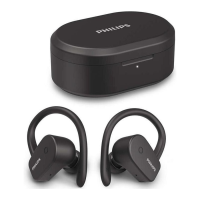
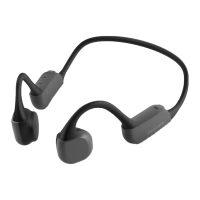
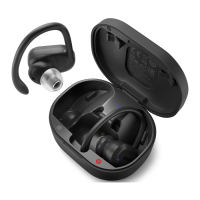
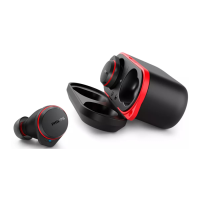
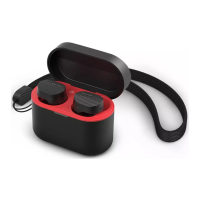
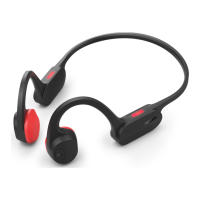
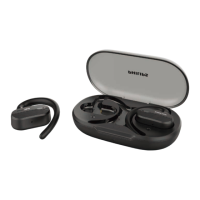
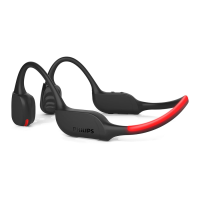
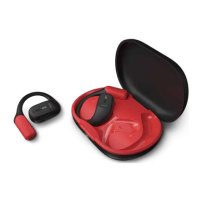
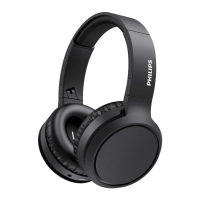
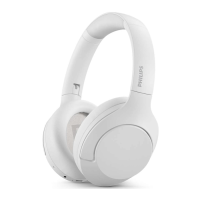
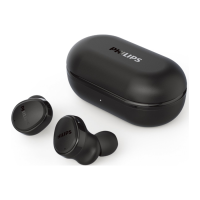
Remove the integrated battery
If there is no collection/recycling system for electronic products in your country, you can protect the
environment by removing and recycling the battery before disposing the headphones.
Make sure the headset is disconnected from the charging case before removing the battery.
Compliance with EMF
This product complies with all applicable standards and regulations regarding exposure to
electromagnetic fields.
Environmental information
All unnecessary packaging has been omitted. We have tried to make the packaging easy to separate
into three materials: cardboard (box), polystyrene foam (buffer) and polyethylene (bags, protective
foam sheet.) Your system consists of materials which can be recycled and reused if disassembled by a
specialized company. Please observe the local regulations regarding the disposal of packaging
materials, exhausted batteries and old equipment.
Notice of compliance
The device complies with the FCC rules, Part 15. Operation is subject to the following two conditions:
1. This device may not cause harmful interference, and
2. This device must accept any interference received, including interference that may cause
undesired operation.
FCC rules
This equipment has been tested and found to comply with the limits for a Class B digital device,
pursuant to part 15 of the FCC Rules. These limits are designed to provide reasonable protection
against harmful interference in a residential installation. This equipment generates, uses and can
radiate radio frequency energy and, if not installed and used in accordance with the instruction
manual, may cause harmful interference to radio communications.
However, there is no guarantee that interference will not occur in a particular installation. If this
equipment does cause harmful interference to radio or television reception, which can be and on, the
user is encouraged to try to correct the interference by one or more of the following measures:
Relocate the receiving antenna.
Increase the separation between equipment and receiver
Connect the equipment into an outlet on a circuit different from that to which the receiver is
connected.
Consult the dealer or an experienced radio/TV technician for help.
FCC Radiation Exposure Statement:
This equipment complies with FCC radiation exposure limits set forth for an uncontrolled environment.
This transmitter must not be co-located or operating in conjunction with any other antenna or
transmitter.
Canada:
This device contains licence-exempt transmitter(s)/receiver(s) that comply with Innovation, Science
and Economic Development Canada’s licence-exempt RSS(s). Operation is subject to the following two
conditions:
1. This device may not cause interference.
2. This device must accept any interference, including interference that may cause undesired
operation of the device.
CAN ICES-3 (B)/NMB-3(B)


 To Next Page