English
30
H07024510 / DT2000575 - Rev. 00
When lighting the fire, the grate should be brought quickly to working
temperature. If it is done slowly, condensation will inevitably form
and cause blackening of the grate and the glass
Put the fuel into the grate according to the methods described below:
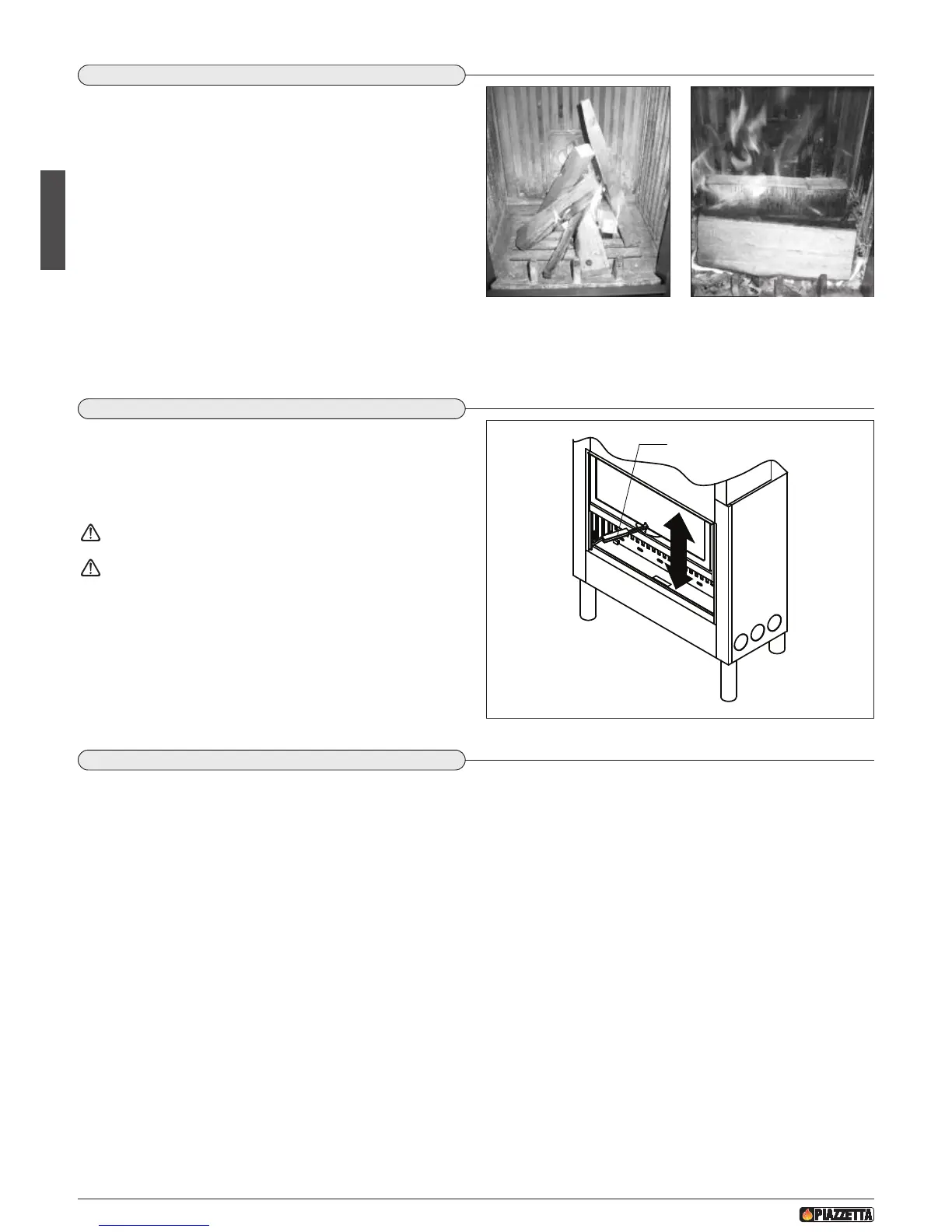
- Put the air or smoke damper to the open position (MAXIMUM)
(see paragraphs “COMBUSTION AIR REGULATION” or “SMOKE
D
AMPER REGULATION”). Fig. 37 Fig. 38
- Place the material for kindling (paper, firelighter, etc.) in the centre
of the grate and add small pieces of soft wood (fir) in the form of
a pyramid. To light the soft wood quickly, open the door by approx.
two centimetres for 5–10 minutes. Figure 38
- Once the bed of embers has been created, stoke-up with the recommended amounts of fuel. Keep the door closed except when adding more
fuel and adjust the combustion air or the smoke damper as instructed in the respective paragraphs “COMBUSTION AIR REGULATION” or
“SMOKE DAMPER REGULATION”.
DT2010047-00
5.7 NIGHT TIME OPERATION AT MINIMUM
After normal operation during the day, the appliance may continue to operate for a few hours at night.
When stoking up the fire for the last time in the evening, ensure that the bed of embers is sufficient, put the wood in the grate and then set
the combustion air dampers to minimum. Night time operation of the stove at minimum depends on the type of wood (a very hard wood is
recommended), the flue draught and the weather.
The amount of wood to put on and the necessary adjustment of combustion air flow will be learned with experience (see the paragraph
“COMBUSTION AIR REGULATION”).
The next morning, start up the fire at maximum to burn off any creosote formed during the night. Creosote deposits start to form when the
flue temperature falls to below 150 °C. To prevent this from happening it is important to try to maintain the grate of the appliance at normal
working temperature (rated heating efficiency phase) as long as possible.
Prolonged operation of the stove at minimum could require more frequent cleaning of the grate and the flue.
Fig. 37
DT2030064-00
Fig. 38
DT2030065-00
DT2010330-00
5.5 LIGHTING
D
T2010046-00
5.6 OPENING THE DOOR
The door must remain closed while the stove is alight, otherwise it
could damage the inside of the stove. The door must be opened
slowly, holding it slightly ajar for a moment before opening it
completely. Open the door when the flame has died down and
certainly never when the flame is very intense.
Always use the hexagonal door handle tool provided.
Do not slam the door shut otherwise the glass could break.



 To Next Page