Need help?
Do you have a question about the Pioneer SX-450 and is the answer not in the manual?
Procedure for calibrating AM reception sensitivity and performance.
Procedure for calibrating FM reception sensitivity and performance.
Procedure for calibrating MPX (Multiplex) stereo signal reception.
Procedure for adjusting the idle current in the power amplifier stage.
Step-by-step guide for routing and tensioning the dial cord.
Important warning for handling the dial needle to prevent damage or contamination.
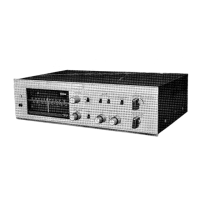
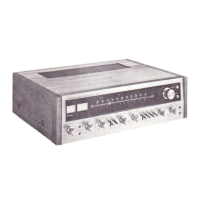
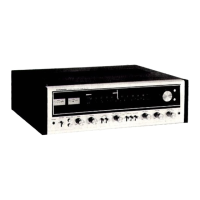
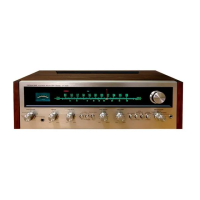
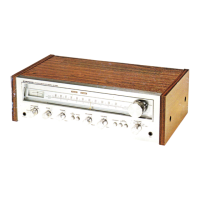
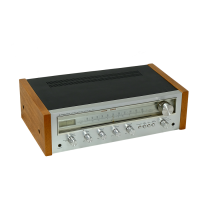
The Pioneer SX-450 is an AM/FM stereo receiver designed to deliver high-fidelity audio reproduction. This unit serves as the central hub for a home audio system, integrating a tuner for radio reception, a preamplifier for signal processing, and a power amplifier for driving loudspeakers. Its primary function is to receive, process, and amplify audio signals from various sources, providing a rich and immersive listening experience.
The SX-450 is equipped with both AM and FM tuners, allowing users to access a wide range of radio broadcasts. The FM tuner benefits from stereo reception capabilities, enhancing the listening experience with a broader soundstage. The receiver also features multiple input options, including a dedicated phono input for turntables, enabling users to enjoy their vinyl collections. Additionally, auxiliary inputs are provided for connecting other audio sources such as CD players, cassette decks, or digital media players. A microphone input further expands its versatility, allowing for vocal amplification or recording.
At its core, the SX-450 incorporates a preamplifier section that allows for precise control over the audio signal. This includes bass and treble tone controls, enabling users to tailor the frequency response to their personal preferences or room acoustics. A balance control is also present, allowing for adjustment of the relative volume between the left and right channels. The volume control provides overall level adjustment, ensuring comfortable listening levels.
The power amplifier section of the SX-450 is responsible for amplifying the processed audio signals to drive loudspeakers. It is designed to deliver sufficient power to fill a typical listening space with clear and dynamic sound. The receiver supports multiple speaker configurations, typically allowing for connection of two pairs of speakers (A and B), which can be used individually or simultaneously. A headphone jack is also included for private listening.
A tape monitor function is integrated, providing flexibility for recording and playback with a cassette deck or other recording device. This feature allows users to monitor the signal being recorded or to listen to the playback from the tape deck directly through the receiver's amplifier.
Operating the SX-450 is straightforward, with clearly labeled controls on the front panel. The large tuning knob facilitates precise selection of radio stations, complemented by a dial scale that indicates the chosen frequency. A stereo indicator light illuminates when an FM stereo broadcast is being received, confirming optimal reception.
The function selector switch allows users to easily switch between different audio sources, such as AM, FM, Phono, or Aux/Mic. This intuitive design ensures quick and convenient access to all connected devices. The speaker selector switch provides control over which set of speakers (A, B, or A+B) is active, or allows for all speakers to be turned off when using headphones.
Tone controls for bass and treble are typically rotary knobs, offering continuous adjustment to fine-tune the sound. The balance control, also a rotary knob, allows for subtle adjustments to the stereo image. The main volume control is prominently placed for easy access and adjustment.
A loudness switch is often included, which, when engaged, boosts bass and treble frequencies at low listening levels. This compensates for the human ear's reduced sensitivity to these frequencies at lower volumes, providing a fuller sound even when listening quietly. An FM muting switch is also a common feature, designed to suppress inter-station noise when tuning between FM stations, providing a cleaner listening experience.
The front panel also includes a headphone jack, allowing for direct connection of headphones for personal listening without disturbing others. A microphone input, often a 1/4-inch jack, provides a convenient point of connection for a microphone.
The service manual provides detailed instructions for various maintenance and adjustment procedures, ensuring the longevity and optimal performance of the SX-450. These procedures are typically intended for qualified service technicians, but understanding them offers insight into the device's upkeep.
One crucial maintenance aspect is the adjustment of the AM and FM sections. This involves using specialized signal generators and voltmeters to fine-tune the tuner circuits for maximum sensitivity and accurate reception across the entire frequency band. For the AM section, adjustments include setting specific coils (T6, TC4, TC5) and the bar antenna core to achieve peak signal indication at designated frequencies. Similarly, the FM section requires adjustments of various coils (T3, T1, T2, T4, T5, TC3, TC1, TC2) to optimize sensitivity, minimize distortion, and ensure accurate center-of-scale indication on the AM/FM meter. These adjustments are critical for clear and strong radio reception.
Another important maintenance procedure outlined is the power amplifier section's idle current adjustment. This involves connecting a DC voltmeter across specific terminals and cutting a jumper lead if the voltage falls below a certain threshold (e.g., 15mV). Proper idle current adjustment is essential for the stable operation of the power amplifier and helps prevent overheating and premature component failure.
The manual also details the dial cord stringing procedure, which is a common repair task for older receivers. This involves carefully routing and tensioning the dial cord around various pulleys and the tuning drum to ensure smooth and accurate movement of the dial needle. Specific instructions are provided for turning the tuning drum, tying the cord, passing it through pulleys, winding it around the dial shaft, and securing it with a spring hook. This procedure is vital for the proper functioning of the tuning mechanism.
Furthermore, the manual includes a caution regarding dial needle installation, emphasizing the delicate nature of the plated metal portion. It advises against touching this section directly to prevent fingerprints and impurities, which could affect its appearance and anti-corrosion properties. This highlights the attention to detail required for maintaining the aesthetic and functional integrity of the device.
Overall, the Pioneer SX-450 is a robust and versatile stereo receiver designed for reliable performance and user-friendly operation, with comprehensive maintenance guidelines to ensure its continued functionality over time.
 General
| Type | Stereo Receiver |
|---|---|
| Power Output | 15 watts per channel into 8Ω (stereo) |
| Tuning Range | FM, MW |
| Input Sensitivity | 2.5mV (MM), 150mV (line) |
| Signal to Noise Ratio | 70dB (MM), 90dB (line) |
| Output | 150mV (line) |
| Speaker Load Impedance | 4Ω to 16Ω |
| Semiconductors | transistors, diodes |
| Frequency Response | 20Hz to 20kHz (±1dB) |
| Total Harmonic Distortion | 0.5% |
| Weight | 8.6kg |

 To Next Page