PIPER SENECA II SERVICE MANUAL
04/30/07 VII - LANDING GEAR AND BRAKE SYSTEM
1J7
SECTION VII
LANDING GEAR AND BRAKE SYSTEM
7-1. INTRODUCTION. This section contains instructions for overhauling, inspecting and adjusting the
various components of the PA-34-200T landing gear and brake system. Also included are adjustments for the
electrical limit, safety and warning switches. This section does not cover the hydraulic function of the landing
gear, except brakes, this information may be found in Section VI, Hydraulic System.
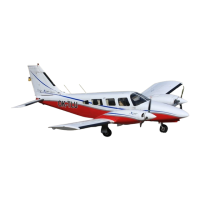
7-2. DESCRIPTION. The PA-34-200T airplane is equipped with a retractable tricycle air-oil strut type
landing gear, hydraulically raised or extended by an electrically powered reversible pump. A selector switch
in the instrument panel to the left of the control quadrant is used to select gear UP or DOWN position.
Gear positions are indicated by three green lights directly above the selector switch when the gear is
down and locked, and a red light at the top of the instrument panel when gear is unsafe. Activation of all
three downlock switches will shut the hydraulic pump off. As the instrument lights are turned on, the green
lights will dim.
As manifold pressure drops below approximately 14 inches of mercury, and if the landing gear has not
been extended, a throttle switch located in the quadrant will actuate a warning horn indicating to the pilot
the landing gear is still up. The warning horn will continue to operate until the landing gear is down and
locked, at which time three green lights on the instrument panel will energize.
It is preferred the landing gear be extended and retracted by means of the gear selector knob; however,
in the event of hydraulic or electrical failure, the gear can be extended by pulling the free-fall valve thus
permitting the gear to fall free. The nose and main gear require no assist springs. Once the gear are down
and the downlock hooks engage, a spring maintains pressure on each hook in the locked position until
released by hydraulic pressure.
In the event the airplane is sitting on the ground, and the gear selector knob is in the "UP" position, a
safety switch (squat switch) located on the left main gear will prevent the hydraulic pump from actuating if
the main switch should be turned on. When the plane leaves the ground, as in flight, the safety switch will
actuate when the oleo extends in excess of 8 inches, and the hydraulic pump will raise the landing gear. In
the event the airplane is placed on jacks and raised to the extent the oleo will extend in excess of 8 inches,
the safety switch will actuate the hydraulic pump, thus raising the landing gear if the landing gear selector
knob is in the "UP" position and the main switch is turned on.
The nose gear is steerable by the use of the rudder pedals. As the gear retracts, the steering linkage
becomes separated from the gear so that rudder pedal action with gear retracted is not impeded by the nose
gear operation. A gear centering spring mechanism is incorporated in the nose gear steering mechanism.
The two main wheels are equipped with self-adjusting single disc hydraulic brake assemblies which are
actuated by individual toe brake cylinders mounted on the rudder pedals and a handle connected to a brake
cylinder located below and forward of the center of the instrument panel. A parking brake is incorporated
with the handle, and is used by pulling back on the handle and pushing forward on the button to the left of
the handle. To release the hand brake, pull aft on the handle and allow it to swing forward. The cylinders are
supplied hydraulic fluid from a reservoir located on the forward side of the cabin main bulkhead.
7-3. TROUBLESHOOTING. Mechanical and electrical troubles peculiar to the landing gear system are
listed in Table VII-IV at the back of this section. When troubleshooting, first eliminate hydraulic malfunctions
as listed in Section VI. Then proceed to switch malfunctions and last to the mechanical operation of the gear
itself, both of which are included in this section.



 To Next Page