
 Need help?
Do you have a question about the Polycom VVX 601 and is the answer not in the manual?
Instructions on how to place calls using handset, speakerphone, or headset.
Steps to initiate a call using the phone's dialer interface.
Procedure to redial the last called number or contact.
How to switch between handset, headset, and speakerphone during a call.
Steps to place an active call on hold and reactivate held calls.
Methods for transferring calls, including blind and consultative transfer types.
Using the Calls screen to hold or resume active and held calls.
How to silence or ignore an incoming call without answering.
Procedure to reject a call and send it directly to voicemail.
Step-by-step guide to setting up and conducting a conference call.
Accessing and managing the list of missed, received, and placed calls.
How to view, edit, save, or delete entries from the call list.
Steps to save a contact from call details to the phone's directory.
Instructions for removing contacts from the recent calls list.
Steps to access the CommPortal web interface for phone management.
Overview of the main dashboard features and information displayed in CommPortal.
Managing voice messages and call activity through the CommPortal interface.
Using Call Manager features to configure call coverage and settings.
Procedure to change the account password via the phone's settings.
Instructions related to setting up and customizing phone keys.
Steps to update the time, date, and their display format on the phone.
Steps to configure forwarding of voicemail messages to an email address.
How to delete voice messages from the CommPortal inbox and deleted folders.
Guide to changing the display language on the phone.
Instructions to adjust the time, date, and their display format.
Steps to set a custom background image for the phone display.
Using personal photos for screen savers or backgrounds on specific models.
How to make line keys transparent to better view the background.
How to activate and configure the phone's screen saver feature.
Using personal photos for screen savers on compatible phone models.
Configuring sound output locations for incoming call notifications.
Steps to choose a ringtone for incoming calls or specific lines.
Assigning unique ringtones to specific contacts in the directory.
Adjusting the ringtone and call audio volume using physical keys.
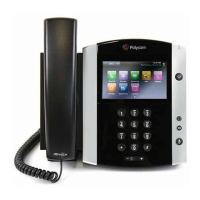
This document outlines the features and functionalities of Polycom VVX 301, 401, 501, and 601 series phones, designed to enhance business communication. It covers everything from basic call handling to advanced customization options, ensuring users can effectively manage their phone system.
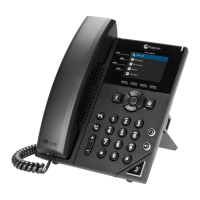
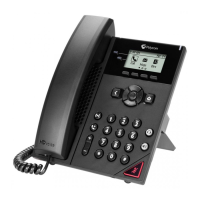
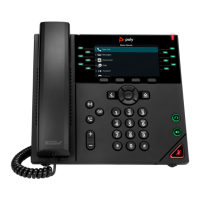
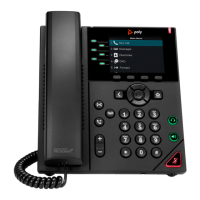
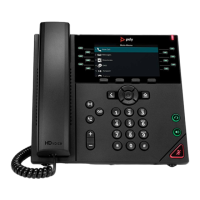
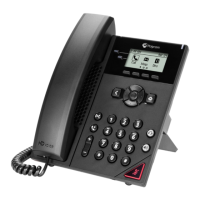
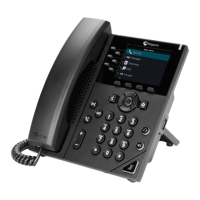
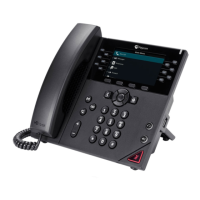
The Polycom VVX series phones are designed to facilitate clear and efficient audio communication in a business environment. These phones can manage up to 24 active, incoming, and held audio calls simultaneously, though only one call can be actively in progress at any given time. They support multiple lines, which can be configured with unique extension numbers or shared across the network, offering flexibility in call management. Users can place calls using a handset, speakerphone, or headset, providing options for different work styles and preferences. The phones also keep a record of all placed calls, allowing for easy redialing of recent contacts.
Beyond basic call functions, the VVX phones offer robust features for managing ongoing calls, including holding, resuming, and transferring calls. Call transfers can be executed as either blind transfers (immediate) or consultative transfers (after speaking with the recipient), providing control over the transfer process. The phones also support conference calls, enabling users to initiate and manage multi-party conversations with up to 12 active or held conference calls at a time, though only one can be active.
Incoming call management is comprehensive, allowing users to ignore, silence, or reject calls. Rejecting a call sends it directly to voicemail, while ignoring or silencing a call stops the ringing but keeps the notification visible. This ensures that users can manage interruptions without missing important notifications. The phones also maintain a Recent Calls list, which includes missed, received, and placed calls, with up to 100 entries per list. This list allows users to view call details, edit contact information, save new contacts to the directory, and delete entries.
The CommPortal Web Interface is a key feature, providing a web-based portal for managing phone settings and features remotely. This portal allows users to log in with their phone number and voicemail PIN to access a dashboard that displays new voice messages, recent calls, contacts, and applied settings. It also includes a Call Manager tab, which describes how incoming calls are handled and allows users to change call coverage settings, such as Call Forwarding, Do Not Disturb, and Find Me/Follow Me.
The Polycom VVX phones are designed for intuitive use. To place a call, users can simply start typing a phone number, press a line key, or pick up the handset/press the Speakerphone or Headset key. For VVX 501 and 601 models, an onscreen keyboard icon facilitates number entry. Redialing is straightforward, either by selecting the Redial icon on the Home screen or pressing the Redial soft key. Switching between the handset, headset, and speakerphone during a call is seamless, requiring only a press of the respective key or picking up the handset.
Call holding and resuming are managed with a simple "Hold" or "Resume" selection. When a call is on hold, a hold icon appears on the line, and a red LED light flashes on the line key. Transferring a call involves pressing the "Transfer" key and then dialing a number or selecting a contact. For consultative transfers, users press "Transfer" again after speaking with the contact.
Managing multiple calls is visually aided by green lights on line keys for active calls and red lights for held calls. Users can select a call from the Calls screen to highlight it and then choose to hold or resume it. Conference calls are initiated by calling a contact, selecting "Conference" after they answer, calling another contact, and then selecting "Conference" again to add them to the call.
The CommPortal Web Interface enhances usability by providing a centralized platform for managing advanced settings. Users can configure phone keys, set the time and date display, and manage voicemail-to-email settings. Voicemail-to-email allows users to forward messages to their email address, with the option to keep the original message in the inbox. The portal also provides tools to delete messages from the inbox, either individually or in bulk, and to permanently delete messages from the Deleted tab.
Customization options further enhance the user experience. Users can change the phone's language, set the time and date display format, and select a background picture. On VVX 501 and 601 phones, personal photos can be uploaded as backgrounds or screen savers using a USB flash drive or the Web Configuration Utility. Transparent line keys can be enabled on VVX 501 and 601 models, allowing the background picture to be fully visible. Screen savers can be enabled to display default photos or an idle browser after a period of inactivity.
Audio settings are also customizable. Users can choose where to hear sound effects (handset, headset, speaker, or active audio device) and select unique ringtones for incoming calls, either for the phone as a whole or for individual lines. Furthermore, specific ringtones can be assigned to individual contacts in the directory, allowing users to identify callers quickly. The volume of ringtones and in-call audio can be adjusted using the physical volume keys on the phone.
While the document primarily focuses on user-facing features, some aspects touch upon maintenance and configuration. The CommPortal Web Interface serves as a central point for managing phone settings, which can be considered a form of user-level maintenance. Through the portal, users can change their password, configure phone keys, and update time and date settings. This allows for self-service adjustments without requiring IT intervention for common changes.
The ability to manage voicemail messages through the CommPortal, including playing, deleting, and marking them as heard/unheard, contributes to maintaining an organized voicemail inbox. Similarly, the option to delete contacts from the Recent Calls list helps keep the call history tidy and relevant.
For more advanced customization, such as adding personal photos as backgrounds or screen savers, the document mentions using a USB flash drive or the Web Configuration Utility. This implies that users can manage their phone's aesthetic settings independently. The document also advises checking with the system administrator for supported languages, indicating that some configurations might require administrative oversight.
Overall, the Polycom VVX series phones are designed with a balance of advanced communication features and user-friendly customization options, supported by a web-based management portal that empowers users to maintain and personalize their phone experience.
 General
| Wi-Fi | No |
|---|---|
| Opus Codec | Yes |
| Wall Mountable | Yes |
| Audio Features | Acoustic Clarity Technology |
| Connectivity | Gigabit Ethernet |
| Lines | 16 lines |
| Power | PoE (Power over Ethernet) or AC adapter |
| Expansion | Support for up to three VVX Expansion Modules |
| Headset Ports | RJ-9 |
| Supported Protocols | SIP |
| Audio Codecs | G.711, G.722, G.729, Opus |

 To Next Page


