4.Thecompletionofchargeis
indicated by the LED remaining on
continuously. The pack is fully charged
and may be used at this time or left on the
charger.
Recharge discharged batteries as soon
as possible after use or battery life
may be greatly diminished. For longest
battery life, do not discharge batteries
fully. It is recommended that the batteries
be recharged after each use.
Charger Diagnostics
This charger is designed to detect certain
problems that can arise with the battery packs
or the power source. Problems are indicated
by one LED flashing in different patterns.
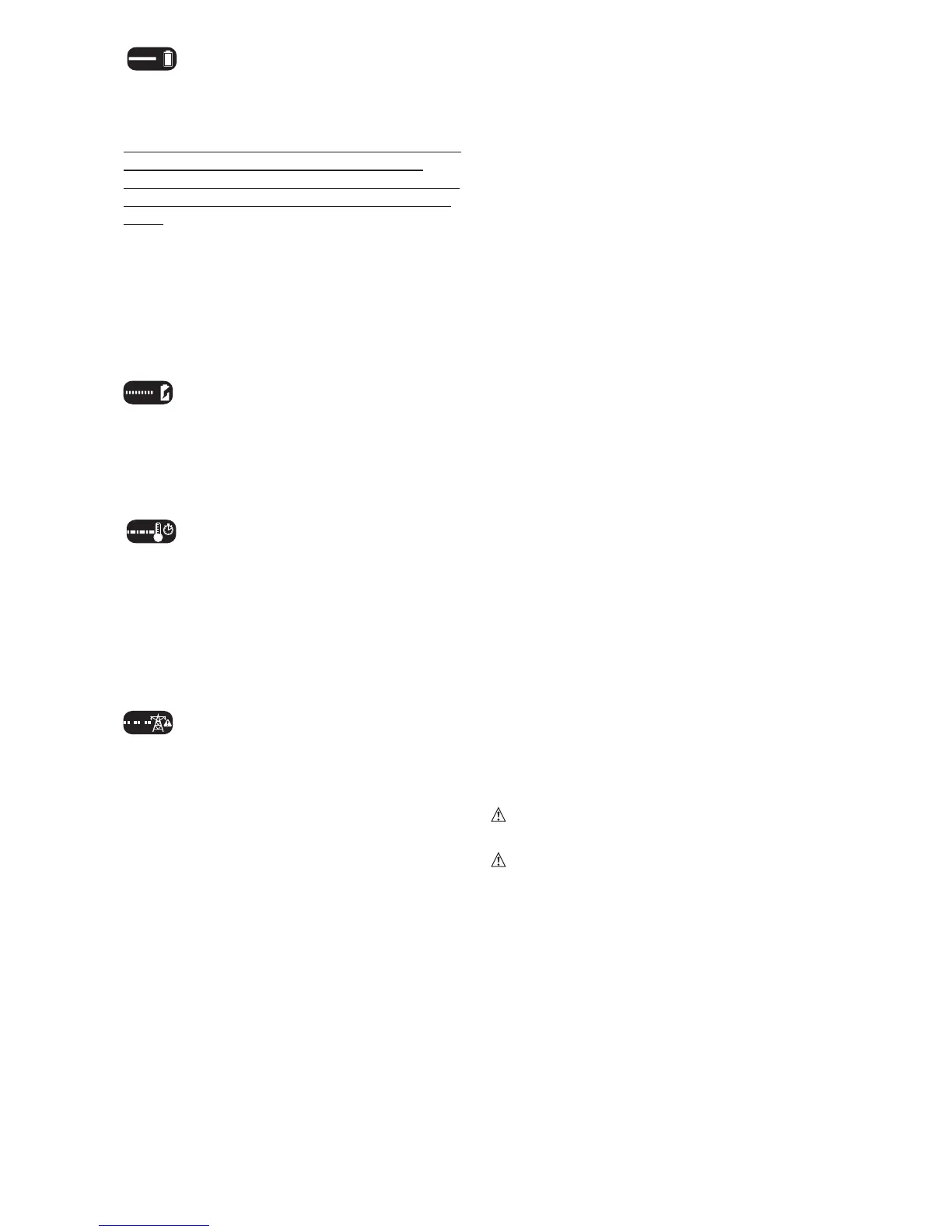
Bad Battery
The charger can detect a weak or
damaged battery. The LED flashes in
the pattern indicated on the label. If you see
this bad battery blink pattern, do not continue
to charge the battery. Return it to a service
center or a collection site for recycling.
Hot/Cold Pack Delay
When the charger detects a battery
thatisexcessivelyhotorexcessively
cold,itautomaticallystartsaHot/Cold
Pack Delay, suspending charging until the
battery has normalized. After this happens,
the charger automatically switches to the
Pack Charging mode. This feature ensures
maximumbatterylife.The light flashes in
the pattern indicated on the label.
Problem Power Line
When the charger is used with some
portable power sources such as
generators or sources that convert DC to
AC, the charger may temporarily suspend
operation. The LED flashes in the pattern
indicated on the label. This indicates that
the power source is out of limits.
Leaving the Battery in the Charger
The charger and battery pack can be
left connected with the LED glowing
indefinitely. The charger will keep the
battery pack fresh and fully charged.
Thischargerfeaturesanautomatictune-
upmodewhichequalsorbalancesthe
individual cells in the battery pack to allow
it to function at peak capacity. Battery
packs should be tuned up weekly or
whenever the battery no longer delivers the
same amount of work. To use the automatic
tune-upmode,placethebatterypackinthe
chargerandleaveitforatleast8hours.
Important Charging Notes
1.Longestlifeandbestperformancecan
be obtained if the battery pack is charged
whentheairtemperatureisbetween65°F
and75°F(18°-24°C).DONOTcharge
the battery pack in an air temperature
below+40°F(+4.5°C),orabove+105°F
(+40.5°C).Thisisimportantandwillprevent
serious damage to the battery pack.
2.Thechargerandbatterypackmay
become warm to touch while charging.
This is a normal condition, and does
not indicate a problem. To facilitate the
cooling of the battery pack after use, avoid
placing the charger or battery pack in a
warm environment such as in a metal
shed, or an uninsulated trailer.
3.Ifthebatterypackdoesnotcharge
properly:
a. Check current at receptacle by
plugging in a lamp or other appliance
b. Check to see if receptacle is
connected to a light switch which turns
power off when you turn out the lights.
c. Move charger and battery pack to a
location where the surrounding air
temperatureisapproximately65°F-
75°F(18°-24°C).
d. If charging problems persist, take
the tool, battery pack and charger to
your local service center.
4.Thebatterypackshouldberecharged
when it fails to produce sufficient power on
jobs which were easily done previously.
DO NOT CONTINUE to use under these
conditions. Follow the charging procedure.
You may also charge a partially used pack
whenever you desire with no adverse
affect on the battery pack.
Safety Warnings and
Instructions: Drills
WARNING: Before using tool, read all
instructions and cautionary markings on tool.
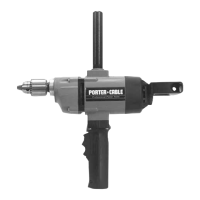
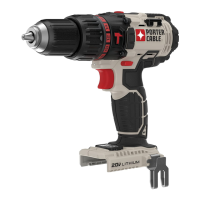
WARNING: Drillmaystall(ifoverloaded
orimproperlyused)causingatwist.Always
expectthestall.Gripthedrillfirmlywithtwo
hands to control the twisting action and
prevent loss of control which could cause
personal injury. If a stall does occur, release
the trigger immediately and determine the
reasonforthestallbeforere-starting.
7



 To Next Page