9
GUIDELINES FOR EXTENSION CORDS
8VHDSURSHUH[WHQVLRQFRUG. Make sure
your extension cord is in good condition.
When using an extension cord, be sure to
use one heavy enough to carry the current
your product will draw. An undersized cord
will cause a drop in line voltage, resulting in
loss of power and cause overheating. The
table below shows the correct size to use
depending on cord length and nameplate
ampere rating. If in doubt, use the next
heavier gauge. The smaller the gauge
number, the heavier the cord.
%HVXUH\RXUH[WHQVLRQFRUGLVSURSHUO\
ZLUHG and in good condition. Always replace
a damaged extension cord or have it repaired
E\DTXDOL¿HGSHUVRQEHIRUHXVLQJLW3URWHFW
your extension cords from sharp objects,
excessive heat and damp or wet areas.
8VHDVHSDUDWHHOHFWULFDOFLUFXLW
IRU\RXUWRROV This circuit must not
be less than a #12 wire with a 16 A time-lag
fuse or a #14 wire with a 12 A time-lag fuse.
NOTE: When using an extension cord on a
circuit with a #14 wire, the extension cord
must not exceed 25 feet in length. Before
connecting the tool to the power line, make
sure the switch is in the OFF position and
the electric current is rated the same as the
current stamped on the motor nameplate,
running at a lower voltage will damage
the motor.
,QDOOFDVHVPDNHFHUWDLQWKHUHFHSWDFOHLQ
TXHVWLRQLVSURSHUO\JURXQGHG,I\RXDUH
QRWVXUHKDYHDFHUWL¿HGHOHFWULFLDQFKHFN
WKHUHFHSWDFOH
WARNING
!
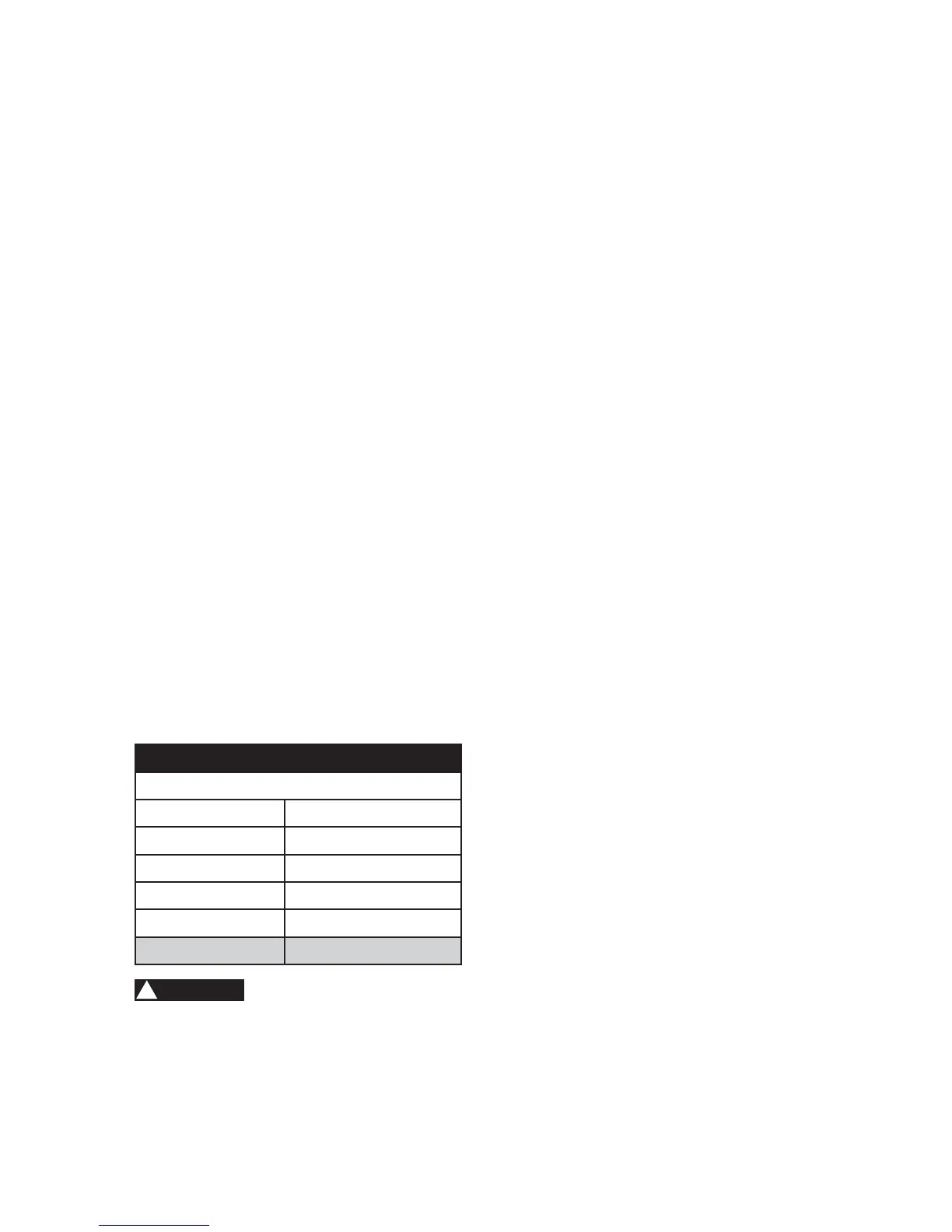
MINIMUM GAUGE FOR EXTENSION CORDS (AWG)
(When usng 120 volts only)
$PSHUH5DWLQJ 7RWDOOHQJWKRI&RUG
More Than Not More Than
25ft. 50ft. 100ft. 150ft.
0 6 18 16 16 14
6 10 18 16 14 12
10 12 16 16 14 12
12 16 14 12
Not Recommended



 To Next Page