8
WARNING: Never connect
heater to private (non-utility) gas
wells. This gas is commonly known
as wellhead gas.
CAUTION: Use only new, black
iron or steel pipe. Internally-tinned
copper tubing may be used in
certain areas. Check your local
codes. Use pipe of 1/2
" diameter or
greater to allow proper volume gas
to heater. If pipe is too small, undue
loss of pressure will occur.
Installation must include an equip-
ment shutoff valve, union, and
plugged 1/8
" NPT tap. Locate NPT
tap within reach for test gauge hook
up. NPT tap must be upstream
from heater (see Figure 7).
IMPORTANT
: Install equipment
shutoff valve in an accessible
location. The equipment shutoff
valve is for turning on or shutting off
the gas to the appliance. Apply pipe
joint sealant lightly to male threads.
This will prevent excess sealant
from going into pipe. Excess sealant
in pipe could result in clogged
heater valves.
CAUTION: Use pipe joint seal-
ant that is resistant to gas
(PROPANE or NG).
We recommend that you install a
sediment trap in supply line as
shown in Figure 7. Locate sediment
trap where it is within reach for
cleaning. Install in piping system
between fuel supply and heater. Lo-
cate sediment trap where trapped
matter is not likely to freeze. A sedi-
ment trap traps moisture and
contaminants. This keeps them from
going into heater controls. If sedi-
ment trap is not installed or is
installed incorrectly, heater may not
run properly.
CAUTION: Avoid damage to
regulator. Hold gas regulator with
wrench when connecting into gas
piping and/or fittings.
WARNING: Never use an open
flame to check for a leak. Apply a
mixture of liquid soap and water to
all joints. Bubbles forming show a
leak. Correct all leaks at
once.
CAUTION: Make sure external
regulator has been installed be-
tween gas supply and heater. See
guidelines under Connecting to Gas
Supply.
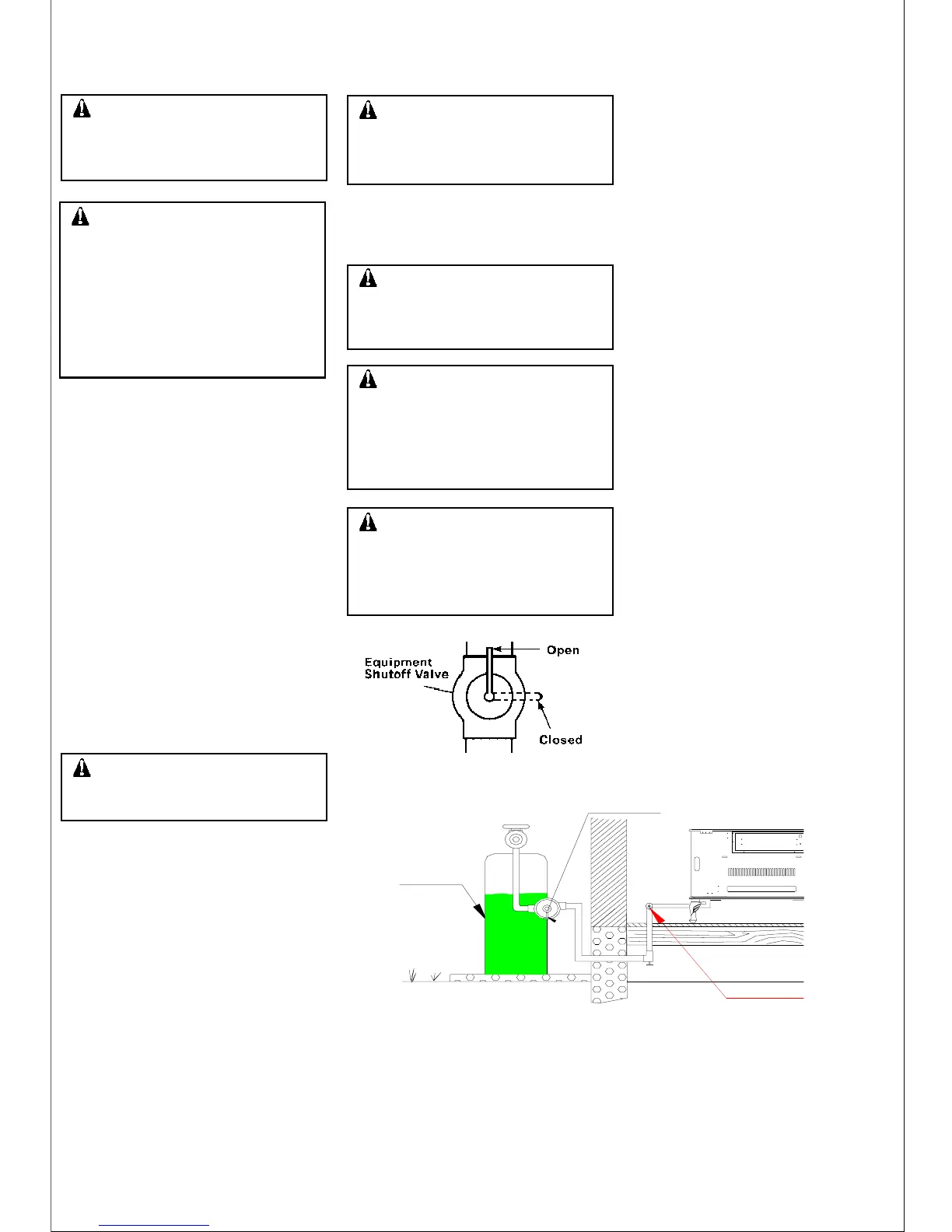
Figure 8 -Equipment Shutoff Valve
Pressure Testing Gas
Supply Piping System
Test Pressures In Excess Of 1/2
PSIG(3.5kPa)
1. Disconnect heater with its
appliance main gas valve (control
valve) and equipment shutoff valve
from gas supply piping system.
Pressures in excess of 1/2 PSIG
will damage heater regulator.
2. Cap off open end of gas pipe
where equipment shutoff valve
was connected.
3. Pressurize supply piping system
by either using compressed air or
opening gas supply tank valve.
4. Check all joints of gas supply
piping system. Apply mixture of
liquid soap and water to gas
joints. Bubbles forming show a
leak.
5. Correct all leaks at once.
6. Reconnect heater and equipment
shutoff valve to gas supply. Check
reconnected fittings for leaks.
Pressure Testing Heater
Gas Connections
1. Open equipment shutoff valve
(see Figure 8).
Figure 9.1 -Checking Gas Joints
CHECKING GAS
CONNECTIONS
WARNING: Test all gas piping
and connections for leaks after
installing or servicing. Correct all
leaks at once.



 To Next Page