In the event of a leak or spill of uncured part material, wear safety glasses with side shields to provide eye protection.
Because of the 3D printer system’s built-in engineering controls, respiratory protection is not necessary during normal operation. A
NIOSH-approved (or equivalent) dust mask is recommended when dry sanding cured material parts.
Always wear protective sleeves or a lab coat when doing anything around the materials. When skin comes in contact with materials
they can cause an allergic reaction that can be harmful to skin.
Skin Contact
Uncured part material is a sensitizer, and can cause allergic reactions if skin comes into contact. When handling any part or waste material,
always wear 100% nitrile gloves and lab coats.
Should skin come into contact with uncured part material, wash thoroughly with soap and cold water and immediately remove contaminated
clothing and shoes. Do not use hot water or solvents to wash hands, as it will result in absorption through the skin. If skin is irritated, seek
medical attention. Dry-clean contaminated clothing and discard contaminated shoes and leather products in accordance with applicable
regulations.
Eye Contact
Safety goggles with side shields should be worn to prevent accidental splashes into the eyes. If material comes in contact with the eye, ush
immediately with large amounts of cold water for 15 minutes, avoid sunlight, uorescent light, and other ultraviolet light, and obtain immediate
medical attention. Eye wash facilities and a rst aid kit should be readily available and close to the 3D printer system.
Contact Lenses
Wearing contact lenses is not recommended if handling liquid materials. If material splashes into eyes when contact lenses are worn, ush eyes
immediately with water. Verify that ushing has removed the contact lens from the eye(s). Protect eyes from light and obtain immediate medical
attention. Discard contact lenses that come into contact with liquid material.
Fume Inhalation
Under normal operation, inhalation is not an expected route of entry. Always work in a well ventilated area when using materials and avoid
breathing vapors. If inhaled, remove the personalto fresh air. Give articial respiration or cardiopulmonary resuscitation (CPR) if required. If
breathing is dicult, give oxygen. Obtain immediate medical attention.
Ingestion
Uncured part material is toxic if ingested. Obtain immediate medical attention.
Hygienic Practices
Because uncured material is toxic if ingested, it must not be present where food and drink are stored, prepared, or consumed. After handling
materials, wash hands with soap and cold water before consuming meals, breaks, smoking, applying cosmetics, using toilet facilities, and after
work.
Employees should be alerted of the need to clean and rinse off any contacted surface promptly in order to prevent further contamination. Ensure
a convenient washroom location is provided with access to soap, water, and disposable paper towels.
Tools contaminated with part material should be cleaned prior to reuse. Solvents such as denatured alcohol or Isopropyl Alcohol (IPA), are
normally required to clean equipment and tools. Wash with soap and water to remove any traces of excess part material or solvent.
Material Handling and Safety
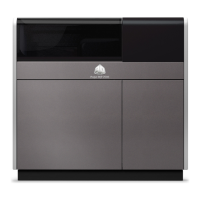
Prior to using the ProJet® MJP 2500 and 2500
Plus
, users should be aware of potential hazards which may result in exposure to uncured part
material, such as removal of the material waste bag and handling part material cartridges.
Emergency (GHS/SDS)
Chemtrec USA (800) 424-9300; Europe +1-703-527-3887
Consult the materials Global Harmonized Standards/Safety Data Sheets (GHS/SDS) for information on specic materials. For further
information on this and related topics, consult the 3D Systems - Materials website at http://www.3dsystems.com/support/materials/msds.
Packaging Inspection
The material cartridges are packaged in shipping cartons. Upon receipt of materialshipments, inspect cardboard carton exterior for signs of
damage and leakage. Ifleakage is observed, DO NOT open carton, and contact 3D Systems’s TechnicalSupport Hotline.


 To Next Page
 Loading...