
 Need help?
Do you have a question about the Radiodetection RD7200 and is the answer not in the manual?
Provides basic operating instructions, safety information, and guidelines for the RD7200 locator and transmitter.
Details how to register products to extend the standard one-year warranty to three years.
Explains safety checks, calibration certificates, and performance tests for the RD7200 locator.
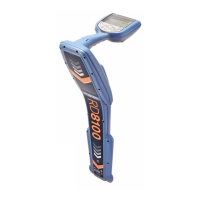
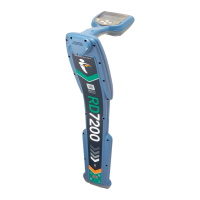
Identifies and describes the physical components and features of the RD7200 locator.
Details the buttons and keys on the RD7200 locator keypad and their functions.
Explains the meaning of different icons displayed on the RD7200 locator screen.
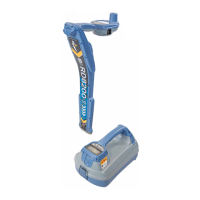
Identifies and describes the physical components and features of the Tx-5 and Tx-10 transmitters.
Details the buttons and keys on the transmitter keypad and their functions.
Explains the meaning of different icons displayed on the transmitter screen.
Describes the short and long press actions for the RD7200 locator's keys.
Describes the short and long press actions for the transmitter's keys.
Lists and explains the configurable options available in the RD7200 locator's system menus.
Lists and explains the configurable options available in the transmitter's system menus.
Enables or disables Eco mode on the transmitter to maximize runtime with alkaline batteries.
Recommends a general-purpose locate frequency by measuring target utility impedance.
Introduces active and passive frequency locating methods for buried utilities.
Utilizes harmonic signals on power networks to distinguish single vs. multiple cable sources.
Describes different modes (PEAK, PEAK+, GUIDANCE, NULL) for signal detection and tracing.
Provides information on measuring utility depth, signal current, and relative orientation.
Applies a locate signal to insulated live wires when direct connection or induction is unsuitable.
Used to identify target cables among multiple cables or in tightly packed situations.
Tools for tracing non-metallic pipes and conduits, sometimes requiring specific transmitter settings.
Detects cable or pipe insulation faults using an A-Frame accessory and transmitter multimeter function.
Applies a signal to a line or live cable from a domestic mains plug or directly.
Used for locating pipes and cables underwater at depths up to 300 feet / 100 meters.
Guidelines for storing equipment in a clean, dry environment and ensuring terminals are clean.
Recommendations for using approved battery packs, chargers, and power supplies.
Instructions for cleaning the equipment safely using a soft cloth, avoiding abrasives and high pressure water.
Information on obtaining and installing software upgrades to enhance locator and transmitter performance.
Advises against attempting to disassemble the equipment, as it voids the warranty and may cause damage.
Recommendations for regular checks, annual servicing, and calibration at approved centers.
Procedures for running self-tests and eCert for checking locator accuracy and performance.
Details on using PC software for managing, customizing, registering, and upgrading the RD7200 locator.
 General
| Operating Temperature | -20°C to +50°C (-4°F to +122°F) |
|---|---|
| Storage Temperature | -40°C to +70°C (-40°F to +158°F) |
| IP Rating | IP65 |
| Display | LCD with backlight |
| Frequencies | 512 Hz, 640 Hz, 8 kHz, 33 kHz |
| Operating Modes | Peak, Null |
| Current Measurement Accuracy | +/- 5% of reading |
| Battery Type | Alkaline or NiMH rechargeable batteries |




 To Next Page