EasyManua.ls Logo

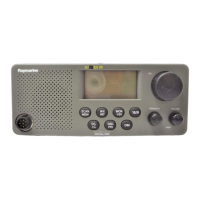
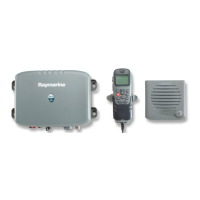
Raymarine RAY60 - User Manual

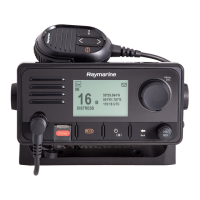
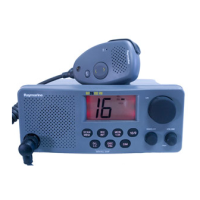
Raymarine RAY60
116 pages
Print Icon
To Next Page IconTo Next Page
Loading...
Ray50 / Ray60
/ Ray70
Installation and operation
instructions
English
Date: 03-2015
Document number: 81356-1-EN
© 2015 Raymarine UK Limited
Ray50/Ray60/Ray70

Table of Contents

Other manuals for Raymarine RAY60

Questions and Answers

  • R
    Robert SimmonsAug 22, 2025
    What to do if my Raymarine Two-Way Radio will not boot up?
    • M
      Matthew HernandezAug 22, 2025
      If your Raymarine Two-Way Radio won't boot up and is stuck in a reboot loop, the issue might stem from the power supply or connection. Please refer to the solutions provided for the problem 'Product does not turn on or keeps turning off'. Alternatively, the software might be corrupted. In this case, try re-flashing the latest software from the Raymarine website.
  • J
    Johnny GrantNov 6, 2025
    Why my Raymarine Two-Way Radio does not turn on?
    • M
      markhawkinsNov 6, 2025
      If your Raymarine Two-Way Radio doesn't turn on or keeps turning off, several factors could be responsible. First, check the fuses and breakers, replacing any that are blown. If fuses continue to blow, inspect for cable damage or incorrect wiring. Also, ensure the power cable is fully inserted and locked. Inspect the power supply cable and connectors for damage or corrosion. Flex the power cable near the connector to check for reboots or power loss, and replace if necessary. Check the vessel's battery voltage, terminal condition, and power supply cables, ensuring secure, clean, corrosion-free connections. Finally, use a multi-meter to check for high voltage drop across connectors and fuses, replacing as needed. Also, make sure that the power supply is wired correctly, according to the inst...

Summary

Important Information and Safety

Safety Notices

Essential safety warnings and precautions for installing and operating the Raymarine VHF radio.

Installation Planning and Guidance

Installation Checklist and Parts

A checklist for installation tasks and a list of parts supplied with the Ray50 VHF radio.

Location Requirements and Mounting Options

Guidance on selecting installation locations, considering GPS, ventilation, and surface requirements.

Cabling and Connections

Power Connection and Protection

Detailed instructions for connecting the power supply, including fuse and breaker recommendations.

Specific Connections

Guidance on connecting handsets, SeaTalkng, NMEA 0183, antennas, speakers, and loud hailers.

Location and Mounting Procedures

Bracket and Panel Mounting

Step-by-step instructions for mounting the Ray50 using bracket or panel mount methods.

Ray60;Ray70 Panel Mounting

Detailed guide for panel mounting the Ray60/Ray70, including bezel attachment.

Getting Started with Your VHF Radio

Configuration Settings

Guide to setting language, AIS, network type, MMSI, ATIS ID, and radio region.

Digital Selective Calling (DSC) Operations

Distress and Urgency Calls

Procedures for making and responding to distress, urgency, and safety calls.

VHF Radio Operations

Hailer, Fog Horn, and Intercom Functions

Troubleshooting Common Issues

General Troubleshooting

Provides possible causes and corrective actions for common problems with marine electronics installations.

Power Up and VHF Radio Issues

Troubleshooting power-up problems and issues with VHF radio functions like DSC.

GPS Troubleshooting

Solutions for common GPS/GNSS problems such as no fix or no data.

Technical Specifications

Ray50 Technical Specification

Detailed environmental, power, transmitter, receiver, and speaker specifications for the Ray50.

Ray60 Technical Specification

Detailed environmental, power, transmitter, receiver, and speaker specifications for the Ray60.

Ray70 Technical Specification

Detailed specifications for Ray70, including AIS, GPS, and loud hailer capabilities.

Raymarine RAY60 Specifications

General IconGeneral
TypeVHF Marine Radio
Frequency Range156.000 - 163.425 MHz
DSCYes
GPSNo
Waterproof RatingIPX7
ChannelsInternational, U.S.A., Canadian
DisplayLCD
Power Output25W (High), 1W (Low)

Related product manuals