Chapter 2: Installation 17
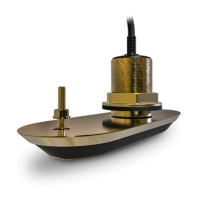
2.2 Installing the Thru-hull Transducer
Tools and Material Needed
Water-based antifouling paint (mandatoryfor boats kept in salt
water)
Safety goggles
Dustmask
Electric drill
Drill bit:1/8" (3 mm)
Holesaw:
Drill
Fiberglass or wood2" (51 mm)
Aluminium or steel hull 2-1/8" (54 mm)
Sandpaper
File (for installation in a metal hull)
Mild household detergent or weak solvent (alcohol)
Marine sealant
Slip-joint pliers
Silicone greaseor petroleum jelly
Tie-wraps
Cored fiberglass hull installation:
Hole saw for hull interior 2-3/8" (60 mm)
Cylinder, wax, tape and castingepoxy
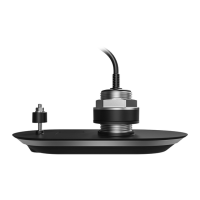
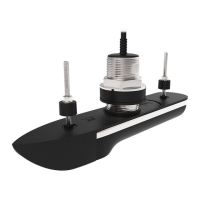
Fairing (required with E66020, E66029 and E66043 transducers;
optionalfor E66024, E66033 and E66035
Level and protractor (installation with a fairing)
Band saw or hand saw (installation with a fairing)
Rasp (installation with a fairing)
Preparation
Fairing
Most vessels havea deadrise angle at thetransducer’s mounting
location. If the transducer is mounted directly to the hull, the sonar
beam will be tilted off-vertical at the same angle as the deadrise. To
offset this deadrise angle, you can install a transducer fairing.
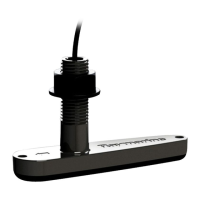
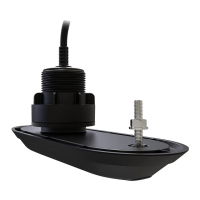
Differentfairingsareavailabletofitvarioustransducers.Fairingsare
required for installing the E66020, E66029 and E66043 thru-hull
transducers.



 To Next Page
 Loading...