16
Always replace the tyre with a tyre of the same type, dimension and prole as otherwise the ride
characteristics may be adversely affected. This can lead to accidents.
CAUTION:
Tyres are wear parts. Check the tread depth, tyre pressure and condition of the tyre side-
walls regularly. Replace worn tyres before using the bike.
Note:
Note the dimension of the tted tyre. Standard designations are used when stating the tyre
dimension.
• Example 1: “46-622” means the tyre is 46)mm wide and the rim diameter is 622)mm.
• Example 2: “28 x 1.60 inches” means that the tyre diameter is 28 inches and the tyre width
is 1.60 inches.
• The tyre pressure is frequently stated in PSI. Technical data” contains a table which you can
use to convert tyre pressures from PSI into bar.
IX-4.1: Inner tubes
The inner tube is necessary to maintain the pressure inside the tyre. It is inated via a valve.
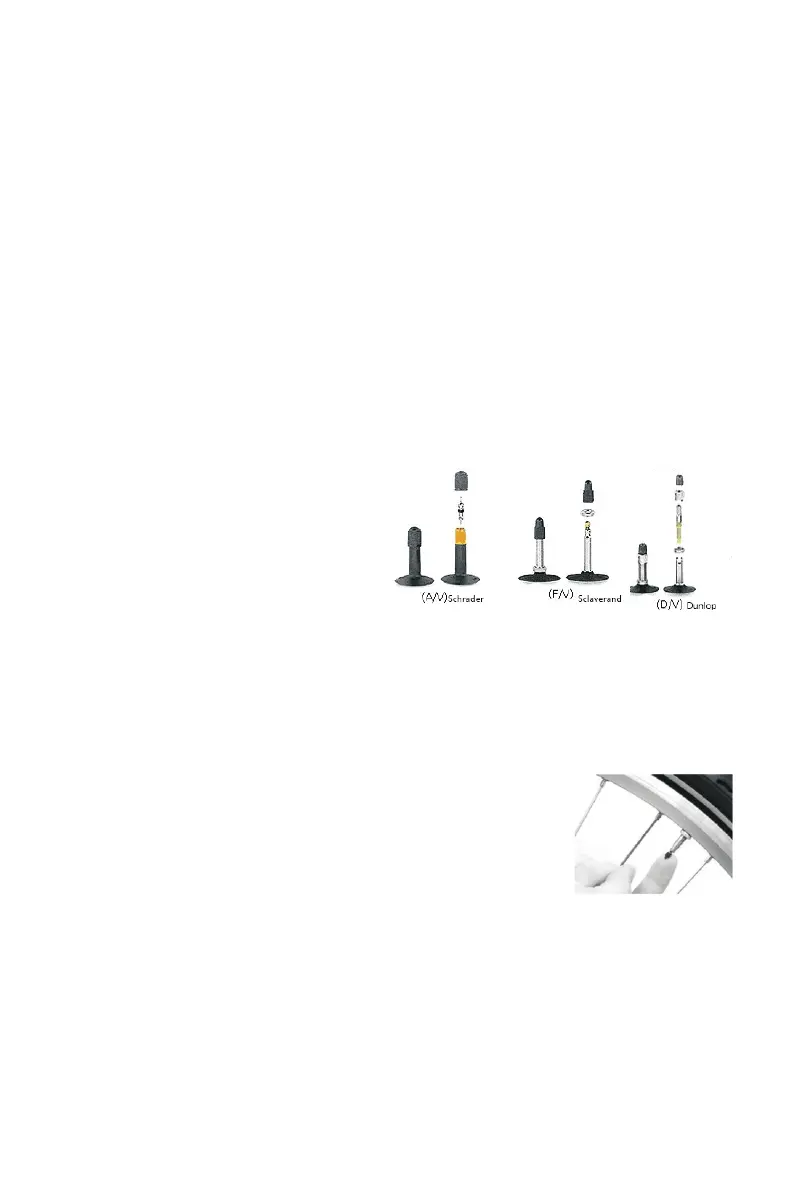
Three valve types exist:
All three have a cap to protect them from
ingress of dirt.
To inate an inner tube with a Sclaverand or
road valve, proceed as follows:
• Unscrew the valve cap anticlockwise
with your ngers.
• Unscrew the knurled nut anticlockwise.
• Push the knurled nut with your nger briey into the valve until air escapes.
• Inate the inner tube using a suitable tyre pump.
• Screw the knurled nut back down.
• Screw the cap clockwise back onto the valve.
NOTE:
Ask a specialist cycle shop for advice on which tyre pump is suit-
ableforyourvalveToinateaninnertubewithaDunlop/Woods
valve or Schrader/car valve proceed i follows:
• Unscrew the valve cap anticlockwise.
• Inatetheinnertubeusingasuitabletyrepump.
• Screw the cap clockwise back onto the valve.
X. Brake, brake levers and brake systems
This User Manual describes the maintenance and handling of typical, commercially available
brake components for MTB, ATB, cross and road bikes. For other components, refer to the
separate information or enclosed instructions. If you have questions on installation, adjustment,
maintenance and operation, please consutt a specialist cycle shop.



 To Next Page