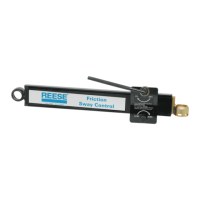
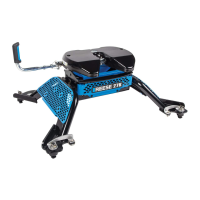
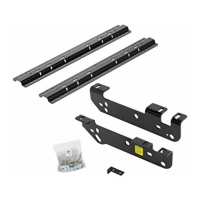
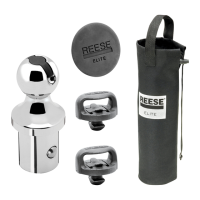
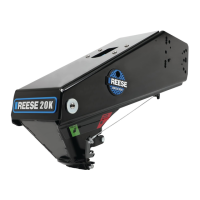
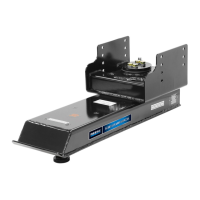
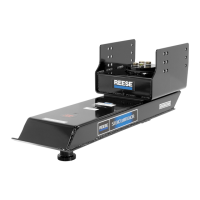
The Reese Dual Cam II is a premium weight distribution kit designed to enhance towing safety and stability by providing active sway control and weight distribution. This system is engineered to force the trailer to stay in a straight line behind the tow vehicle, counteracting sway forces more effectively as they increase. The redesigned Dual Cam II system is noted for its ease of installation and broader application coverage, making it compatible with a wide range of popular trailer frames.
Function Description:
The primary function of the Reese Dual Cam II is to act as a leverage system between the tow vehicle and the trailer. This mechanism distributes the tongue weight across all axles of both the tow vehicle and the trailer, preventing excessive squat at the rear of the tow vehicle and improving overall stability. Unlike passive sway control systems, the Dual Cam II provides active sway control, meaning it actively resists sway as it occurs, rather than merely dampening it. This ensures that the trailer remains aligned with the tow vehicle, reducing the risk of jackknifing and loss of control, especially during turns or braking. The kit is designed for both weight distribution and sway prevention, eliminating the need for separate sway bars.
Important Technical Specifications:
The Reese Dual Cam II is available in three different kit numbers, each corresponding to a specific spring bar weight rating, max tongue weight, and max gross weight (GVWR):
- Kit Number 66091:
- Spring Bar Weight Rating: 600 lbs
- Max Tongue Weight: 600 lbs
- Max Gross Weight (GVWR): 12,000 lbs
- Kit Number 66092:
- Spring Bar Weight Rating: 800 lbs
- Max Tongue Weight: 800 lbs
- Max Gross Weight (GVWR): 12,000 lbs
- Kit Number 66093:
- Spring Bar Weight Rating: 1,200 lbs
- Max Tongue Weight: 1,200 lbs
- Max Gross Weight (GVWR): 12,000 lbs
For weight carry (without spring bars), the system supports a maximum tongue weight of 1,000 lbs and a maximum gross weight (GVWR) of 10,000 lbs.
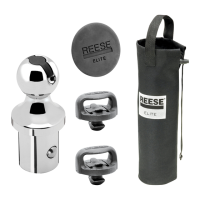
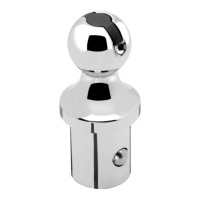
The system includes a pre-torqued 2-5/16" hitch ball, which requires a 1-1/4" shank thread size. It works with both 1-1/2" and 2" frame widths and accommodates frame heights ranging from 4" to 7". The installation requires specific tools, including 1-1/8", 15/16", and 3/4" sockets and wrenches, a torque wrench capable of up to 450 ft-lbs, and a tape measure.
Usage Features:
- Fully Automatic, Active Sway Control: The system continuously works to keep the trailer straight behind the tow vehicle, providing superior stability.
- No-Drill Installation: The design eliminates the need for drilling into the trailer frame, simplifying the installation process.
- No Relocation of A-Frame Items: Users do not need to move existing items on top of the A-frame to install the sway control system.
- Simple Installation and Adjustment: The kit is designed for straightforward setup and fine-tuning.
- Automatic Sway Control Engagement: Hooking up the spring bars automatically engages the sway control mechanism.
- No U-Bolts: The absence of U-bolts prevents interference with bottle racks or other A-frame mounted items.
- Reduced Noise: The system is engineered for quieter operation during travel.
- Compatibility: Works with various frame widths (1-1/2" and 2") and frame heights (4"-7").
- Adjustable Ball Mount: The ball mount allows for up to 15° of adjustment, enabling precise height and angle settings to compensate for vehicle squat and achieve proper weight distribution. The height of the hitch ball needs to be approximately 1 inch above the coupler when the trailer is level to account for vehicle squat.
- Front Axle Load Restoration (FALR): The system helps restore the front axle load of the tow vehicle, which is crucial for maintaining steering and braking effectiveness. Adjustments to the cam hole position or ball mount can increase or decrease FALR as needed.
- Aluminum Trailer Compatibility: The kit can be installed on aluminum trailers, provided an isolator (such as polypropylene tape or heavy-duty packaging tape) is used to prevent galvanic corrosion.
Maintenance Features:
- Limited Lifetime Warranty: The product comes with a limited lifetime warranty, ensuring it is free from material defects in both material and workmanship for the original consumer purchaser, provided installation and use are in accordance with product instructions.
- Pre-Trip Maintenance:
- Lubrication: Trunnions, ball, and cam (spring bar and cam interface) should be lubricated with lithium grease or heavy oil for the first 250 miles of use to allow the bars to "embed" properly in the cams.
- Cleaning: Keep trunnions and sockets in the head assembly free of dirt/debris. The head assembly exterior should also be kept clean, especially the trunnion sockets, to prevent dirt or debris from lodging between components.
- Inspection: Before every trip, clean the ball and coupler socket and coat the ball lightly with grease. Check spring bars and bolts for wear, replacing any component worn halfway through. Verify that all bolts are properly tightened, and the hitch pin and clip are securely in place. Ensure electrical hookups and safety chains are properly connected.
- Rust Prevention: Keep the hitch painted to prevent rust and maintain its appearance.
- Spring Bar Marking: It is recommended to mark the spring bars to distinguish between the driver's side and passenger's side, as switching sides every trip is not recommended and can cause excessive noise.
- Noise Considerations: Metal-to-metal contact may result in noises, especially at slower speeds. It is normal for spring bars and cams not to be at the exact same angle, and spring bars may not necessarily sit flat on the cams.
- Removal When Not Towing: Remove the hitch from the towing vehicle receiver when not towing to prevent contamination of head sockets, reduce the chance of striking the hitch on driveway ramps or other objects, and minimize damage in the event of a rear-end collision.
- Spring Bar Removal for Backing Up: It is recommended to remove the spring bars when backing up into campsites, driveways, or similar tight areas to prevent over-rotation and potential damage to the ball mount.
The Reese Dual Cam II is a comprehensive solution for trailer towing, offering advanced safety features and robust construction to ensure a stable and secure towing experience.

 Need help?
 General

 To Next Page