15
Safety On Board
Symptoms of excessive exposure to carbon monoxide are:
• Dizziness • Watering, itchy eyes
• Drowsiness • Flushed appearance
• Nausea • Inattentiveness
• Headache • Incoherence
• Ringing in the ears • Fatigue or vomiting
• Throbbing temples • Convulsions
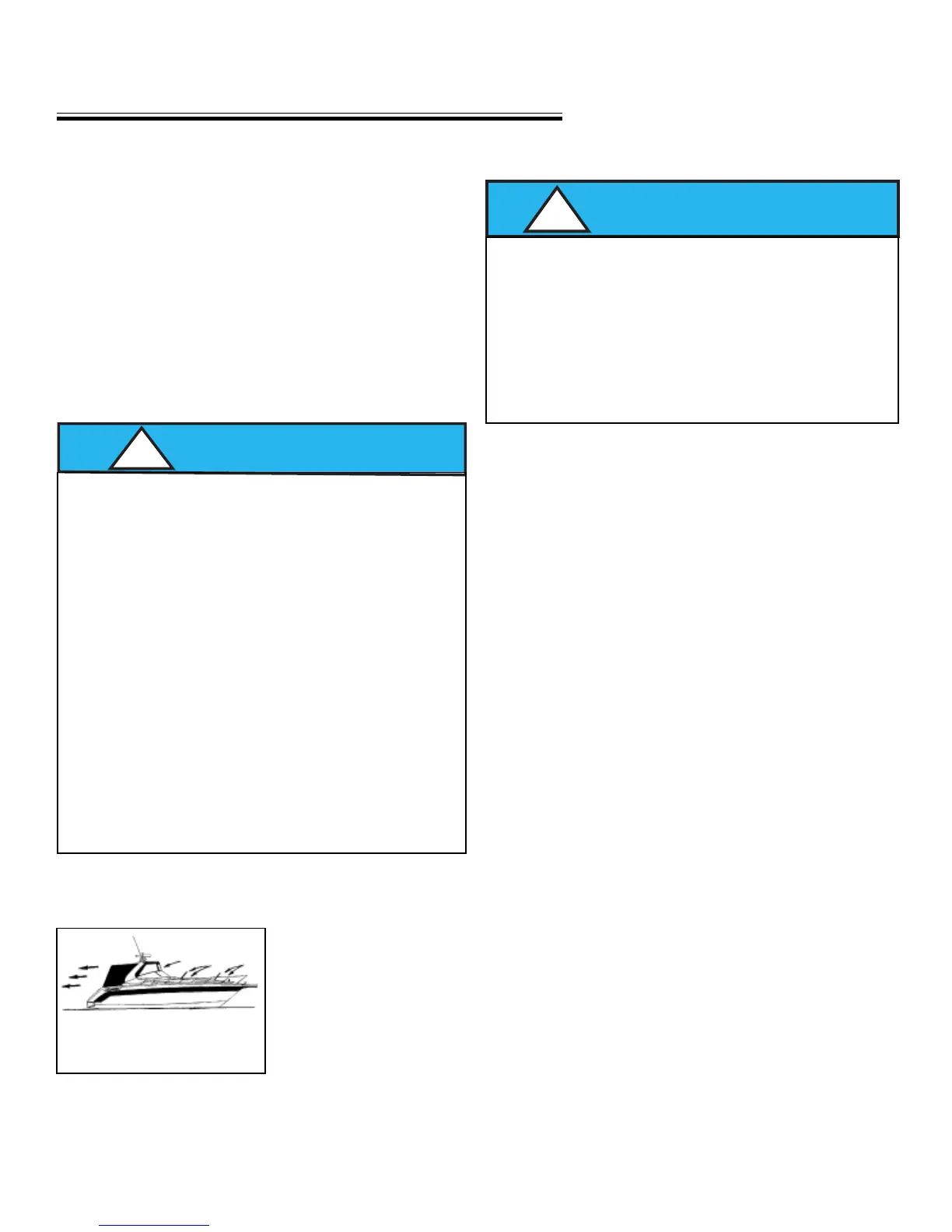
To help prevent carbon
monoxide accumulation,
ventilate your cabin and
cockpit while underway.
Open a forward hatch,
porthole or window to
allow air to travel through
the boat’s interior. See the
illustration below for desired airflow.
DESIRED AIR FLOW
THROUGH BOAT
AVOID INJURY OR DEATH!
EXHAUST FUMES CAN KILL!
INSPECT THE EXHAUST SYSTEM BEFORE
EACH OUTING.
REPAIR OR REPLACE LEAKING, CRACKED,
CORRODED, AND/OR MISSING EXHAUST
COMPONENTS.
WARNING
!
EACH TRIP
Make sure all exhaust clamps are in place and secure.
Look for exhaust leaking from the exhaust system
components, indicated by rust and or black streaking,
water leaks, or corroded or cracked fittings.
Inspect all rubber exhaust hoses for burned or cracked
areas. All rubber hoses should feel soft and and be free
of kinks.
Visually verify that water exits at the engine exhaust
outlet.
Keep an ear tuned for any change in exhaust sound
that could indicate an exhaust component malfunction.
DO NOT OPERATE THE VESSEL IF ANY OF THE
ABOVE ITEMS EXIST. CONTACT A MARINE
PROFESSIONAL!
CARBON MONOXIDE IS A TASTELESS,
ODORLESS AND INVISIBLE GAS THAT CAN
CAUSE DISCOMFORT, SEVERE ILLNESS,
AND EVEN DEATH. EXERCISE CAUTION
WHILE OPERATING GENERATOR OR
ENGINES IN CONFINED SPACES OR AT
DOCKSIDE. DO NOT ALLOW HULL EXHAUST
OUTLETS TO BECOME BLOCKED.
EXHAUST FUMES CAN BECOME TRAPPED
IN AND AROUND THE CONFINES
OF YOUR BOAT. DURING IDLE AND SLOW
CRUISE CONDITIONS, BILGE BLOWERS
SHOULD BE USED.
DANGER
!



 To Next Page