8
Chapter 3
NIGHT RUNNING
Boats operating between sunset and sunrise ( hours vary
by state), or in conditions of reduced visibility, must use
navigation lights. Nighttime operation, especially during
bad weather and fog, can be dangerous. All Rules of the
Road apply at night, but it is best to slow down and stay
clear of all boats regardless of who has the right-of-way.
To see more easily at night, avoid bright lights when
possible. Also, it is helpful to have a passenger keep watch
for other boats, water hazards and navigational aids.
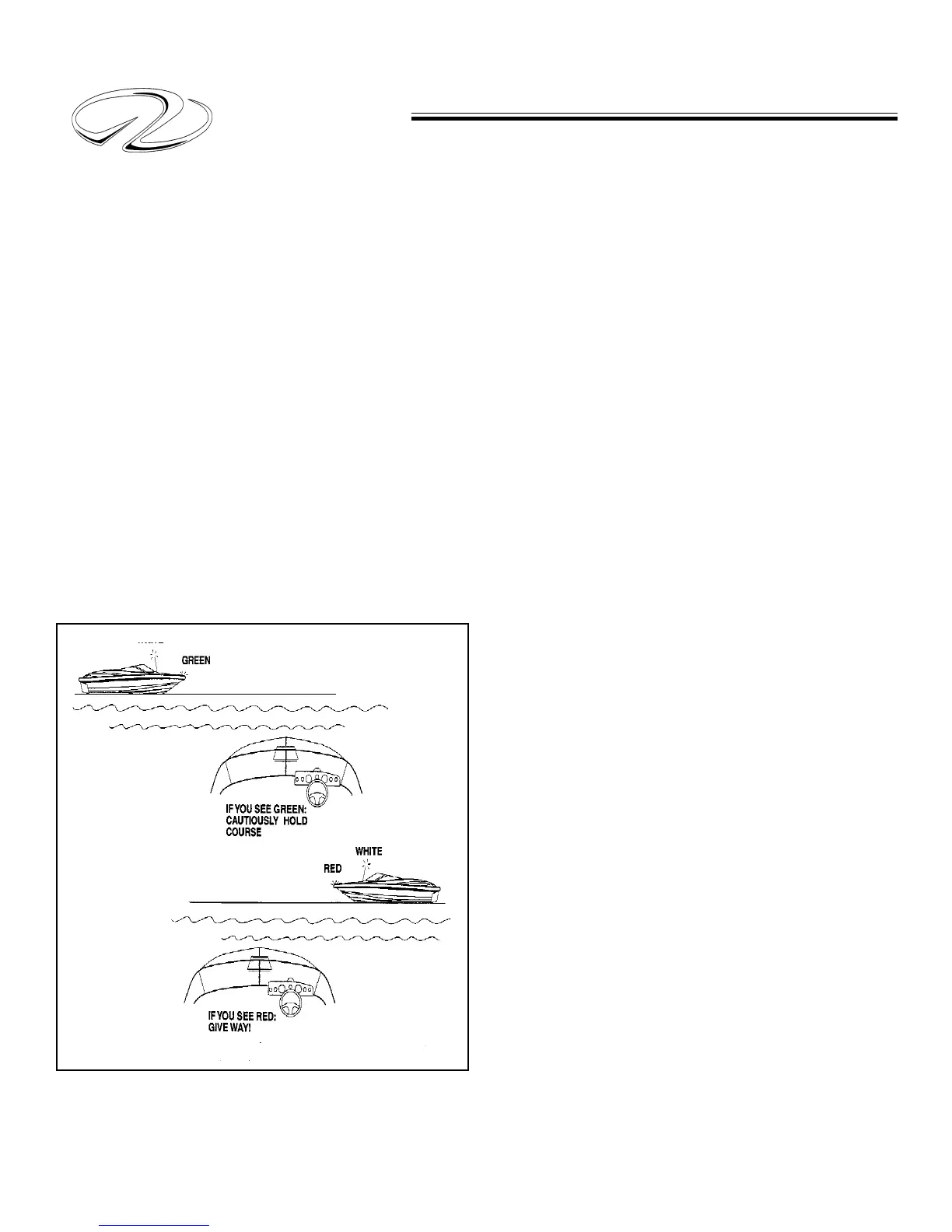
To determine the size, speed and direction of other vessels
at night, you should use the running lights. A green light
indicates starboard side, and a red light indicates port side.
Generally, if you see a green light, you have the right-of-
way. If you see a red light, give way to the other vessel.
BRIDGE CLEARANCE
Be aware that your vessel requires a specified bridge
clearance height. This height is a measured estimate from
the waterline to the top of the highest object usually the
radar arch, radar or the masthead light depending on what
arch equipment is installed. The estimated height can
change because of variances in the loaded condition of
the vessel. Consult the bridge clearance specifications
located in Chapter 12 (technical information section). An
easy way to measure bridge clearance is to have someone
place a long straightedge such as a piece of wood at a 90
degree angle across the highest point of the boat. Then
with a tape rule measure the distance straight down to
the waterline. Take this measurement with the fuel and
water tanks 1/2 full and only 1 person besides yourself
on board. This will give you a safe measurement. As your
boat is loaded down with people the bridge clearance will
become somewhat lower.
Some bridges are tendered. Know and use the proper
bridge signals when approaching these bridges (see bridge
signals in this chapter). You can also monitor and
communicate on channel 13 of a VHF radio for bridge
information in most domestic locals. Other bridges are
marked with a clearance measurement and you are on
your own. After determining your vessel will clear the
bridge proceed with caution at a safe idle speed. Keep
your eye on vessel traffic at all times in order to react
quickly. Resume a safe speed once clear of the bridge
structure and acknowledgment of clear visibility.
Use common sense regarding bridge clearance because
bodily injury and property damage could result if a
mishap occurs with a bridge structure.



 To Next Page