10
Chapter 5
GENERAL INFORMATION
Alternating current sometimes called AC is used on board
your vessel. It is brought to the boat through the use of
shore power cords or produced on board through a gen-
erator. Alternating voltage is normally measured at 120
volts. It is important to familiarize yourself and under-
stand the various parts of the main AC panel. It is of prime
importance to respect alternating current on a vessel just
as you do your home electricity.
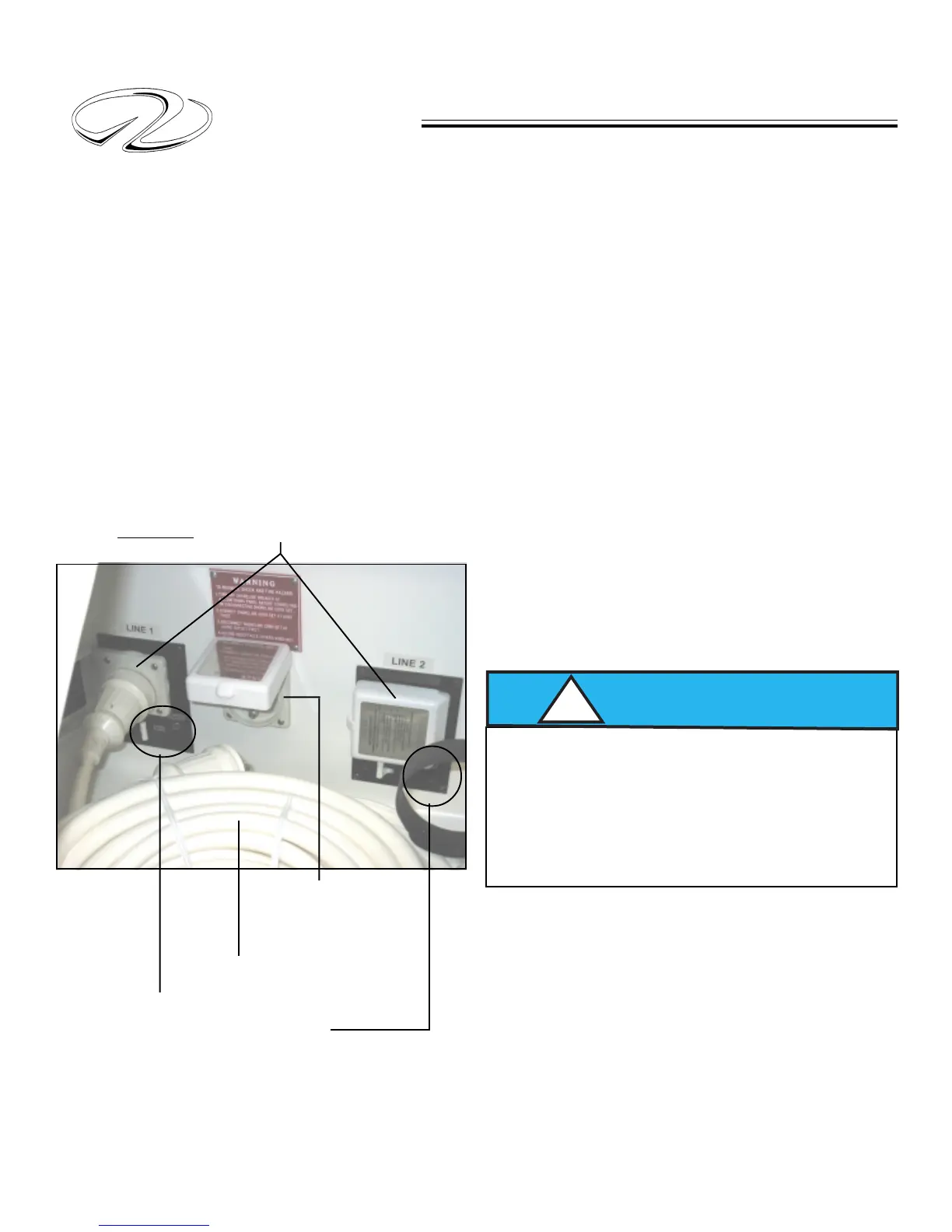
Shore power Locker/Inlets/Cords
ALTERNATING CURRENT (AC)
REVERSED POLARITY INDICATORS
AND MAIN INLET BREAKERS
TYPICAL SHORE POWER INLETS
SHORE POWER CORD
CABLE TV
INLET
The shore power locker stores the two 30 amp cords. Earlier
production boats feature a telephone cable/TV cord.
Since the popularity of cell phones the telephone cable
has been eliminated.
When connecting the shore power cords be sure to twist
the cord into the inlet plug first. The cord installs one way
only. Align the pins, insert the cord into the inlet plug and
twist in place. Then screw the fitting onto the threads to
lock the cord in the inlet plug.
Plug the power cord into the marina receptacle last. This
reduces the possibility of a shock hazard.
When disconnecting the shore power cord remove from
the marina outlet first. Then remove the cord from the
ship’s power inlet.
Note that some dockside power boxes will not accept the
male twist shore power cord. Some older power boxes use
a 3 prong system similar to a house receptacle. You may
need to buy an adapter that changes from twist to 3-way.
They can be purchased at most marina supply houses. Make
sure it is the same capacity as the shore power cord.
PREVENT BODILY INJURY, DEATH OR FIRE!
NEVER USE EXTENSION CORDS
OR IMPROVISED CORDS
IN THE SHORE POWER INLETS.
USE ONLY APPROVED MARINE SHORE
POWER CORDS.
DANGER
!



 To Next Page