18
Chapter 5
TRIM SYSTEM OVERVIEW
Your stern drive vessel features both an outdrive controlled
power trim and a transom mounted trim tab system.
V-drive models use the trim tab system only. Both these
systems use hydraulic cylinders which are driven electrically
by a motor and valves which control the bow rise or port
and starboard heeling angles depending on the particular
system on your vessel.
Power Trim
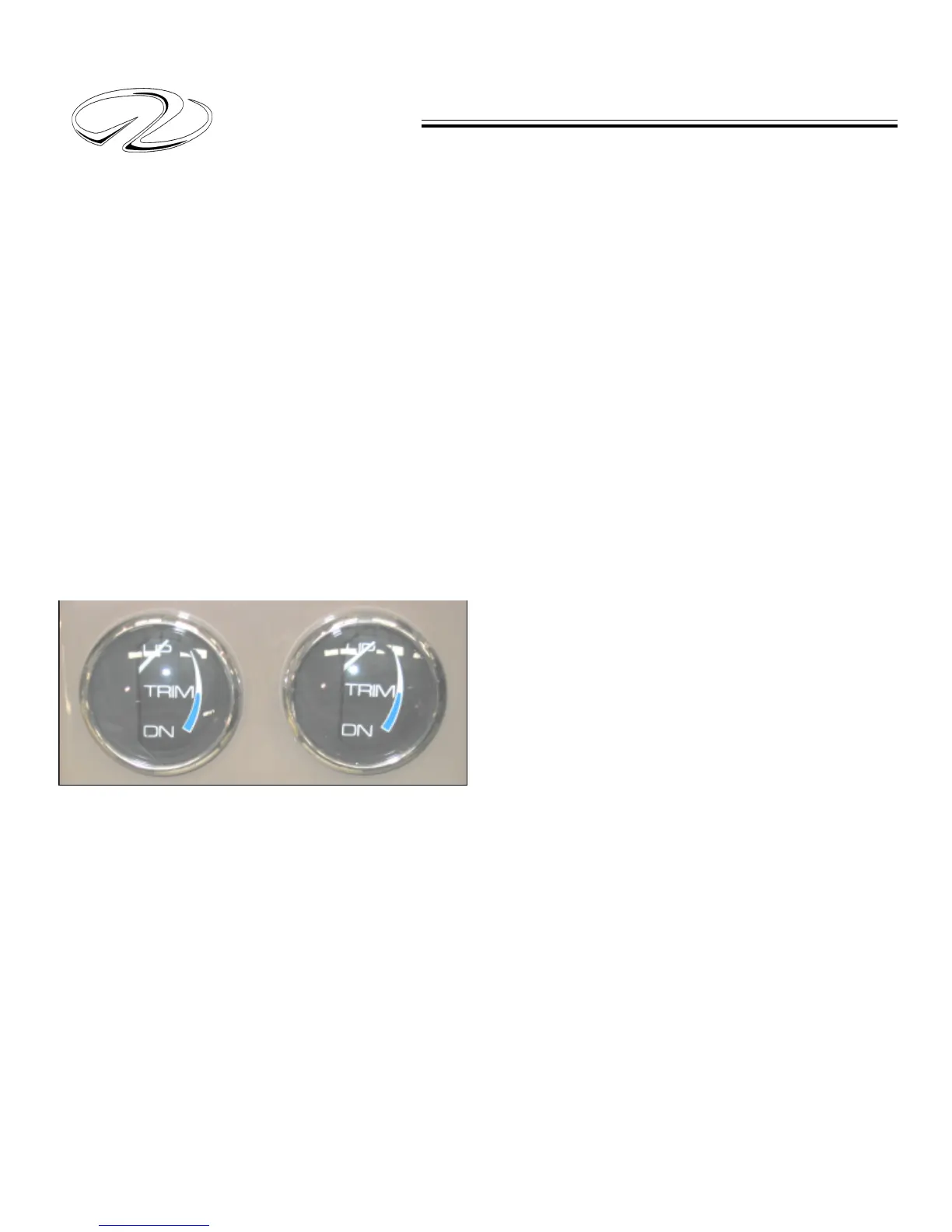
The power trim system features 2 dash reference trim
gauges. As the trim switches located on the remote control
are activated the gauges will show a up or down resulting
angle movement of the stern drives which effects bow
rise.
The power trim system features an electric motor, hydraulic
pump, and reservior. As the trim is activated fluid moves
proportionally through the system. The pump reservior
needs to be periodically checked for hydraulic fluid levels.
See the engine manufacturer’s engine owner’s manual for
specifications and capacity of trim lubricant.
POWER TRIM GAUGES
PORT STARBOARD
The power trim is normally used prior to accelerating onto
a plane, after reaching the desired RPM or boat speed,
and when there is a change in water or boating conditions.
Position passengers and equipment in the boat so that the
weight is balanced correctly fore and aft as well as side to
side. Trimming will not compensate for an unbalanced
load.
To operate the trim, push the switch until the desired bow
position is reached. The trim may be operated at any boat
speed or at rest. Avoid operating the trim system when
running in reverse. Observe the trim/tilt gauge which
indicates the boat’s bow position achieved by the trim angle
of the vertical drive unit. “Bow-Up” corresponds to the
upper portion of the trim range on the gauge while “Bow
Down” corresponds to the lower portion of the trim range
on the gauge.
To determine the proper trim angle, experiment a little
until you are familiar with the changes in your boat. The
vessel will be properly trimmed when the trim angle
provides the best boat performance for the particular
operating conditions. A trim position that provides
balanced steering load is most desirable.
To familiarize yourself with the power trim, make test
runs at slower speeds and at various trim positions to see
the effect of trimming. Note the time it takes for the boat
to plane. Watch the tachometer and speedometer readings
as well as the ride action of the boat.



 To Next Page