10
Chapter 6
STOPPING TWIN-SCREW VESSELS
A proven way to stop a twin-screw vessel is by reversing
the propellers. This action will not push the stern to one
side like other type powered vessels.
The skipper of a twin-screw boat can use the following
approach idea in both port and starboard situations; with
the boat stopped, the skipper can reverse the propeller so
the stern will be pushed toward the dock. With the
starboard approach, reverse the outboard engine propeller
to check headway when approaching parallel to a dock,
the stern will move in. With the port approach, the
reversing starboard right-hand propeller will move the stern
toward the port. When approaching to put the vessel’s
starboard side to the pier, the reversing port propeller will
move the stern toward starboard.
Once increased headway is gathered in reverse gear, the
force of the lower hull moving through the water is enough
to track straight. When backing, the stern will lead as it
heads to port or starboard, before the vessel actually starts
to turn. When the control is put in forward gear position,
the stern is pushed to starboard; the amount of push
depends on the hull design and the amount of throttle
advance.
STOPPING
Remember that your boat
does not have any brakes. It
uses reverse thrust from the
propeller to stop. If the vessel
has headway, with the helm
and propellers in reverse the
propeller thrust is directed
backwards, past the lower
gearcase of the stern drive.
Depending on how far the
throttle is advanced, the discharged thrust may not be
strong enough to reverse the water flowing by the gearcase.
As the power is increased, the propeller thrust becomes
strong enough to stop the flow of water past the lower
unit, and, as the throttle is advanced it reverses its flow
more completely.
When water is flowing past the gearcases, steering torque
is increased, but when the thrust stops the water flow, the
boat will not respond to the helm. This is a short lived
event and is overcome quickly when the water again flows
past the gearcase. Furthermore, added to the energy of
the water hitting the lower gearcase, the propeller thrust
is directed by turning the stern drives, which can add to
the steering torque.
The props tend to throw the stern to port. This is why
experienced skippers undertake a portside landing when
wind and current conditions permit. They allow the prop
to move the stern to port toward the dock.
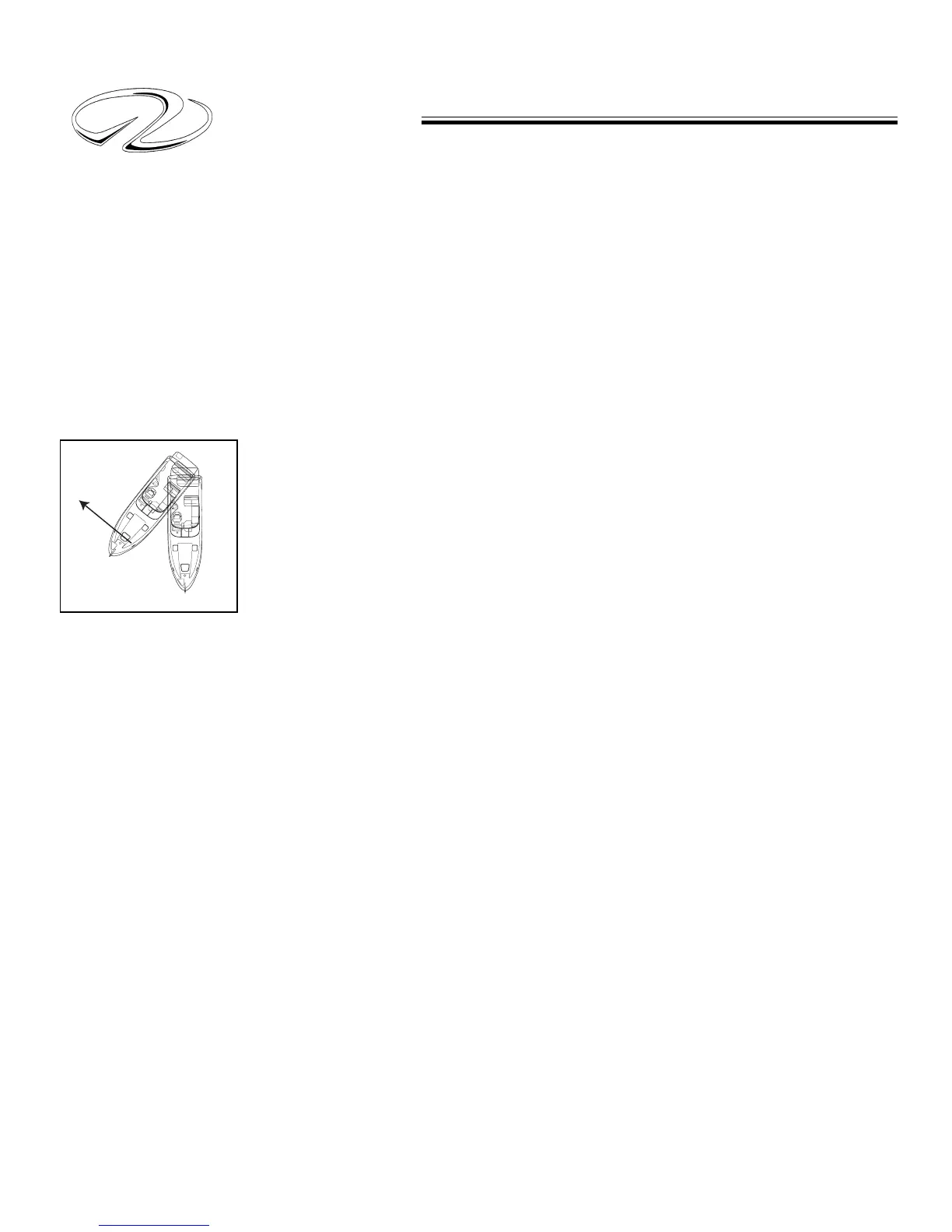
With a forward motion when the helm wheel is turned
hard to one side, the vessel pivots around a point about
1/3 its length abaft to stern. See illustration.



 To Next Page