Regency CI1150 Wood Cast Insert | 23
maintenance
Creosote
When wood is burned slowly, it produces tar and
other organic vapours combine with moisture to
form creosote. The creosote vapours condense in
the relatively cool chimney ue of a slow burning
re. As a result, creosote residue accumulates on
the ue lining. When ignited, this creosote can
result in an extremely hot re.
The chimney connector and chimney should be
inspected at least once every two months during
the heating season to determine if creosote build
up has occurred. If creosote has accumulated it
should be removed to reduce the risk of chimney re.
CAUTION: Things to remember in case of
a chimney re:
1. Close all draft controls.
2. CALL THE FIRE DEPARTMENT.
Ways to Prevent and Keep Unit Free
of Creosote
1. Burn stove with the draft control wide open
for about 10-15 minutes every morning during
burning season.
2. Burn stove with draft control wide open for about
10 - 15 minutes every time you apply fresh wood.
This allows the wood to achieve the charcoal
stage faster and burns up any unburned gas
vapours which might otherwise be deposited
within the system.
3. Only burn seasoned wood! Avoid burning kiln
dried, wet or green wood. Seasoned wood has
been dried at least one year.
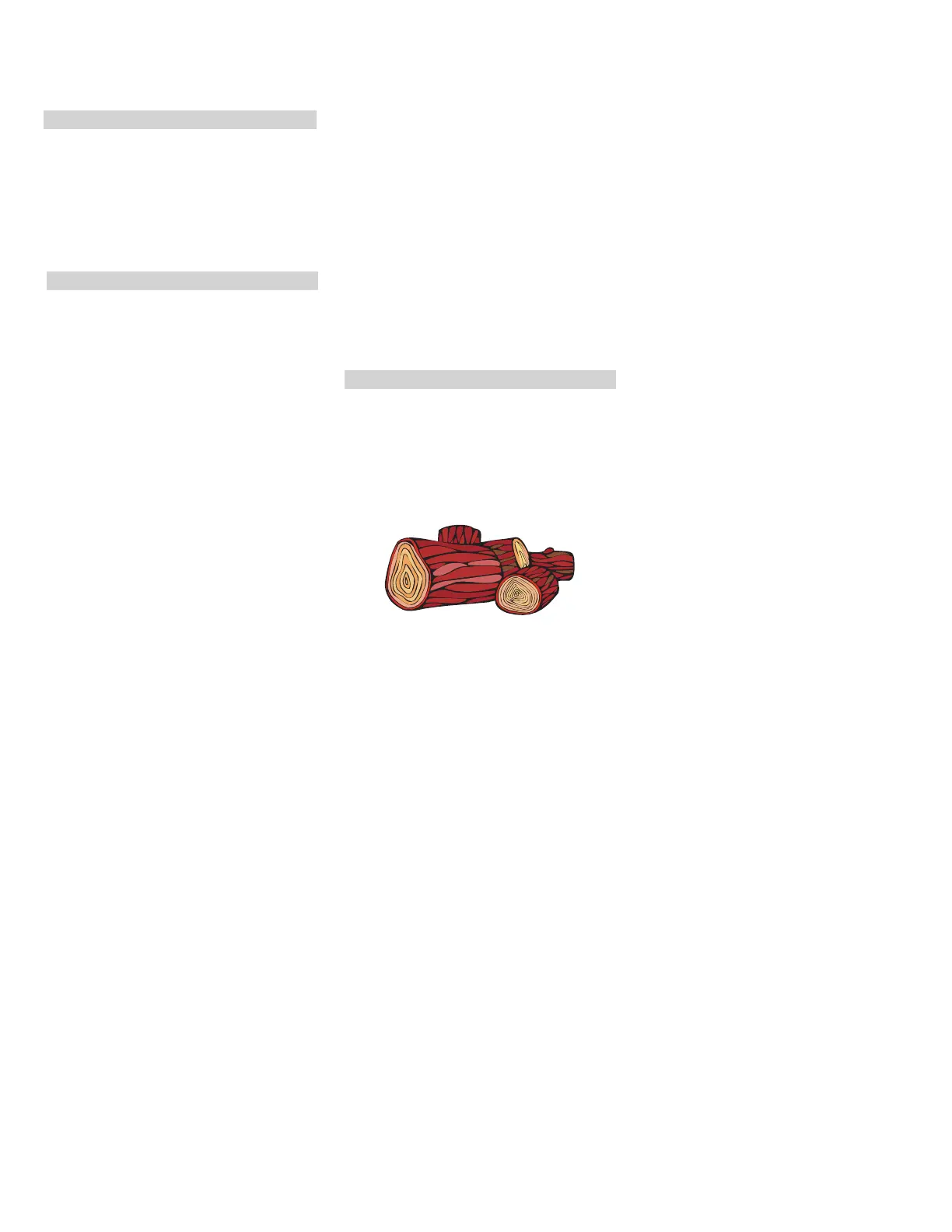
Wood Storage
Store wood under cover, such as in a shed, or cov-
ered with a tarp, plastic, tar paper, sheets of scrap
plywood, etc., as uncovered wood can absorb water
from rain or snow, delaying the seasoning process.
Maintenance
It is very important to carefully maintain your re-
place stove, including burning seasoned wood and
maintaining a clean stove and chimney system. Have
the chimney cleaned before the burning season
and as necessary during the season, as creosote
deposits may build up rapidly. Moving parts of your
stove require no lubrication.
4. A small hot re is preferable to a large smoul-
dering one that can deposit creosote within the
system.
5. The chimney and chimney connector should be
inspected at least once every two months during
the heating season to determine is a creosote
buildup has occurred.
6. Have chimney system and unit cleaned by
competent chimney sweeps twice a year
during the rst year of use and at least once
a year thereafter or when a signicant layer
of creosote has accumulated (3 mm / 1/8" or
more) it should be removed to reduce the
risk of a chimney re.


 To Next Page