7
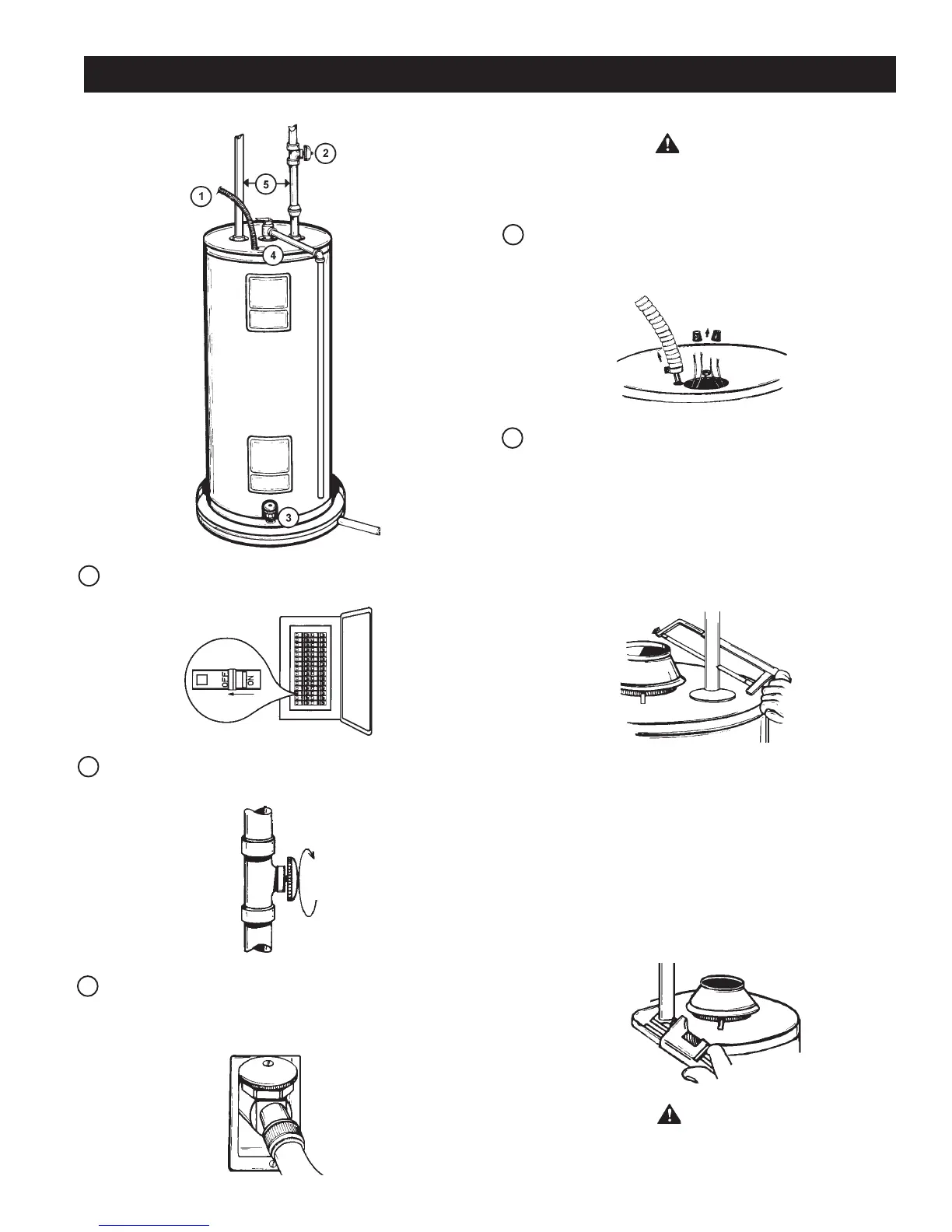
1. Turn “OFF” electrical supply to the water heater.
2. Turn “OFF” the water supply to the water heater at the water
shut-off valve or water meter.
3. Attach a hose to the water heater drain valve and put the
other end in a floor drain or outdoors. Open the water heater
drain valve. Open a nearby hot water faucet which will relieve
pressure in the water heater and speed draining.
REMOREMO
REMOREMO
REMO
VING THE OLD WVING THE OLD W
VING THE OLD WVING THE OLD W
VING THE OLD W
AA
AA
A
TER HEATER HEA
TER HEATER HEA
TER HEA
TERTER
TERTER
TER
WARNING
The water passing out of the drain valve may be extremely hot.
To avoid being scalded, make sure all connections are tight
and that the water flow is directed away from any person.
4. Check again to make sure the electrical supply is turned
“OFF” to the water heater. Then disconnect the electrical
supply connection from the water heater junction box.
5. a. If you have copper piping to the water heater, the two
copper water pipes can be cut with a hacksaw
approximately 4" away from where they connect to the
water heater. This will avoid cutting off the pipes too
short. Additional cuts can be made later if necessary.
Disconnect the temperature-pressure relief valve drain
line. When the water heater is drained, disconnect
the hose from the drain valve. Close the drain valve.
The water heater is now completely disconnected and
ready to be removed.
b. If you have galvanized pipe to the water heater, loosen
the two galvanized pipes with a pipe wrench at the
union in each line. Also disconnect the piping
remaining to the water heater. These pieces should
be saved since they may be needed when
reconnecting the new water heater. Disconnect the
temperature-pressure relief valve drain line. When the
water heater is drained, disconnect the hose from the
drain valve. Close the drain valve. The water heater is
now completely disconnected and ready to be
removed.
CAUTION
Mineral buildup or sediment may have accumulated in the old
water heater. This causes the water heater to be much heavier
than normal and this residue, if spilled out, could cause staining.


 To Next Page