EasyManua.ls Logo

Rosemount 1199 - User Manual

Rosemount 1199
26 pages
Print Icon
To Next Page IconTo Next Page
Loading...
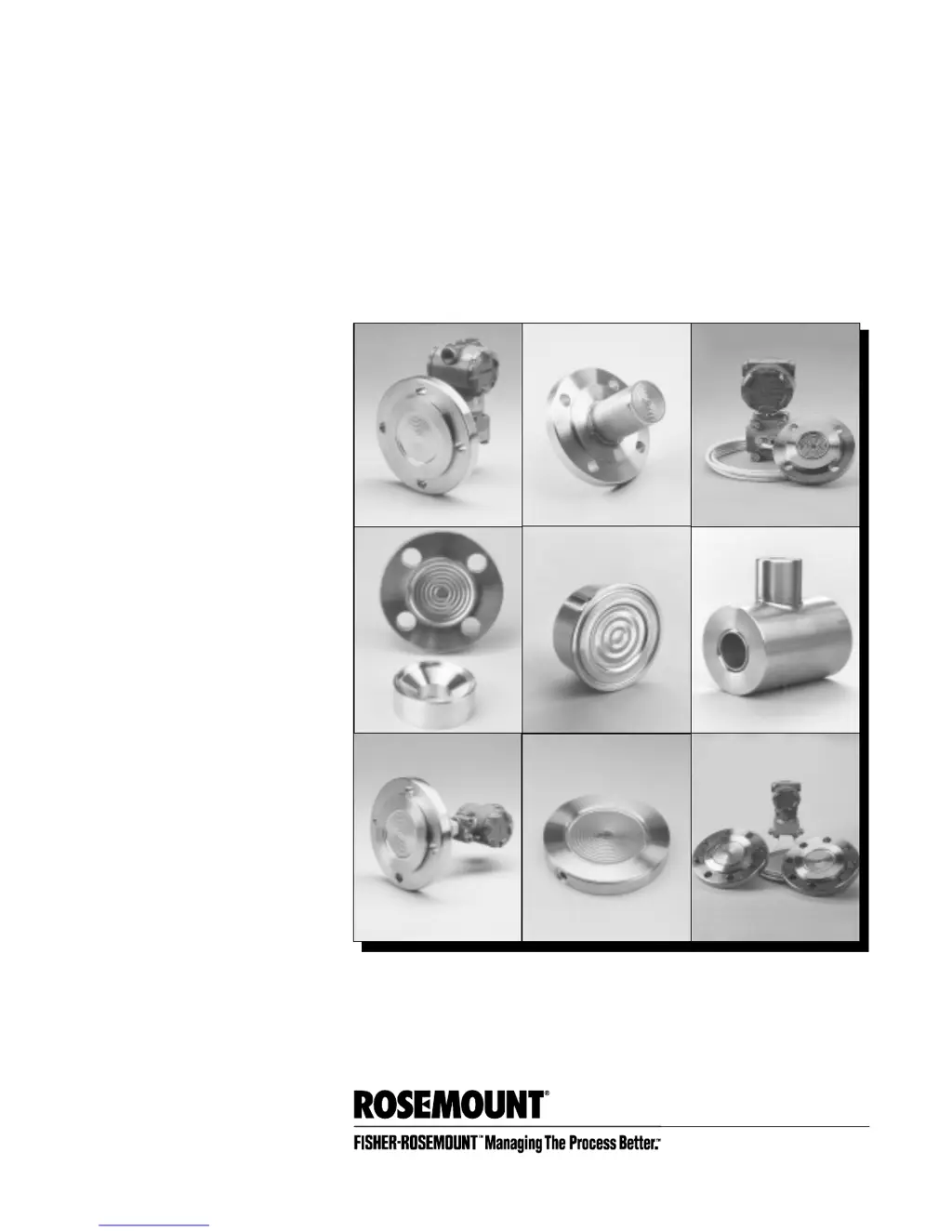
Model 1199
Diaphragm Seal
Systems Manual
00809-0100-4002
English
Rev. AD

Other manuals for Rosemount 1199

Questions and Answers

  • M
    Matthew BerryAug 4, 2025
    What to do if Rosemount 1199 Measuring Instruments have no output?
    • J
      jeffwalkerAug 4, 2025
      If your Rosemount Measuring Instruments have no output, it may be due to an electrical problem. First, ensure adequate voltage is reaching the transmitter. Check the power supply's milliampere rating against the total current drawn by all powered transmitters. Inspect for any shorts, multiple grounds, and proper polarity at the transmitter terminal. Also, check loop impedances. Ensure that you are not using higher than the specified voltage to check the loop, as this can damage the transmitter electronics. Finally, check if the transmitter is in a multidrop mode, as this locks the output at 4 mA.
  • C
    Curtis BrandtAug 11, 2025
    Why Rosemount 1199 Measuring Instruments output reads negative pressure?
    • A
      April MorrisonAug 11, 2025
      If the output of your Rosemount Measuring Instruments reads negative pressure, it could be due to a mounting effect. The remote fill fluid may be applying pressure to the low side, causing a negative reading.
  • M
    Melanie WilliamsAug 18, 2025
    What to do if Rosemount 1199 Measuring Instruments will not respond to change in pressure?
    • H
      Hunter JacksonAug 19, 2025
      If your Rosemount Measuring Instruments will not respond to changes in pressure, the diaphragm may be damaged. To resolve this, remove the seal and inspect the diaphragm for any damage.
  • J
    Joshua DixonAug 26, 2025
    Why Rosemount 1199 Measuring Instruments have slow response?
    • B
      Brandon JenkinsAug 26, 2025
      A slow response in Rosemount Measuring Instruments can occur if the damping is too high or due to cold temperatures. Fill fluid viscosity is temperature dependent, and less viscous fill fluid enhances time response. Heat traced capillaries can be added as an option to maintain constant temperatures to fill fluid.

Summary

Calibration

Zero Suppression

Explanation of why a suppressed zero is needed when a transmitter is mounted below the high side tap.

Zero Elevation

Explanation of when an elevated zero is needed for transmitters mounted above the high side tap.

Calibrating a One-Seal System With Suppressed Zero

Step-by-step procedure for calibrating a one-seal system with a transmitter mounted below the high side tap.

Calibrating a One-Seal System With Elevated Zero

Step-by-step procedure for calibrating a one-seal system with a transmitter mounted above the high side tap.

Calibrating a Two-Seal System With Elevated Zero

Procedure for calibrating a two-seal system with a transmitter mounted level, above, or below the high pressure tap.

Maintenance and Troubleshooting

Troubleshooting

Identifying and resolving common problems with diaphragm seal systems, including no output and slow response.

Rosemount 1199 Specifications

General IconGeneral
ModelRosemount 1199
CategoryMeasuring Instruments
TypeDiaphragm Seal System
Connection TypeFlanged, Threaded, or Sanitary
ApplicationPressure Measurement
Output Signal4-20 mA
Process Temperature-40 to 85 °C
Material316L SST
Process Connection1/2" NPT
Fill FluidSilicone Oil
Diaphragm Material316L SST
MountingDirect Mount, Remote Mount
CompatibilityRosemount Transmitters

Related product manuals