EasyManua.ls Logo

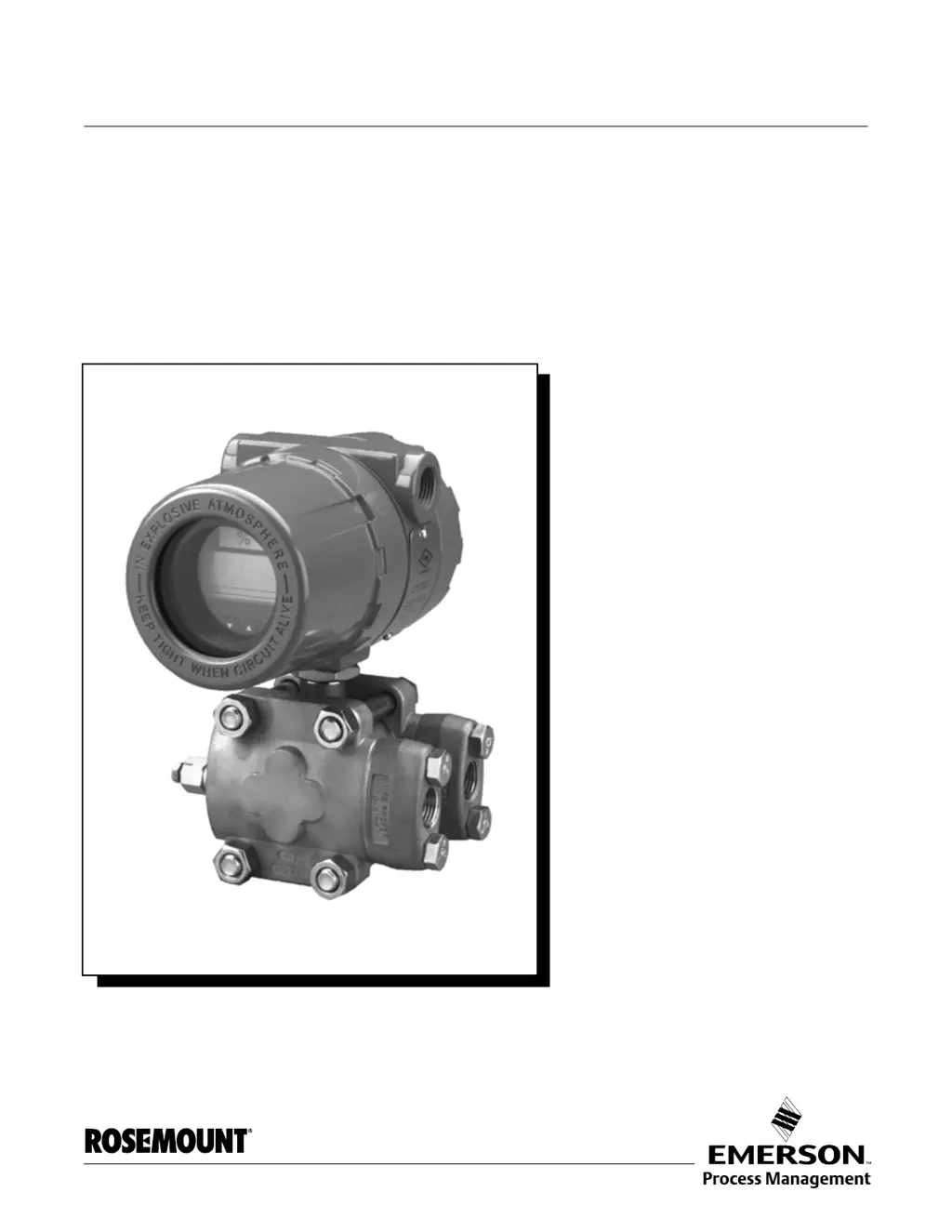
Rosemount 1151GP - User Manual

Rosemount 1151GP
176 pages
Print Icon
To Next Page IconTo Next Page
Loading...
www.rosemount.com
Reference Manual
00809-0100-4360, Rev BA
August 2008
Rosemount 1151 Pressure Transmitter

Table of Contents

Questions and Answers

  • A
    Aaron Jones DDSAug 9, 2025
    What to do if my Rosemount 1151GP Measuring Instruments transmitter does not communicate with the HART Communicator?
    • S
      Steven BurnettAug 9, 2025
      First, check the loop wiring to ensure a minimum of 250 Ω resistance between the power supply and the communicator connection, and that the transmitter receives adequate voltage (minimum 17 volts if the communicator and 250 Ω resistance are properly in the loop). Also, inspect for intermittent shorts, open circuits, and multiple grounds. Specify the transmitter by tag number. If using an I.S. Barrier, refer to its documentation for troubleshooting steps.
  • R
    Ruben BranchAug 17, 2025
    Why is the output of my Rosemount 1151GP Measuring Instruments high?
    • M
      markreyesAug 17, 2025
      A high output could stem from several causes: * Restrictions, leaks, or blockages in the primary element impulse piping. * Blocking valves not fully open. * Entrapped gas in liquid lines or liquid in dry lines. * Changes in the density of fluid in impulse lines. * Sediment in transmitter process flanges. Additionally, verify the power supply output voltage at the transmitter is within 12 to 45 V dc. Connect the HART Communicator and enter the XMTR TEST mode to determine any electronic failures, ensuring post connectors are clean. If the issue persists, the sensing element may be defective, indicated by obvious defects, such as a punctured isolating diaphragm or fill fluid loss.
  • M
    Manuel RodriguezAug 25, 2025
    What to do if my Rosemount 1151GP output is erratic?
    • T
      Toni AllenAug 25, 2025
      An erratic output from your measuring instrument can be caused by several factors. Check the loop wiring for adequate voltage (12-45 V dc with no load), intermittent shorts, open circuits, and multiple grounds. Avoid using over 45 volts, as this may damage the transmitter electronics. If process pulsation is the cause, adjust the electronic damping using the HART Communicator. Also, connect the communicator and perform a transmitter test to identify any electronic failures, ensuring the post connectors are clean. Finally, inspect the impulse piping for entrapped gas in liquid lines or liquid in dry lines.
  • V
    Veronica HughesDec 1, 2025
    Why doesn't my Rosemount 1151GP transmitter characterize properly?
    • S
      Sonya BradshawDec 1, 2025
      A transmitter that doesn't characterize properly can be due to several factors. Start by checking the pressure source for restrictions or leaks, proper leveling or zeroing, and ensure the weights/gauge are set correctly. Verify the pressure source's accuracy, ensuring it's at least three times more accurate than the Rosemount 1151 Smart. Next, confirm the mA meter is functioning correctly. Also, check the power supply output voltage at the transmitter, ensuring it's 12 to 45 V dc with no load, and verify a minimum of 250 Ω resistance between the HART Communicator and the power supply. Connect the communicator and perform a transmitter test to identify any electronic failures, ensuring the post connectors are clean. If the electronics are still suspect, consider substituting them with new o...

Summary

Installation

Mounting Considerations

Provides guidance on transmitter mounting, including requirements for different services.

Electrical Considerations

Covers essential electrical installation aspects, including power supply and conduit.

Wiring

Details the proper procedures for connecting the transmitter's wiring.

Grounding

Explains techniques for properly grounding the transmitter signal wiring and case.

Liquid Level Measurement

Explains how to use differential pressure transmitters for liquid level applications.

Configuration (Smart Only)

Commissioning the Transmitter on the Bench

Describes testing the transmitter and loop before installation for optimal performance.

Setting Hardware Switches

Explains how to set user-selectable failure mode and transmitter security switches.

Commissioning with a HART-Based Communicator

Details the process of commissioning the instrument using a HART-based communicator.

Testing the Equipment and the Loop

Covers essential tests to verify transmitter, communicator, and loop functionality.

Reranging with a Communicator Only

Explains how to independently change analog 4 and 20 mA points without a pressure input.

Reranging with a Communicator and a Reference Pressure

Details reranging using a pressure source and communicator to maintain analog span.

Reranging Using the Integral Span and Zero Buttons and a Reference Pressure

Describes reranging using the transmitter's integral span and zero buttons with pressure.

Operation and Maintenance

Smart Calibration

Covers calibration tasks for Smart Pressure Transmitters, including output and sensor calibration.

Calibrating the Sensor

Explains sensor trim and zero trim procedures for accurate sensor calibration.

Digital Trim (Sensor Trim and Analog Output Trim)

Describes digital trim functions to adjust transmitter characterization to plant standards.

Compensating for High Static Pressure

Explains how to correct systematic errors in DP or HP transmitters due to static pressure.

Analog Calibration

Details calibration procedures for the Rosemount 1151 Analog Pressure Transmitter.

Troubleshooting

Smart Troubleshooting

Provides suggestions for common operating problems on Smart transmitters.

Analog Troubleshooting

Offers troubleshooting suggestions for common operating problems on Analog transmitters.

Retrofitting the Rosemount 1151 Transmitter

Safety Messages

Highlights potential safety issues and warning symbols related to retrofitting procedures.

Removing the Analog Electronics Assembly

Details the steps for removing the analog electronics assembly from the transmitter.

Installing the Smart Retrofit Kit

Provides instructions for installing the smart retrofit electronics kit and securing it.

Characterization

Explains characterization as a one-time calibration for the sensor and electronics.

Characterizing with a HART Communicator

Guides the user through the characterization process using a HART communicator.

Appendix B Product Certifications

Hazardous Locations Certifications

Covers FM, CSA, and ATEX certifications for hazardous area operations.

North American Certifications

Lists Factory Mutual and CSA approvals for North American hazardous locations.

Canadian Standards Association (CSA) Approvals

Details CSA explosion-proof and intrinsically safe certifications.

European Certifications

Information on ATEX intrinsically safe and combustible dust certifications.

Glossary

Digital Trim

Adjusts transmitter characterization to plant standards.

Sensor Trim

Two-point calibration to linearize output between end-point pressures.

Rosemount 1151GP Specifications

General IconGeneral
BrandRosemount
Model1151GP
CategoryMeasuring Instruments
LanguageEnglish

Related product manuals