Reference Manual
00809-0100-4360, Rev BA
August 2008
3-13
Rosemount 1151
Multidrop
Communication
Multidropping transmitters refers to the connection of several transmitters to a
single communications transmission line. Communication between the host
and the transmitters takes place digitally with the analog output of the
transmitters deactivated. With the smart communications protocol, up to 15
transmitters can be connected on a single twisted pair of wires or over leased
phone lines. Note that burst mode operation is not compatible with multidrop
communications.
The application of a multidrop installation requires consideration of the update
rate necessary from each transmitter, the combination of transmitter models,
and the length of the transmission line. Multidrop installations are not
recommended where intrinsic safety is a requirement. Communication with
the transmitters can be accomplished with commercially available Bell 202
modems and a host implementing the HART protocol. Each transmitter is
identified by a unique address (1-15) and responds to the commands defined
in the HART protocol.
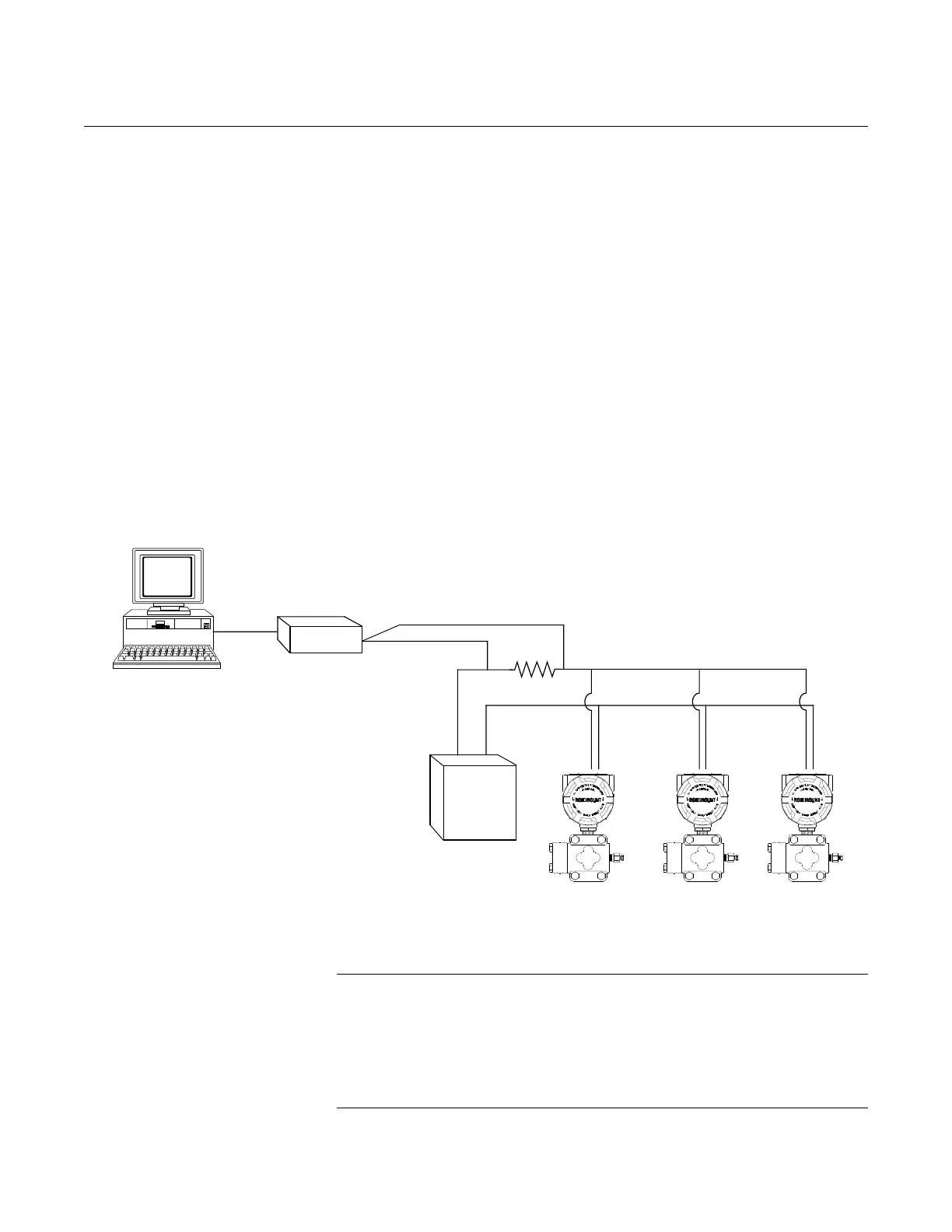
Figure 3-7 shows a typical multidrop network. This figure is not intended as an
installation diagram. Contact Emerson Process Management product support
with specific requirements for multidrop applications.
Figure 3-7. Typical Multidrop Network.
HART-based communicators can test, configure, and format a multidropped
Rosemount 1151 in the same way as it can a Rosemount 1151 in a standard
point-to-point installation.
NOTE
The Rosemount 1151 Smart Pressure Transmitter is set to address 0 at the
factory, allowing it to operate in the standard point-to-point manner with a 4–20
mA output signal. To activate multidrop communication, the transmitter address
must be changed to a number between 1 and 15 (inclusive). This change
deactivates the 4–20 mA analog output, sending it to 4 mA. It also disables the
failure mode alarm signal, which is controlled by the upscale/downscale switch.
Bell 202
Modem
Power
Supply






 To Next Page